



2018 School Spending Survey Report
Tracy Wolff Talks with Roger
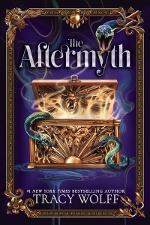
The popular YA-adult, fantasy-romantasy author Tracy Wolff ventures into middle-grade world-building in The Aftermyth. Penelope is looking forward to enrolling in Anaximander’s Academy, which, even on her first day, is “everything — and nothing — like I thought it’d be.”

Talks with Roger is a sponsored supplement to our free monthly e-newsletter, Notes from the Horn Book. To receive Notes, sign up here.
Sponsored by

The popular YA-adult, fantasy-romantasy author Tracy Wolff ventures into middle-grade world-building in The Aftermyth. Penelope is looking forward to enrolling in Anaximander’s Academy, which, even on her first day, is “everything — and nothing — like I thought it’d be.”
Roger Sutton: So, Tracy, why the move into middle grade? You have had such success in adult books and in books for teens. What made you want to expand your empire?
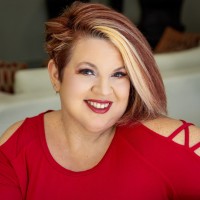 Tracy Wolff: Oh, I like the sound of that. “Expanding my empire.” Actually, it comes from the other part of my professional life, which is being a teacher. I taught middle school for a couple years, I taught high school for a number of years, and then I taught writing and American literature at the college level. And one of the things that I noticed in my students, pretty much across the board, was that when kids are small and they’re just beginning to read, they love story time. It’s the best time of the day. Everybody waits for it. They gather around the teacher and they’re super excited about reading the book and hearing about what’s happening with the characters. But by the time I got them in eighth grade, or twelfth grade, or college, so many of my students would tell me how much they despise reading, how boring it was, how hard it was — all the reasons why they didn’t like doing it. Being a literature teacher, that made my life very difficult. But it always bothered me, and I always wanted to figure out what it is that turned students off so much between when they are five and six and when I would get them. And Simon & Schuster is an incredible publisher and partner. We’re determined to go after those kids and hopefully grab them before we lose them. Reading is getting to be a lost art in some ways, but it’s one of the most exciting things you can do. It’s also one of the best things you can do for your brain, for your imagination, for the world, for knowledge, for everything. So I’ve always wanted to write a middle-grade novel, and it just seemed like now was the time to do it. That’s the number one reason, and also because I had a cool story I wanted to tell.
RS: What kind of a middle-grade reader were you?
TW: I was a voracious, nonstop middle-grade reader. Every two weeks my mom would take me to the bookstore and we would each buy a pile of books, and in that two weeks we would read them, and I would reread them probably several times, and then two more weeks would pass and we’d go and we’d buy a whole other stack of books. It was our little day together.
RS: Where was this?
TW: This was in Los Angeles and San Diego, back when B. Dalton and Walden Books were still in business. You mentioned my adult books, and my YAs, which tend to be paranormal or fantasy romances or contemporary romances. Long story short, it was my mom who got me started on romance novels. It was the summer before sixth grade, so they were very mild romance novels.
RS: I noticed that although you write these pretty spicy young adult and adult romances, there is just the inklings of romance in this one. I mean there’s a girl, and there are two cute guys, which is classic, but it’s all innocent.
TW: Yeah. The goal for this series, hopefully, is to follow Penelope through her six years at Anaximander’s Academy. We’re starting now when she’s thirteen in her very first year. But by the time we finish, she’s going to be older, she’ll be in her last year — though the series will stay middle-grade as you go through the years. I think we’ll be seeing a little more of the cute boys Kyrian and Sullivan.
RS: So six books, one for each year?
TW: The plan is six books. I will say that the second book takes place in the second semester of Penelope’s first year. So we’ll see how this ends up, but yes.
RS: Do you like the world-building, world-bending aspect at the beginning? It seems like a lot of work, to plan what you’re going to do.
TW: I love world-building and world-bending. Before I wrote the Crave series, I would have told you that world-building was not my favorite thing. And I will tell you, characters are my favorite. I love writing characters. I love writing dialogue. I love writing relationships. But I realized as I wrote the Crave series, and certainly as I wrote The Aftermyth, that I really do love world-building. I love the big parts of it, and I love the small minutiae. I love being able to create a campus that works like a Rubik’s Cube. Or an upside-down waterfall. Or a hall of legends.
RS: And when you’re writing a fantasy novel and you’ve got your initial world mapped out, basically, does it ever happen that your characters want to do something that your world-building did not allow for? So you have to go back to the beginning?
TW: Oh yeah, absolutely. This is one of the things about writing a series, especially a longer series. It’s always a pain. You have to really think out your rules. Because I can guarantee when you’re writing a fantasy series that somewhere along the line you’re going to want to do something that breaks those rules. Then you’re either stuck or you have to find a really inventive, reasonable way to explain why you get to break the rules in this one set of circumstances. If you’re going to break a rule, you better have a reason for it, because otherwise the world doesn’t work. It collapses in on itself. But I also think sometimes that makes you a better writer. Because you really get into this thing. It’s like, “I want to do this, my world won’t let me do this, so what do I need to do to come up with something that I think is as cool as this that does work within the world?” So it really stretches your imagination. Think about it — in the world we live in, there are rules, such as gravity, so how do we live with that and then also do all the cool things that we want to do? It’s kind of like that. Hopefully the situation comes up in the first book when you can still change it. The problem is when it comes in, say, book four.
RS: And we know from places like Reddit and Goodreads that fantasy readers will catch you if you contradict yourself.
TW: They will absolutely catch you. As they should. I’ve always been very lucky. I have incredible readers who follow along with me, and the worlds I create matter to them as much as they matter to me. So of course they’re going to notice any discrepancies. I had an editor once who would ask, “How did that happen?” And I’d answer, “Magic.” And she’d say, “That’s not an acceptable answer. I want to actually know how it happened.” Editors like that are great to have because they stretch you and they push you and they really make you think through the things that you do and the decisions that you make, and that’s wonderful. I’ve been lucky to work with some incredible editors.
RS: And who is the editor for this book?
TW: Her name is Kara Sargent. And she is phenomenal. She and I did a book together years ago called Phantom Wheel, and it was some of the most fun I’ve ever had writing a book, so I was excited to work with her again. Simon & Schuster has such an incredible lineup of middle-grade authors that it felt like such a privilege and an honor to be able to join them.
 RS: What was the steepest part of the learning curve for you with this book? What was the hardest thing to do?
TW: I don’t know that there was a steep learning curve, exactly. Although with this book staying within the world-building was difficult. At one point I had to buy a Rubik’s Cube and label it because I was just losing myself in where we were and what we were doing. I was like, “Wait a minute, that shouldn’t be over there, that should be over here. Okay, now I can write.” With this book, because there was so much world-building going on at the beginning that was going to carry through to the end, I did something I don’t normally do. I bought this massive bulletin board and laid it out over my entire dining room table. I had everything from the world, everything from the characters, I had strings and colored lines going in between them all. Normally I have a story bible, but that I do piecemeal as I’m going along, and this one was too complex for that. I had to invent a new system for how I keep track of things.
RS: As a child, did you read D’Aulaires’ Book of Greek Myths?
TW: Oh absolutely, I’ve read it and I’ve taught it.
RS: I ask because I have met so many writers for young people who read that book, as did I, over and over and over again as children.
TW: Absolutely. It’s an amazing book and it’s written in a really great way because it captivates adults and children alike. I went back and read it again before I started The Aftermyth. Obviously, I did other research, but I wanted to refresh myself with it, especially because I’m going to be taking on some of these myths and twisting them around a little bit and playing with them. I wanted to know what it was that I was breaking before I broke it.
RS: That seems like a very wise strategy.
TW: Absolutely. I read that one and several other mythology books as well. In an obscure little bookstore in New England I found a book called Pandora’s Box, which does nonfiction-wise what I’m trying to do fiction-wise with The Aftermyth. I was so excited to see other female writers having the same reaction to some of these myths. The Aftermyth is actually the second Pandora’s box book I’ve written. I wrote one many, many years ago. It was a YA novel called Doomed, and instead of opening a box, my main character opens an attachment and brings about technological Armageddon. That was a very different book to write and a lot of fun in its own way because I got to destroy the world! But when I sat down to do this book, I was thinking about the Pandora’s box myth and what bothers me so much about it. Pandora was created by two male gods. Zeus went to Hephaestus and asked him to create a woman because he wanted to punish Prometheus and his brother Epimetheus, two Titans charged with creating humanity and all the animals. Hephaestus made Pandora in the image Zeus wanted. She got all kinds of gifts from the gods: beauty, a beautiful voice, unending curiosity. So, she was created specifically to punish Prometheus and Epimetheus, and they hand her a jar filled with bad things and tell this woman to whom they gave unending curiosity, “Don’t open the jar.” Then she opens the jar, and she’s the one who’s gone down in history as being blamed, when really these two male Titans did something that angered Zeus. Zeus wanted to punish them and created her to do exactly what she did. So I don’t understand how it’s all her fault. But we live in a world where history is told by the winners, and I wanted to ask, “What happens if we tell it from another side, what happens if we look at something differently, as if we’re in a whole new world with whole new ideas?” I’m kind of flipping some of these myths. This book flipped the Pandora’s box myth, and we’ll look at others as the series goes on.
RS: So do you see a different myth governing each of the novels?
TW: Yes.
RS: Can you tell us what’s next?
TW: I don’t know if I’m allowed to tell you, because we haven’t revealed the cover, and when you see the cover, you’ll know.
RS: Okay. All right.
TW: It’s one of my favorite myths, and as we get through the series each of the students is going to have their own myth that they’re dealing with, their own mythological creature they’re walking in the footsteps of. We’ll see how it goes.
RS: So you plan to move on from Penelope?
TW: Oh no, Penelope is the main character all the way through. But her friends will be dealing with their own myths. Fifi will have hers; Paris, her twin brother, will have his; Arjun will have his; as will Kyrian and Sullivan and maybe some new characters that you meet in book two.
RS: I wasn’t sure how I felt about Penelope embracing the nickname Fifi gives her.
TW: Ellie. Well, I think in her heart she’s still Penelope. But I think that her growth arc in this book was learning that sometimes it’s okay if everything doesn’t go exactly as planned. And sometimes it’s okay to be flexible and sometimes it’s okay to see what happens as opposed to planning everything out. When I sat down to write this book, I did not realize at first what I was doing, but I was writing about my best friend Jenn, who was my college roommate, and myself. She is totally Penelope, and I’m totally Fifi. I didn’t really realize what I was doing till maybe a little more than a third of the way through the book, and when I did, I was so delighted. I thought, No wonder I’m having so much fun, because I’m writing our friendship from her point of view. We showed up at college; she was from a small town of maybe six hundred people, I was from San Diego. Opposite parts of the country, very different everything. I think she did not know what to do with me for the first several months we knew each other. Now we have a friendship that’s lasted thirty years. I think that sometimes Penelope had to learn some lessons Jenn had to learn. And Fifi’s going to have to learn some of the lessons I’ve had to learn.
RS: I have high hopes for these characters. I hope that they continue to grow and get their own stories.
TW: Oh, me too. I’m very excited. And I have lots of things in store for all of them. I’m not nice, I have great plans to torture them. To give them happily-ever-afters in the end, but to torture them in between.
RS: Oh, spoilers, spoilers!
TW: Exactly.
Sponsored by



RECOMMENDED

Please register with us to continue reading.
ALREADY A SUBSCRIBER? LOG IN
We are currently offering this content for free. Sign up now to activate your personal profile, where you can save articles for future viewing.
ALREADY A SUBSCRIBER? LOG IN
Thank you for visiting.
We’ve noticed you are using a private browser. To continue, please log in or create an account.

Add Comment :-
Be the first reader to comment.
Comment Policy:
Comment should not be empty !!!