Newsletters

While Where the Wild Things Are is (arguably? No.) the greatest Caldecott Medal winner ever, the children’s book awards from the American Library Association flourish in their own right, honoring each year’s most distinguished achievements in literature for young people. If you’re coming to the ALA convention in Anaheim, please...

In this special issue of Notes from the Horn Book we celebrate the June 10th birthday of Maurice Sendak, who died last month at the age of eighty-three. As well as being a master of illustration, Sendak was a great friend to The Horn Book. While he was best known...

Picture booksWhere the Wild Things Are (1963) written and illus. by Maurice Sendak, Harper, 3–7 years.In the Night Kitchen (1970) written and illus. by Maurice Sendak, Harper, 3–7 years.Outside Over There (1981) written and illus. by Maurice Sendak, Harper, 3–7 years.Mr. Rabbit and the Lovely Present (1962) written by Charlotte...
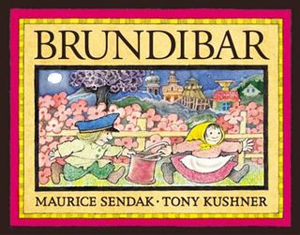
Sendak drew and painted to music, and in his later career would design operas including The Magic Flute, The Love for Three Oranges, and his own Where the Wild Things Are, set by Oliver Knussen.The Tony Kushner/Sendak collaboration Brundibar (2003) re-creates the story line of a Czech opera written by...

Sendak never settled for prettiness; his illustrations for folklore demonstrate a respect for the tales’ immense power.The Juniper Tree and Other Tales from Grimm (1973), selected by Lore Segal and Maurice Sendak, translated by Segal and Randall Jarrell, and illustrated by Sendak, features Grimm favorites including “Rapunzel,” “Hansel and Gretel,”...

It’s a shame that Sendak’s only extended prose work for children is the wonderful Higglety Pigglety Pop, but his tender illustrations for novels by Randall Jarrell and Meindert DeJong demonstrate the artist’s reach beyond the picture book.Sendak’s daring imagination weaves a simple rhyme into the complex and brilliantly original tale...

There’s no need to leave Sendak behind when children begin reading for themselves.Entirely original in approach and content is Ruth Krauss’s A Hole Is to Dig (1952), illustrated by Sendak. In this “first book of first definitions,” Krauss, with the help of children themselves, gives us such gems as “a...

Sendak’s self-styled trilogy about children confronting and mastering fear has inspired much debate and more than a few dissertations, but generations of children have managed all on their own to “only connect” with these three masterpieces.Where the Wild Things Are (1963), Sendak’s best-known work and the 1964 Caldecott Medal Winner,...

Left to right: Roger Sutton, Maurice Sendak, Sergio Ruzzier, Frann Preston-Gannon, Ali Bahrampour, Denise Saldutti. Photo by Richard Asch.Last year, I went to Maurice Sendak’s house to spend a day with the Sendak Fellows, four artists who were given time and studios to work on any project they desired, as...
1,552 articles
ALREADY A SUBSCRIBER? LOG IN
We are currently offering this content for free. Sign up now to activate your personal profile, where you can save articles for future viewing.
ALREADY A SUBSCRIBER? LOG IN
Thank you for visiting.
We’ve noticed you are using a private browser. To continue, please log in or create an account.
