


2018 School Spending Survey Report
Field Notes: Teaching Our Stories with the Latinx KidLit Book Festival
Growing up, we didn’t see ourselves, our families, our culture, or our identities represented in the K–12 curricula of our schools. In college, Tracey enrolled in a Chicano/a literature course and for the first time was introduced to the voices of Chicanx poets, writers, and storytellers whose writings spoke directly to her Brown Girl heart. In graduate school, it was in Liberating Pedagogies and in Theological Themes in Latin American Literature courses where Carla reconnected to her Chilean roots and found inspiration for a career in education and children’s literature.
Founded in 2020, the Latinx KidLit Book Festival (LKBF) is a free, virtual annual event starting in September that celebrates Latinx authors, illustrators, and books. The following is a conversation between LKBF Educator Council members about the festival's significance to their academic work and lives. See also hbook.com/story/the-latinx-kidlit-book-festival.
Growing up, we didn’t see ourselves, our families, our culture, or our identities represented in the K–12 curricula of our schools. In college, Tracey enrolled in a Chicano/a literature course and for the first time was introduced to the voices of Chicanx poets, writers, and storytellers whose writings spoke directly to her Brown Girl heart. In graduate school, it was in Liberating Pedagogies and in Theological Themes in Latin American Literature courses where Carla reconnected to her Chilean roots and found inspiration for a career in education and children’s literature. These interactions with Latinx literature helped us find the language to reflect on our family histories and personal experiences. The following reflection shows how we integrate Latinx children’s and youth literature in our current work, as scholars of culturally and linguistically diverse texts and teaching as well as Latinx KidLit Book Festival Educator Council members: Tracey with Somos Escritoras and Carla in her ethnic studies courses.
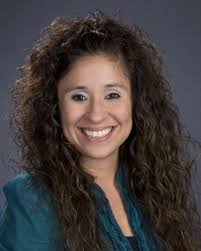
TRACEY T. FLORES: My prior experiences led me to found Somos Escritoras / We Are Writers, a writing and art workshop held at the University of Texas at Austin for Latina girls (grades 6–12) that invites them to use storytelling, art, and writing to explore their lives and the world. At Somos Escritoras, Latina girls learn about their histories and lives while developing positive self-identities through immersing themselves in the poetry, compositions, and art of Latinx storytellers whose work speaks to the multidimensional and expansive experiences and perspectives of Latinx communities.
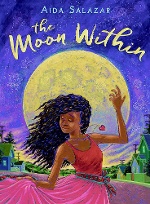
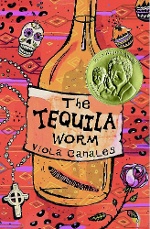 As I plan writing and art activities for our workshops, I draw on the Latinx KidLit Book Festival Database to search for picture books and middle grade and young adult literature focused on themes related to identity, gender, family, and activism. We explore these themes at our workshops, and I want to ensure that I bring many Latinx identities, experiences, and perspectives to the girls to read and discuss. For example, in an opening writing activity to invite the girls to reflect on their relationships with friends and comadres, we read and discussed the poem “My Best Echo,” from The Moon Within (2019) by Aida Salazar and an excerpt about being a comadre from The Tequila Worm (2005) by Viola Canales. Pairing these texts sparked a lively conversation about the people in the girls’ lives who support their hopes and dreams, tell them the real, and push them to be their truest, best, most authentic selves. These texts opened dialogue for reflection; they inspired writing and were mentor texts for the girls to compose their poetry and narratives about their friends and comadres — their best echoes.
Outside of Somos Escritoras, I teach and mentor future educators to cultivate learning communities that foster a love of reading and writing in their pre-K–6 classrooms. Specifically, I work alongside them to unleash their inner writers, read widely, and learn how to select culturally sustaining books as mentor texts for teaching and nurturing writers. I model many writing lessons for my students and share excerpts from the craft videos from the LKBF archives to provide different strategies for teaching writing using authentic texts. The craft videos also introduce my students to published authors who become additional teachers and writing mentors in our learning community.
In these various spaces, I need to nurture and care for my inner writer and develop my craft to support my writing, innovate my pedagogy, and creatively design multimodal writing activities for the girls in the workshop and my college students. For me, the inaugural LKBF Latinx Storytellers Conference in 2024 provided that much-needed community. I was surrounded by my kindred spirits — writers and illustrators — gathering around our love of stories and storytelling. The panel conversations with editors opened my eyes to the path that an idea for a book takes toward publication. The deeply personal and honest conversation among Esmeralda Santiago, Jaquira Díaz, and Alejandra Campoverdi inspired me to keep writing, to keep pushing myself to speak to my truth and to compose my stories of becoming — from chicanita to mujer. Donna Barba Higuera’s keynote, which described the childhood from which she draws inspiration for her writing and the librarian, Mrs. Hughes, who nurtured her as a reader and writer, brought me to tears. The love, care, and intentionality that conference organizers placed into planning the Storytellers gathering was evident across the entire weekend.
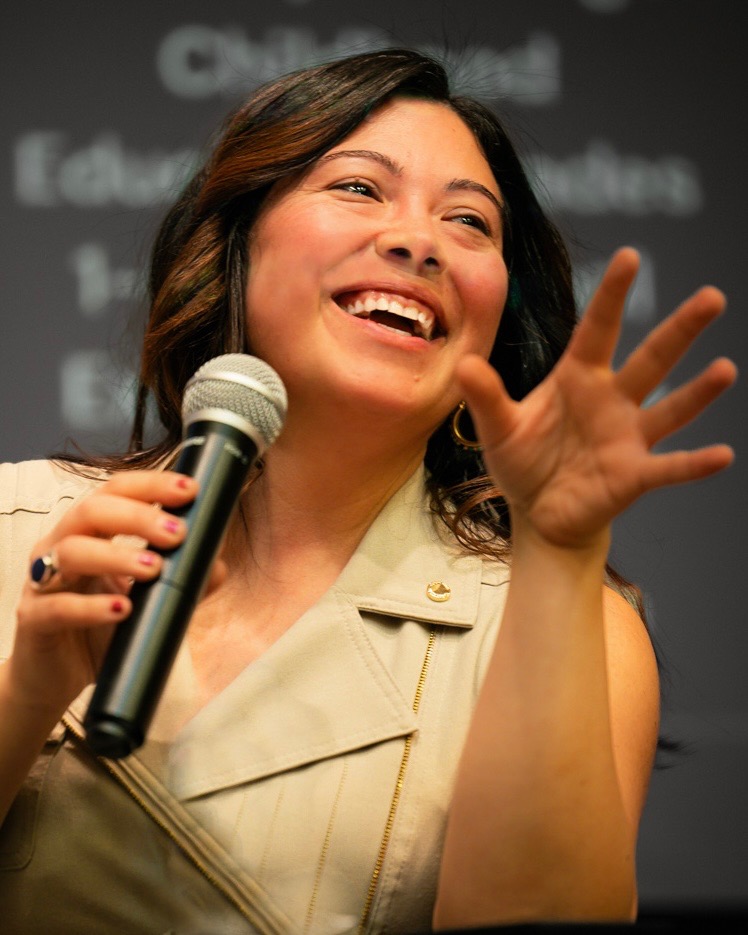
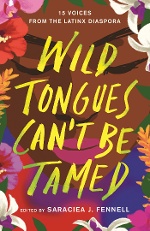 CARLA ESPAÑA: One of my favorite experiences as an ethnic studies professor is teaching this course: The Puerto Rican, Latinx, and Caribbean Child in New York City. I designed the class to start with the complex and varied experiences of the Latinx diaspora. First, I immerse students in personal essays by Latinx authors such as Mark Oshiro, Ibi Zoboi, and Saraciea J. Fennell, in Wild Tongues Can’t Be Tamed: 15 Voices from the Latinx Diaspora (2021). It is when I partner this anthology with Latinx KidLit Book Festival author interviews and craft videos from the festival that my class community of undergraduates comes alive. Whether it is learning about Oshiro’s experience as a transracial adoptee, Zoboi’s childhood in Brooklyn as a Haitian American, or collection editor and author Fennell’s journey to learning about her Garifuna and Honduran roots, the LKBF videos paired with the essays give my students the confidence to nurture their voices. Reading their first personal essays inspired by this immersion has made for a powerful experience every semester.
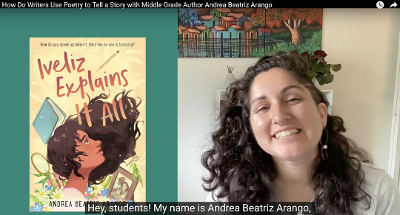 |
| An LKBF video España uses in her classes for education students. Photo courtesy of the Latinx KidLit Book Festival. |
As a faculty member navigating ethnic studies and teacher preparation, I often seek multimodal resources to support my students’ early teacher preparation journey (most are education majors) and their reading and writing lives. I create partner text sets with children’s literature and LKBF craft videos. For example, we read the middle-grade novel in verse Iveliz Explains It All (2022) by Andrea Beatriz Arango, and watch Arango’s LKBF poetry craft video. My students know the story’s content, and they get an example of how to teach writing while working on their teacher demonstration texts.
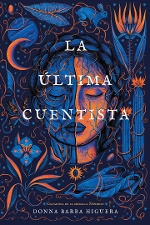
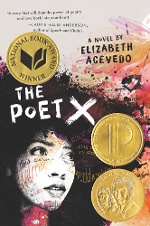
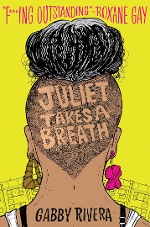 Most undergraduate students who take my courses say they have never seen Latinx children’s literature before our class. In my course on censored and banned books by Latinx authors, we read some picture books and multiple novels, including The Moon Within by Aida Salazar, The Poet X (2018) by Elizabeth Acevedo, and Juliet Takes a Breath (2016) by Gabby Rivera. Some students also read similar literature with me during the same semester in a Spanish teaching course, where we read La última cuentista (2022) by Donna Barba Higuera (the English-language version of this novel, The Last Cuentista, won the Newbery Medal). Their final projects, which included community and school advocacy plans with letters for administrators, families, and students, along with specific references to Latinx literature and Latinx kidlit, not only serve as mentor texts for my students who work on their teaching portfolio contents in English and Spanish but also provide material for them to share with their student teaching and fieldwork school sites as they carry our conversations from the college campus to pre-K–12 settings.
In my long-term work with school districts from New York City to San Antonio and Austin, I often hear the trepidation in practicing teachers who feel unprepared or unfamiliar with Latinx children’s literature. Either they did not get this support in their schooling, or their teacher preparation program did not provide access to contemporary Latinx children’s literature, nor ways of teaching it. It has been a joy to teach teachers how to plan units with multimodal text sets that include LKBF resources such as introductory videos to authors, craft videos to teach writing, picture books partnered with illustrator draw-offs, and the books that begin to populate their classroom and school libraries.
* * *
Although our journeys with Latinx children’s and youth literature have taken us to different educational spaces, we have found a common thread: we seek Latinx literature to heal our inner niñas, nurture our writing, and develop pedagogy to support in-service and pre-service teachers. As Latina scholars, authors, and mothers, we have found solace and spark for creative writing and scholarship through involvement with the Latinx KidLit Book Festival. Whether a personal essay on language and perception of Latinidad, a poem on early schooling, or multimodal projects such as podcasts, vision boards, collages, or zines, engaging with Latinx authors and illustrators has radically changed the way we nourish our creative selves and show up in the classroom.
It is a joy to witness the thoughtful LKBF programming enabling pre-K–12 teachers, teacher educators, and higher education scholars to weave the Latinx writing many of us missed in our early schooling into instructional and community events. We continue to be encouraged by the literature that helps our students see themselves on the page and the stories that arise from those interactions. We hope our experiences also motivate others to consider ways to amplify Latinx stories and voices along with supporting programming like the LKBF, which connects Latinx creatives with the storytellers in our communities.
From the September/October 2025 issue of The Horn Book Magazine.
Single copies of this issue are available for $15.00 including postage and may be ordered from:
Horn Book Magazine Customer Service
magazinesupport@mediasourceinc.com
Full subscription information is here.

Added To Cart
RELATED


RECOMMENDED

Please register with us to continue reading.
ALREADY A SUBSCRIBER? LOG IN
We are currently offering this content for free. Sign up now to activate your personal profile, where you can save articles for future viewing.
ALREADY A SUBSCRIBER? LOG IN
Thank you for visiting.
We’ve noticed you are using a private browser. To continue, please log in or create an account.

Add Comment :-
Be the first reader to comment.
Comment Policy:
Comment should not be empty !!!