


2018 School Spending Survey Report

Appelt v. Caletti
Very different approaches here from Kathi Appelt (Three Times Lucky v.
 Very different approaches here from Kathi Appelt (Three Times Lucky v. Endangered) and Deb Caletti (Temple Grandin v. The Fault in Our Stars). Appelt's voice is very . . . considered, placing her contenders in literary context and braiding her observations on one book with her thoughts about the other and bringing them into contention on theme: "Mo and Sophie [the respective heroines] make us think of the human spirit as a treasure." One wins: "But at the end of the day, it's Sophie who does this best."
We don't need the immediately following caveat: "At least for this reader." We didn't think you were speaking for anyone else.
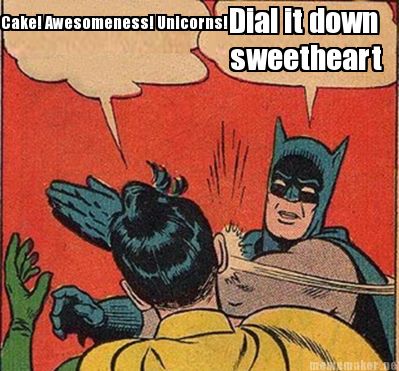
Caletti is practically hyper-ventilating as she begins, having "a moment of panic" (understandable, but still) about comparing a book she had never heard of to the ubiquitous and multi-laurelled John Green ("What about CARNEGIE HALL?"). And I wish I never knew AND NOW I CAN'T UNLEARN IT that Laurie Halse Anderson called John Green "a holy man." As Richard observed to me about Bette Midler in Gypsy, the problem with starting big is that the only place to go is frantic, and Caletti's enthusiasm doesn't leave enough room for our own. (This is something like the point Kenneth Oppel made about Wonder.) But she identifies respective and common strengths and ultimately her context and criteria: "I am a novelist. I love a perfect sentence and a just-right image." She chooses Green because she thinks the writing is richer. I'm inferring because she starts going on about birthday cakes then and I had to look away.
Winner: Appelt.


Added To Cart
RELATED


RECOMMENDED
Please register with us to continue reading.
ALREADY A SUBSCRIBER? LOG IN
We are currently offering this content for free. Sign up now to activate your personal profile, where you can save articles for future viewing.
ALREADY A SUBSCRIBER? LOG IN
Thank you for visiting.
We’ve noticed you are using a private browser. To continue, please log in or create an account.

Add Comment :-
Comment Policy:
Comment should not be empty !!!
windows 7 home premium 64 bit activation key
thank you for your good post.seo servicesPosted : Mar 19, 2013 03:03
Brooke Shirts
Roger, thank you so much for this reviewer-review. I've been lukewarm with the BoB for the past few years because I felt that all of the judges were too nice and not articulate enough about their choices. To tell the truth, they are often dull because of this. Hopefully future judges will rethink their choices!Posted : Mar 18, 2013 04:36
fairrosa
Oh, I totally understand the pragmatic side of these reviews, since they are published as selection aids, mostly for public and school libraries. I am pretty ignorant out of this area: are there more literary reviews for school teachers and parents on children's books as gateways to higher literary appreciation -- and not just for theoretical or academic explorations? Who publish those and where can parents and elementary/middle school teachers access them?Posted : Mar 17, 2013 08:16
Ms. Yingling
I find that the summaries on line don't really tell the whole story, and aren't really helpful. I don't really care if a book is "literary" or not, but I do want to know if it is a good story that my students may find interesting. Perhaps middle school students are rubbing off on me, but a plot summary and a couple of evaluative lines are all that I really want in a book review. I try to visit a lot of different blogs to find out what new books are out there, and I don't need a dissection of all of their qualities.Posted : Mar 17, 2013 05:28
fairrosa
I think however you do it, it will work, somehow :) This really makes one look at the ways we examine books, especially books for children. However, perhaps what needs to be done is an overhaul of the "professional" practices of the reviewers/critics. I feel that this judging of the author-as-judges does not solve your original query -- how, as a field, we examine children's books. Or, as a field, how we write reviews. One of my teachers at school was surprised when she started reading "professional" children's book reviews (trying to find good examples for her students to imitate) that so much of the space is given to just plot summary and only one or two sentences toward the end of each "review" say something evaluative about the book -- and often not illuminating enough on the literary qualities of the books. Since book synopses are so easy to find online these days, perhaps the reviewers can spend more words on dissecting the books' literary merits/flaws?Posted : Mar 17, 2013 03:17