


2018 School Spending Survey Report
Publishers' Preview: Fall 2025: Five Questions for Nicholas Day
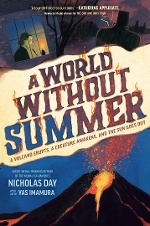
It was A World Without Summer (illustrated by Yas Imamura) after Indonesia’s Mount Tambora erupted in 1815, bringing us climate change, hunger, and…Frankenstein.

This interview originally appeared in the September/October 2025 Horn Book Magazine as part of the Publishers’ Previews: Fall 2025, an advertising supplement that allows participating publishers a chance to each highlight a book from its current list. They choose the books; we ask the questions.
Sponsored by

It was A World Without Summer (illustrated by Yas Imamura) after Indonesia’s Mount Tambora erupted in 1815, bringing us climate change, hunger, and…Frankenstein.
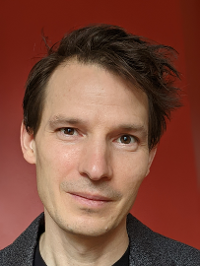 |
| Photo: Isaiah Day. |
1. For you, where did this book begin?
These years — the eruption of Tambora, the creation of Frankenstein, the global climate crisis — have always felt almost hauntingly relevant. A sudden climatic shift that cannot be undone; a scientist who only realizes his mistake once it is too late; a dawning recognition that we’re all in this together. It stays with a person. A World Without Summer is the record of that fascination.
2. What was your first encounter with Frankenstein?
Through the great Boris Karloff, of course. But the original Frankenstein movie has little to do with what Mary Shelley wrote. I’d never read the novel until I began thinking about this book — and when I did, I was stunned. It’s so strange, so rich. Shelley’s novel is subtle, entrancing, and has an extraordinary amount to say to us today — in a way that beautifully echoes the story of the Tambora years.
3. Go ahead and pound the pulpit for science literacy. What would you say first?
There’s no science literacy without narrative. We see and interpret our world through stories, and that includes the world of science. In a sense, everything that stays with us begins with once upon a time…
 4. What does the range of your topics (John Cage, the Mona Lisa, Charles Darwin, babies, and now Tambora) say about you?
I suppose we’re left with capricious or wide-ranging as our options. (Let’s go with wide-ranging, Alex!) But I’m just looking around for things that interest me — and if I’m interested, that’s a sign that maybe there’s a story there to tell.
5. Do you ever feel like you’re writing “from the epicenter of catastrophe”?
I finished this book at the height of the Canadian wildfires. Have we forgotten those weeks already? The air smelled burnt, and the skies were an unearthly color. Even after I was done with A World Without Summer, it felt like I was living inside it. Some days, it still does.
Sponsored by


Added To Cart
RELATED


RECOMMENDED

Please register with us to continue reading.
ALREADY A SUBSCRIBER? LOG IN
We are currently offering this content for free. Sign up now to activate your personal profile, where you can save articles for future viewing.
ALREADY A SUBSCRIBER? LOG IN
Thank you for visiting.
We’ve noticed you are using a private browser. To continue, please log in or create an account.

Add Comment :-
Be the first reader to comment.
Comment Policy:
Comment should not be empty !!!