


2018 School Spending Survey Report

The History of We
Erica Marks on The History of We, written and illustrated by Nikkolas Smith: " The brushstrokes, coupled with the rich, intentional colors, evoke feelings of joy, happiness, struggle, and fear."
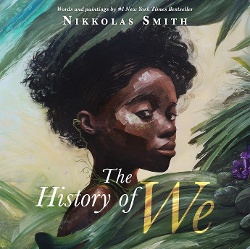 Next up on my list of heavy hitters for potential Caldecott recipients is Artivist and film concept artist Nikkolas Smith. If you’re familiar with Nikkolas’s previous books and social media posts, you know that his art advocates for global change and justice for all. Typically, Smith approaches his illustrations digitally. However in his most recent title, The History of We, Smith took it back to basics.
Before I share my opinion on why I believe it’s a 2026 Caldecott contender, I’ll tell you a little about the story. The History of We is a picture book based on factual information explaining how we are all connected. That’s right — humans originated in Africa, regardless of skin color or background. Not only did Smith use words to share this rarely told story, but he also created the most beautiful illustrations to accompany the text.
As previously mentioned, Smith usually creates digital drawings. For this book, the sketches began digitally before each page was transferred to canvas and hand-painted with acrylics. As readers explore the images in the book, they can see brushstrokes of paint that form the landscapes and figures of the story. The brushstrokes, coupled with the rich, intentional colors, evoke feelings of joy, happiness, struggle, and fear. Smith used a variety of tools — sticks, brushes, scrapers, leaves, and more — to bring the imagery to life.
After hand-painting the art on stretched canvas, his wife and business partner photographed the illustrations we see in The History of We. What I most appreciate about this book are the ombré shades of brown and the hints of gold on the cover and throughout. For me, the green speaks to beginnings, to Mother Earth, and to how we created things such as jewelry, food, and medicine from what surrounded us. Smith gives voice to the voiceless, as he has done many times as an Artivist. Each spread is stunning, and the technique behind the illustrations reflects a deeply creative process.
So, what makes The History of We a 2026 Caldecott contender? There are several reasons. It’s original, appropriate for a child audience to digest, and distinguished. As a reader, if I cover the text and simply follow the images, I’m still drawn into the story they tell. The paintings are so immaculate that I find myself returning to the book again and again, discovering something new each time. I would consider The History of We individually distinct.
I can't wait until the January announcements!
Side note: My daughters still have jackets designed by Smith. I’m quite sure they’re growing out of them, but they refuse to let them go because those designs mean so much to them. Artivism at its finest.
[Read The Horn Book Magazine review of The History of We]


Added To Cart
RELATED


RECOMMENDED

Please register with us to continue reading.
ALREADY A SUBSCRIBER? LOG IN
We are currently offering this content for free. Sign up now to activate your personal profile, where you can save articles for future viewing.
ALREADY A SUBSCRIBER? LOG IN
Thank you for visiting.
We’ve noticed you are using a private browser. To continue, please log in or create an account.

Add Comment :-
Be the first reader to comment.
Comment Policy:
Comment should not be empty !!!