


2018 School Spending Survey Report
Board Book Roundup: That's About the Size of It
What is the ideal trim size for baby books? An average of six-by-six inches is what I see most often. It’s a good size for perusing, carrying, and even stacking by board books’ very young audience. I wonder if this convention harks back to Beatrix Potter, whose own picture books measured just under six inches high and who famously thought that children’s books should be small for little hands. But not all board books use this standard trim size. Sometimes publishers produce them at a height of ten inches or more. Some opt for a squatter stature of five inches or less. And sometimes board books are printed in editions both big and small.
What is the ideal trim size for baby books? An average of six-by-six inches is what I see most often. It’s a good size for perusing, carrying, and even stacking by board books’ very young audience. I wonder if this convention harks back to Beatrix Potter, whose own picture books measured just under six inches high and who famously thought that children’s books should be small for little hands. But not all board books use this standard trim size. Sometimes publishers produce them at a height of ten inches or more. Some opt for a squatter stature of five inches or less. And sometimes board books are printed in editions both big and small. Trim size should be approached thoughtfully as a feature that reflects the theme of the book itself or enhances the reading experience. In a bookstore recently, I watched a grownup with an engrossed toddler, an oversized board book filling their laps and providing an IMAX-like viewing experience.
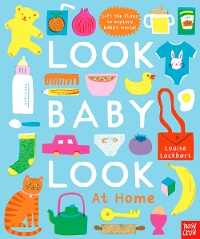
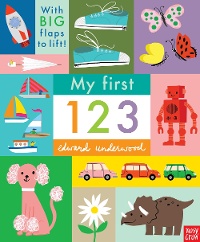
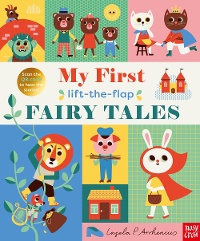
Notable examples of super-sized board books were published in 2025 from Nosy Crow, including Look, Baby, Look! At Home, illustrated by Louise Lockhart; My First 123, illustrated by Edward Underwood; and My First Lift-the-Flap Fairy Tales, illustrated by Ingela P. Arrhenius. All exceeded eleven inches in height, giving toddlers the opportunity to inventory a variety of household objects, count to twenty, and enjoy complete fairy tales, respectively, on eye-catching double-pages. While the goal of these enlarged titles may be to stand out on crowded board-book shelves, they also let the bold and engaging art shine and offer extra space for flaps to lift.
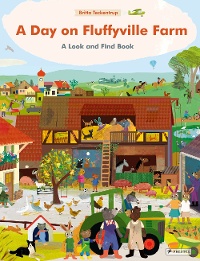 As many of these books are read on the laps of grownups, they can offer an immersive seek-and-find experience. This is evident in one of the largest board books I have ever reviewed at more than thirteen inches high and over ten inches wide: a German import, A Day on Fluffyville Farm: A Look and Find Book (Prestel) by Britta Teckentrup. Here youngsters can explore the same farmhouse and environs on each double-page spread, providing the setting for the lively comings, goings, and even intrigue of the resident critters.
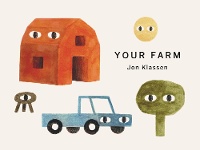
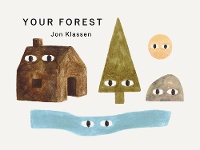
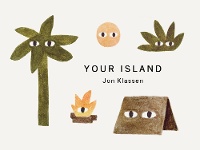
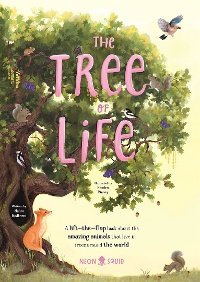 It is particularly satisfying when the size of the book also reflects the subject of the title. The Tree of Life (Neon Squid) by Nalini Nadkarni, illustrated by Kendra Binney, with a height of about thirteen inches, provides profiles of trees around the world, including the banyan, dragon blood, and baobab. Make sure older kids discover this gem, with its rich, lush details and enticing facts underneath delicate flaps. At a shorter and squatter trim size of 5.25 inches tall, the Your Places series (Candlewick) by Jon Klassen, beginning with Your Island, Your Farm, and Your Forest (rev. 1/25), perfectly reflects the second-person narrative that encourages youngsters to take control of the placement of objects, flora, and fauna in diminutive scenes, all brilliantly modified with the word your — as they also feel a sense of ownership over the diminutive books.
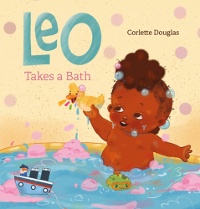
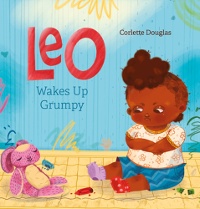
And what of the toddlers who long for independence, often preferring to browse books solo? The Goldilocks-ish trim size for them might be around eight inches square on thick pages with rounded corners, with page thicknesses that are thinner than board pages but thicker than those of picture books. Notable 2025 examples include the Leo series, Leo Takes a Bath and Leo Wakes Up Grumpy (Clavis) by Corlette Douglas. Toddlers will relate to the everyday experiences of this Afro-crowned youngster while they are learning to turn pages and handle books independently.
* * *
And now for the rest of the roundup…While most of the books listed here are in more standard board book dimensions, there is an innovative streak evident in these titles that offers new ideas and formatting features.
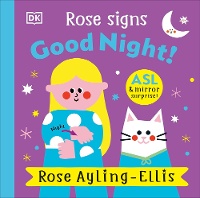 Rose Signs Good Night! [DK Rose Signs]
by Rose Ayling-Ellis; illus. by Margarida Sampaio (DK)
In this brief and playful introduction to ASL (simultaneously published with Rose Signs Good Morning!), Rose walks readers through her nightly routine and demonstrates the signs for bed, bath, brush teeth, and more. On each double-page spread, boldly colored cartoons depict Rose, her scene-stealing cat, Casper, and a friendly, helpful mouse in the bedtime scenarios, while a panel shows Rose modeling the featured ASL sign. For more titles to encourage expressive language (spoken English in these cases), look for Toddler Talk: Let’s Go! and Toddler Talk: All Gone! (Nosy Crow), illustrated by Carolina Búzio.
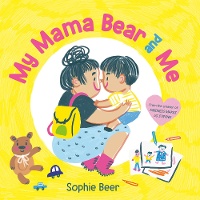 My Mama Bear and Me
by Sophie Beer; illus. by the author (Dial)
A first-person toddler narrator relates life with “Mama Bear” in ursine-tinged and spirited rhyming verse: “Mama Bear is growly roary / with her fangs and claws. / She’s also smart and caring with / her strong and gentle paws!” The text and brightly hued art honestly portray the highs and lows of parent-child relationships. And with no other parent in sight, children from single-parent families will see themselves reflected. For a book about a grandparent-child relationship, see One, Two, Grandma Loves You (Abrams Appleseed) by Shelly Becker, illustrated by Dan Yaccarino.
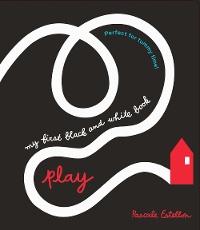 My First Black and White Book: Play!
by Pascale Estellon; illus. by the author (Post Wave)
This beautifully designed, accordion-fold title provides a wordless experience for very young readers. The high-contrast imagery in black, white, and other striking colors is perfect for the development of newborn eyes still learning to focus, and the sturdy construction, which uses thick fabric to join pages, means the book can last as readers grow. Each page features raised tactile elements, including a simple maze to trace and shapes to feel. There is even one flap that toggles back and forth in between two pages, revealing either a friendly white sheep or a cheeky black wolf. A mirror will reflect readers during tummy-time sessions. The separate paper sleeve used to contain the book makes it difficult for library circulation but allows for viewing experiences free of ISBNs and barcodes. A companion title is My First Black and White Book: Touch! For more high-contrast titles that include tactile elements and mirrors, look for the My World series (DK), which includes Happy Baby, Hello Baby, Bright Baby, and Curious Baby by Rebecca Weerasekera; and This Is My World (Little Simon) by Hannah Eliot, illustrated by Emily Spikings.
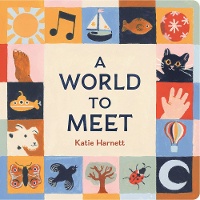 A World to Meet
by Katie Harnett; illus. by the author (Rise/Penguin Workshop)
Babies are introduced to various “things” meted out page by page from dawn to dusk in rhymed couplets and gentle, earth-toned, mixed-media illustrations: “The world is full of things to meet… / Things with hands and things with feet.” Standard board-book objects (tree, boat) and animals (cat, dog) appear, but there are surprises too, introducing rich vocabulary: “Things that twang and things that peal” (a guitar and bell, respectively). It’s lovely, lively, and lyrical. For more lighthearted rhyming titles, enjoy This Dog. That Dog. and Hi, Cat. Bye, Cat. (Harper/HarperCollins) by Jade Orlando, along with Egg, Egg, Egg! and Banana, Banana, Banana! (Post Wave) by Sarah Finan.
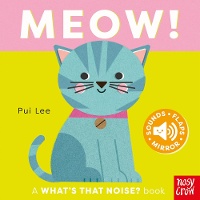 What’s That Noise? Meow! [What’s That Noise?]
illus. by Pui Lee (Nosy Crow)
Little ones are encouraged to guess the animal under a flap by pressing a button on the verso that activates a battery-powered recording of each animal’s signature sound. When the gatefold flap on the recto is opened, readers will see as well as hear the critter. While the text is predictable, the art is enticing, using muted swaths of color and simple shapes. The final spread features a mirror, and the button plays a baby’s giggle while the text declares, “It’s you!” For another board book with sound effects, explore My Animal Sounds (Twirl) with black-and-white art by Xavier Deneux.
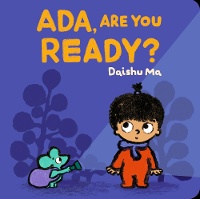 Ada, Are You Ready? [Ada’s World of Fun]
by Daishu Ma; illus. by the author (Candlewick)
Backpack-wearing, flashlight-wielding Mouse comes to a dark forest and sees several glowing white eyes and distinctive shadows hidden in the trees. Mouse identifies Squirrel, Elephant, Duck, Monkey, and Lion by shining a flashlight in their direction and asking, “Are you ready?” When the titular Ada arrives, a cheerful tot with tan skin and bright red outfit, the hidden animals yell “surprise!” for the presumptive first-birthday celebration. Ma’s cartoons feature the same delightful characters in the companion title, Ada, Look at My Teeth! For another guessing game using eyes in the dark, look for Hoot Hoot (Twirl) by Georgette.
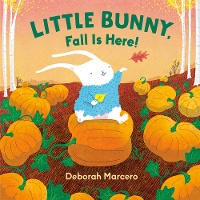 Little Bunny, Fall Is Here! [Little Bunny]
by Deborah Marcero; illus. by the author (Putnam)
When Little Bunny requests a pre-naptime story, Mama is too busy. The rabbit kit turns to other forest critters, but they are all furiously preparing for winter. Little Bunny and Field Mouse finally realize they can create their own story by experiencing the sights and sounds of autumn. Little Bunny, Spring Is Here! is the companion title, and let’s hope winter and summer are not far behind. With text and art that are playful, lyrical, and droll, starring relatable characters, these are sumptuously simple seasonal tales. For more about the seasons, look for Spring ABC (Candlewick) by Jannie Ho, part of the Jannie Ho’s ABCs series.
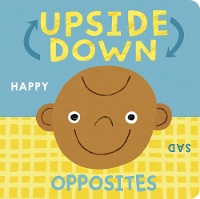 Upside Down Opposites
by Danielle McLean; illus. by Matt Hunt (Tiger Tales)
This title encourages youngsters to flip the book on each and every double-page spread to experience the opposite. A bird flies high, but when turned over is headed in descent. A snail in the rain stays dry by clinging below the leaf, but gets wet when the book is reoriented. McLean’s rhyming text flows smoothly and pairs well with Hunt’s clean, soft-toned graphics. Also in the series: Upside Down Animals. Other titles published in 2025 with novel formats include Count to 10 (and Back Again!) (Workman), illustrated by Hui Skipp, which employs gatefolds on both sides of each double-page spread, and Nosy! (Creative Editions) by Seymour Chwast, a delightful exploration of noses; the book is shaped like a face in profile.
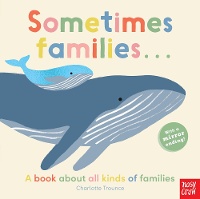 Sometimes Families…
illus. by Charlotte Trounce (Nosy Crow)
Various nonhuman animal families are compared to each other in rhyming text and simple illustrations in muted colors. Fast cheetahs are contrasted with slow sloths, and messy mud-wallowing hippos are distinguished from neat, grooming monkeys. The final double-page spread includes an embedded mirror and encourages readers to reflect on “your own special family.” A lovely introduction to familial bonds in the animal kingdom as well as the concept of opposites. For more animal relationships, this time contrasted with parallel human activities, check out First Joys (Rise/Penguin Workshop) by Véronique Joffre.
 Shabbat Shalom: Let’s Rest and Reset
by Suzy Ultman; illus. by the author (Rise/Penguin Workshop)
In this gentle, cheerful exploration of the Jewish weekly holiday of Shabbat, readers are encouraged to take a break: “On Friday night, Shabbat begins, and we pause the doing to enjoy just being.” Ultman walks readers through Shabbat’s elements in spare prose paired with amusing and surprising anthropomorphic images, including a behatted strawberry seated at the dinner table and smiling Shabbat candlesticks and dishes. For more titles that encourage respite, look for the meditative Peaceful Mind and Loving Kindness (DK), both written by the Dalai Lama and illustrated by Tisha Lee, and the community-oriented Hot Pot Night (Charlesbridge) by Vincent Chen.
From the November/December 2025 issue of The Horn Book Magazine.
 Single copies of this issue are available for $15.00 including postage and may be ordered from:
Horn Book Magazine Customer Service
magazinesupport@mediasourceinc.com
Full subscription information is here.


Added To Cart
RELATED


RECOMMENDED

Please register with us to continue reading.
ALREADY A SUBSCRIBER? LOG IN
We are currently offering this content for free. Sign up now to activate your personal profile, where you can save articles for future viewing.
ALREADY A SUBSCRIBER? LOG IN
Thank you for visiting.
We’ve noticed you are using a private browser. To continue, please log in or create an account.

Add Comment :-
Be the first reader to comment.
Comment Policy:
Comment should not be empty !!!