


2018 School Spending Survey Report

Find more great Horn Book content at these links:
Recommended books: reviews and themed booklists
App and e-book reviews
Movie reviews
Event news and recaps
Events calendar
Color Uncovered e-book review
Like any good discovery museum exhibit, the San Francisco Exploratorium's Color Uncovered interactive e-book (2011) invites users to experiment for themselves as they learn about color.
 Like any good discovery museum exhibit, the San Francisco Exploratorium's Color Uncovered interactive e-book (2011) invites users to experiment for themselves as they learn about color. The relationship between color and light waves, humans' and animals' perception of color, color blending, and complementary colors are just a few of the seventeen color-related topics covered in this well-designed nonfiction offering.
In keeping with the Exploratorium's philosophy that "having fun is an important part of the [learning] process," the text is casual and humorous in tone, frequently highlighting facts that are bizarre or downright (delightfully) gross. A section entitled "How Is Monet Like a Honeybee?" explains that, due to cataract surgery removing the lens from one eye, Monet could see unfiltered ultraviolet light — unlike most humans, but similar to bees. An image of a yellow Downy Cinquefoil flower as viewed with normal human sight is contrasted with one in UV light, revealing the neon shades that bees perceive. "Color to Dye For" discusses the prevalence of carmine dye (made from cochineal insects) in modern products and the popularity of "mummy brown" pigment (made from — you guessed it! — actual mummies) among nineteenth-century painters.
Video and activities enhance the engaging text and crisp (brightly colored, of course) visuals. In the "Shades of Meaning" section, short videos demonstrate the wide range of emotional and cultural associations with colors. Interactive opportunities mostly explore with various optical illusions and tricks of vision related to our perception of color. Each activity is accompanied by information explaining "What's Going On." A few activities require supplies (e.g., a blank piece of paper, a CD case) that users are likely to have at home, but may preclude experimenting on the go. Navigation through the e-book's various chapters is easy, with a table of contents and a menu accessible from every screen.
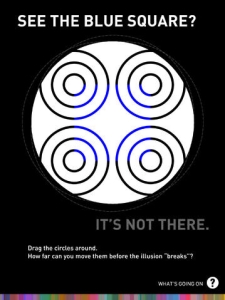
Although the brief articles emphasize breadth of information rather than depth, and seem rather arbitrarily organized, Color Uncovered provides a solid introduction to color and its properties. The e-book may prompt users to research further (or to visit the Exploratorium).
More color information and activities are available on the staff picks page of the Exploratorium's website.
Available for iPad (requires iOS 4.3 or later); free. Recommended for primary users and up.
For more nonfiction science apps for intermediate users, see "Apps for young scientists" in the September 2013 issue of Notes from the Horn Book.


Added To Cart
RELATED


RECOMMENDED

Please register with us to continue reading.
ALREADY A SUBSCRIBER? LOG IN
We are currently offering this content for free. Sign up now to activate your personal profile, where you can save articles for future viewing.
ALREADY A SUBSCRIBER? LOG IN
Thank you for visiting.
We’ve noticed you are using a private browser. To continue, please log in or create an account.

Add Comment :-
Be the first reader to comment.
Comment Policy:
Comment should not be empty !!!