



2018 School Spending Survey Report

Caldecott eligibility
Getting into the weeds on eligibility.
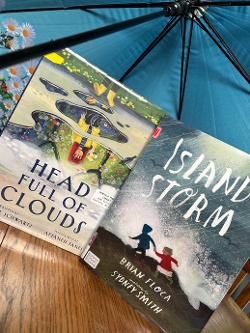 As we’ve covered amply through the years, the Caldecott Medal “shall be awarded annually to the artist of the most distinguished picture book for children published by an American publisher in the United States in English.”
If you’re fuzzy on Caldecott criteria, I recommend Julie Hakim Azzam’s “A Refresher on Caldecott Criteria,” and I always like to cite Robin Smith’s “How to Read a Picture Book, The Caldecott Edition.”
Today, I thought I’d get into the weeds on eligibility, because this is something the Caldecott Committee spends time thinking about, and it comes up in our musings here on Calling Caldecott as well.
This year, for instance, Dean Schneider and I were discussing the excellent Island Storm, which is written by Caldecott winner Brian Floca with pictures by Sydney Smith. This atmospheric, dramatic book with rich, expressive watercolor and gouache images moves from ominous to frightening to transportive to comforting. Smith’s illustrations add emotional depth to Floca’s tale about a storm tearing across a small island. If Floca had done the illustrations himself — as he did in 2014 Caldecott winner Locomotive — the book would be eligible for Caldecott, but would it have been such a powerful book? We can’t know, but an inescapable fact is that Sydney Smith is Canadian and lives in Canada, which renders this book ineligible for Caldecott because the winning illustrator must either be a U.S. citizen or reside in the U.S. I won’t be surprised to see this book on most of the best books of the year lists this year, but, as my father likes to say, you can’t win them all.
Kitty and I also had an eligibility discussion about Head Full of Clouds by Joanne Schwartz, illustrated by Afsaneh Sanei. This is a book published by Tundra, a Canadian publisher, but according to the CIP page, it’s “published simultaneously in the United States of America by Tundra Books of Northern New York.” Every year, Tundra publishes one or two books simultaneously this way that I think are worthy of Caldecott consideration, but I am unsure if they are eligible or not, because even if the creators meet the citizenship/residency requirement, the book also has to be published in the United States. If you spend a little time with the Caldecott Manual (and who doesn’t? I’ve read that full manual more than I’ve read almost any other book, aside from Bark, George by Jules Feiffer*), you’ll see that in the case of simultaneous publications, the question comes down to where the bulk of the editorial work happened for the book. If it happened in Canada, it’s not eligible; if it happened in the U.S., it is. If the Caldecott Committee wanted to seriously consider this book, they and the ALSC Office would have to investigate further.
These kinds of questions also come up with illustrators who are not U.S. citizens but split their time between living in the U.S. and another country. Sometimes there’s only sketchy biographical info about an illustrator, and the Committee has to do more investigation. I don’t want to say that the Committee builds a dossier on each illustrator, but they have to do some deep dives on the citizenship and residency of the illustrators of the books they’re serious about. We can be a bit more casual here at Calling Caldecott, but we also try to do our due diligence to determine eligibility.
*I decided to become belatedly outraged that Bark, George didn’t receive at least a Caldecott Honor back when it was published, but then I looked up what did win that year. Ooof! Some tough competition in 1999. Sorry, George.


RECOMMENDED
Please register with us to continue reading.
ALREADY A SUBSCRIBER? LOG IN
We are currently offering this content for free. Sign up now to activate your personal profile, where you can save articles for future viewing.
ALREADY A SUBSCRIBER? LOG IN
Thank you for visiting.
We’ve noticed you are using a private browser. To continue, please log in or create an account.

Add Comment :-
Be the first reader to comment.
Comment Policy:
Comment should not be empty !!!