


2018 School Spending Survey Report

Clearing the brush
The New York Times' sensationalizing of the practice of abridging adult nonfiction titles for a younger audience rather misses the point, which is about commerce, not censorship.
 The New York Times' sensationalizing of the practice of abridging adult nonfiction titles for a younger audience rather misses the point, which is about commerce, not censorship. The main difference between the adult and juvenile editions of these titles is that the latter are shorter, provide less background material, and are less detailed. As an avid young reader of adult biographies I would have delighted in abridgments that skipped all the stuff about the subjects' forbears. Of course, I could just do it myself and did. Maybe if we all loosened up a bit about just what "reading a whole book" means, more kids might relax more at the prospect of "difficult" books.
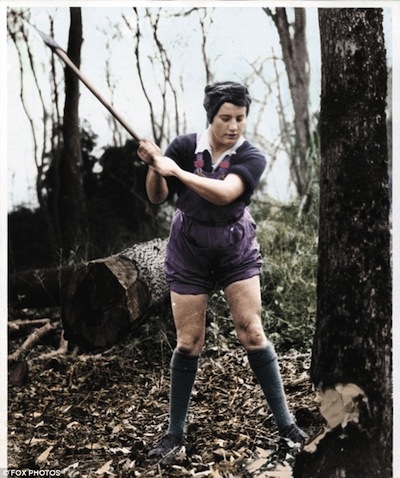
But if Laura Hillenbrand was so hot to rethink Unbroken for a new audience--or even just for me--she could have used the second chance to lose what is possibly my least favorite metaphor of 2014: "Forests of men had gone down at the sight of her."


Added To Cart
RELATED


RECOMMENDED
Please register with us to continue reading.
ALREADY A SUBSCRIBER? LOG IN
We are currently offering this content for free. Sign up now to activate your personal profile, where you can save articles for future viewing.
ALREADY A SUBSCRIBER? LOG IN
Thank you for visiting.
We’ve noticed you are using a private browser. To continue, please log in or create an account.

Add Comment :-
Comment Policy:
Comment should not be empty !!!
Kiersi
I love this line, in particular: "It can be hard to maintain the drama and nuance of historical narratives while targeting the under-13 crowd." Yes, of course. Blame the audience for your inability to write compellingly at that age level.Posted : Oct 13, 2014 10:10
Thom Barthelmess
I can't work myself into a lather over this one. Are there folks who believe that successful writing for young people includes the expurgation of the nasty bits (however they care to define them)? Sure. And I'm glad, because I've worked with plenty of families who believe the same thing, and I want and need to have books for them. Is commerce a driving force in the publishing industry? I think so. Are these two factors at play in the adaptation of adult books for a child/young adult audience? Probably. So what. Those adaptations might be just the thing for some readers. I believe Ann Bausum began her research for Stubby the War Dog thinking of it as a book for young readers and subsequently adapted it "up" for adults in another edition. Call me a Pollyanna, but I'm ready to believe that in plenty of cases where authors are passionate about their subject matter and want to share it as broadly as they can. Good for them.Posted : Oct 08, 2014 10:09
Roger Sutton
I was imprecise. To me, the article gives the impression that the main reason to re-edit these books for younger readers is to tone down the levels of sex and violence. I think instead that these books are being published because they are spinoffs, taking the work that has already been done by the author and the publisher and the marketplace and changing it just enough to sell it all over again.Posted : Oct 08, 2014 07:06
city zen
Not sure what you're really arguing about. The piece in the TIMES is quite clear that this is all about commerce, and does not say anything about censorship.Posted : Oct 08, 2014 06:46
Kate Barsotti
You are right. Different versions for different audiences make sense. You don't want to gloss over everyone's sins and peccadilloes, but there is time for that later. And you're also right about that metaphor. She's too good to have left that one in.Posted : Oct 08, 2014 04:31