


2018 School Spending Survey Report
Family and resilience
The protagonists of these eight memorable, emotional novels, recommended for middle- and/or high-school readers, cope with challenging situations within their families or in their families’ larger circumstances.
The protagonists of these eight memorable, emotional novels, recommended for middle- and/or high-school readers, cope with challenging situations within their families or in their families’ larger circumstances.
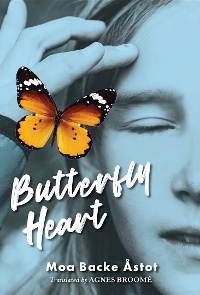 Butterfly Heart
by Moa Backe Åstot; trans. from Swedish by Agnes Broomé
Middle School, High School Levine/Levine Querido 184 pp.
10/25 9781646145751 $19.99
A Swedish teenager copes with the loss of her grandfather by exploring her indigenous Sámi heritage in this translated work from 2024 Printz Honor author Åstot (for Fire from the Sky). Vilda is on the cusp of her fourteenth birthday when her beloved Áddjá, who calls her his “darling butterfly,” dies unexpectedly. To make matters worse, puberty has arrived, including the appearance of Vilda’s first period and tumultuous feelings of rage and lust. She picks fights with her sister and mother, ghosts her best friend, and develops an unrequited crush on a cute older boy. As Vilda searches for relief from her anger and sadness, she is drawn to her family’s roots. Through study of the Sámi language, fittings for a traditional dress known as a gábdde, and healing conversations with her family, Vilda realizes that the best way to preserve her memories of her grandfather is to embrace the heritage he cherished. This intimate and introspective exploration of grief, adolescence, and culture will resonate with young teens and provides a captivating window into a unique way of life whose traditional language and practices are endangered. JENNIFER HUBERT SWAN
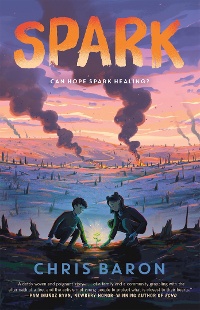 Spark
Spark
by Chris Baron
Middle School Feiwel 320 pp.
7/25 9781250864741 $19.99
e-book ed. 9781250864758 $11.99
Eighth grader Finn Katz’s mother says that if a wildfire ever threatens their small California town, they should be sure to save the black-and-white photograph above the fireplace of Finn’s great-grandfather Phineas Katz, a Jewish immigrant. It will “remind us of what is important / where we’ve come from, and what we’ve been through.” Though readers learn little about Phineas beyond what he stands for, Mrs. Katz’s words prove prophetic: a fire does come; the family must flee their house (with the photograph); and ordinary middle-school life quickly turns into a survival tale amidst an apocalypse. Baron’s verse novel successfully takes readers into Finn’s world, from daily life with family, friends, and school to their frantic escape from the “fires everywhere.” As the fires gather power, so do the poems — with active verbs, short lines, white space, and propulsive energy. When it’s safe to return home, the poem “Hope” sets another tone in its elegant simplicity, speaking to the essential theme: finding hope “once everything in your life has changed.” As Finn ultimately realizes, a spark can start a fire, but it can also ignite change. The novel ends with a return home and a commitment to roots, rebuilding, and the environment. An author’s note describes Baron’s real-life experiences with wildfires fueled by climate change and overdevelopment. DEAN SCHNEIDER
 Leave It on the Track
by Margot Fisher
High School Dutton 336 pp.
11/25 9780593858394 $19.99
Sixteen-year-old Morgan “Moose” Shaker barely escapes the fire that destroys her beloved roller rink in small-town Utah and claims the lives of her two dads, the only out-and-proud gay couple in their conservative community. Still coming to terms with her own queer identity, Moose moves in with her older half-sister, Eden, in Portland, Oregon, where she’s surrounded by open celebration and pride. This visibility only deepens her sense of alienation: she feels not “queer enough,” too scarred (physically as well as emotionally) and too angry to belong. When Eden nudges her to join her roller-derby team, Moose finds herself drawn into a fast-paced, bruising sport that demands emotional resilience as much as physical strength — and offers both a sanctuary and a proving ground. The novel opens with gripping immediacy, then slows as Moose navigates the unfamiliar rhythms of her new life. Debut author Fisher effectively captures the sport’s grit and camaraderie while deepening Moose’s emotional world through her complicated crush on a teammate who embodies everything Moose longs to become. Exploring themes of trauma, self-acceptance, and belonging, this moving story is a raw, tender exploration of survival, identity, and the slow work of healing after loss. ALICIA ROGERS
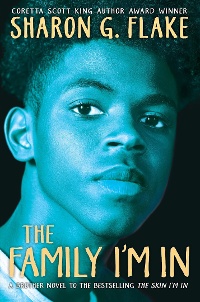 The Family I’m In
by Sharon G. Flake
High School Scholastic 288 pp.
4/25 9781338573206 $18.99
e-book ed. 9781338573220 $18.99
In this “brother novel” to The Skin I’m In and The Life I’m In (rev. 3/21), Flake explores the connection between fathers and sons. John-John McIntyre and his best friend, Caleb, enjoy archery, Star Wars, and puzzles: “geeky nerd stuff,” as he puts it. John-John imagines that his father wishes he had a different son—Big John always talks about how popular he was with girls when he was in high school and how John-John needs to toughen up and start dating. He wishes his dad were more like Caleb’s father; even though Mr. P. hasn’t been the same since he suffered a brain aneurysm, he still listens to and respects Caleb. When John-John tries to live up to his father’s expectations, he finds himself saying and doing things that get him in trouble with his friends and at home. As with Flake’s previous books, readers will be able to relate to the struggles many young people face when they don’t fit their family’s perceived ideal. NICHOLL DENICE MONTGOMERY
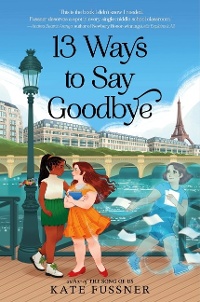 13 Ways to Say Goodbye
by Kate Fussner
Middle School Harper/HarperCollins 304 pp.
3/25 9780063256989 $19.99
In this introspective verse novel, American narrator Nina spends the summer with her aunt in Paris, as her whole family used to do regularly; the visits stopped three years earlier after Nina’s older sister, Lily, died in a bicycle accident. Nina intends to complete Lily’s unfinished “13 Before 13” list before her own thirteenth birthday at the end of the trip. As she crosses off items (which range from “eat a food I’ve never heard of before” to “first kiss”), visions of moments from her sister’s life appear, revealing aspects of their not-always-perfect relationship. Lily complained that Nina was a copycat, and Nina’s arc of finding what she needs now for herself is both poignant and hopeful. Those needs include more open discussion of the family’s loss with her parents as well as openness about her attraction to other girls (and the summer includes the sweet, tentative beginnings of a romance with Sylvie, a girl in her art class). Accessible free verse keeps pages turning, with variations in line breaks and placement on the page helping to pace emotion and, especially, introduce the more fantastical moments. A touching portrait of a preteen in a particular, sad situation whose coming-of-age journey may resonate more broadly. SHOSHANA FLAX
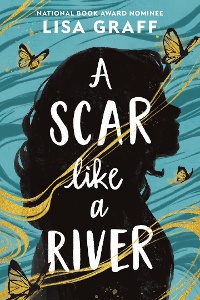 A Scar like a River
by Lisa Graff
Middle School Ottaviano/Little, Brown 400 pp.
2/26 9780316570800 $17.99
Thirteen-year-old Fallon has been keeping secrets for as long as she can remember, such as how she got the scar on her face and why she can’t stand to be near her aunt Lune. She’s content with these secrets remaining a part of her past until the news of her uncle Geebie’s death sends deeply buried traumatic memories shooting to the surface. Graff doesn’t mince words in this story of recovering from abuse, and neither does our spirited and tenacious main character, who always says what she means. These traits are put to the test when Aunt Lune, the only family member who knew about Uncle Geebie’s actions (and yet told no one), moves in with Fallon’s family. Through group therapy and a close look into her family’s past, Fallon learns she may have more in common with Aunt Lune than she thought. Graff strikes a thoughtful balance between the heaviness of Fallon’s hurt and the humor and awkwardness intrinsic to middle school. Her parents are loving and supportive of her both before and after they learn of the abuse. Though it isn’t integral to the plot, Fallon’s mother has an undiagnosed chronic illness that affects her day-to-day existence, a reality not often reflected in children’s fiction. Two instances of child physical and sexual abuse are described in some detail but are done so carefully and without sensationalism. HILL SAXTON
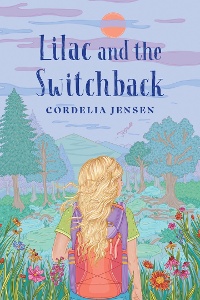 Lilac and the Switchback
by Cordelia Jensen
Middle School Holiday 304 pp.
8/25 9780823458325 $17.99
Lilac is heading into seventh grade, and things are changing. She has lived with an aunt, uncle, and cousin since her mother’s death but questions her place in that family. Meanwhile, she tries reconnecting with her absent father and finds shifting friendships challenging to navigate. But a new interest in reclaiming an abandoned hiking trail with her school trailblazing “tramily” (“trail family”) provides a therapeutic outlet and a place for connection. In this well-paced novel in verse, Jensen creates a sympathetically flawed and vulnerable protagonist. Choices regarding white space, text placement, italics, indenting, and font make transitions and interactions easily distinguishable and heighten the emotional impact. Throughout, Jensen parallels Lilac’s search for her place in the family, among her peers, and in the world with reflections on hiking and nature: “the safest way up / a steep mountain / is often by switchback, / a path with alternate / ascents and descents.” Acceptance gradually comes as Lilac learns that other families “are complicated, / even they / have missing people, / people who matter / but aren’t there, / people who live somewhere / underneath the surface / of their everyday lives.” An epilogue brings the school year to an end as everyone gathers for the opening day of the trail the students have cleared, a symbolic and rewarding conclusion. SYLVIA VARDELL
 We Fell Apart: A We Were Liars Novel
by E. Lockhart
High School Delacorte 320 pp.
11/25 9780593899168 $22.99
The summer after she graduates from high school, Matilda receives an email from the father she’s never known. Kingsley Cello, a famous artist, invites her to his home at Hidden Beach and says he has a painting he wants to give her. Intrigued and feeling at loose ends — her existing relationships are tenuous — Matilda makes the trip from Los Angeles to Martha’s Vineyard. When she arrives, Kingsley is nowhere to be found, and the people she does meet, including her half-brother, Meer, and Kingsley’s romantic partner, June, dismiss his absence as artistic eccentricity. Strange discoveries follow as Matilda gets to know Kingsley’s off-the-grid household, leading eventually to major revelations and then devastating consequences. Matilda’s yearning for connection with and validation from her father is palpable, as is her confusion about the unconventional situation; occasional passages of cascading short lines create a sense of immediacy and, as the story progresses, of her trying to piece things together. Set in the same world as We Were Liars (rev. 5/14) and Family of Liars (rev. 5/22), this novel takes place immediately after the former’s pivotal event; as an opening note from Lockhart indicates, it can be understood on its own but includes spoilers for the previous books. Like those, this book’s plot hinges on secrets, but an affecting emotional arc is at its core. A concluding note expands on literary and other references. SHOSHANA FLAX
From the January 2026 issue of Notes from the Horn Book.


Added To Cart
RELATED


RECOMMENDED

Please register with us to continue reading.
ALREADY A SUBSCRIBER? LOG IN
We are currently offering this content for free. Sign up now to activate your personal profile, where you can save articles for future viewing.
ALREADY A SUBSCRIBER? LOG IN
Thank you for visiting.
We’ve noticed you are using a private browser. To continue, please log in or create an account.

Add Comment :-
Be the first reader to comment.
Comment Policy:
Comment should not be empty !!!