


2018 School Spending Survey Report
Five questions for Chanel Miller
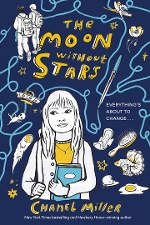
On the heels of Newbery Honor Book Magnolia Wu Unfolds It All, Chanel Miller creates a character who recommends it all. Luna, the seventh-grade protagonist of The Moon Without Stars (Philomel, 10–13 years) has plenty of bibliotherapy recommendations for her classmates, who leave her notes about their problems. But that doesn’t mean she has all the answers when it comes to navigating middle-school social dynamics.
On the heels of Newbery Honor Book Magnolia Wu Unfolds It All, Chanel Miller creates a character who recommends it all. Luna, the seventh-grade protagonist of The Moon Without Stars (Philomel, 10–13 years) has plenty of bibliotherapy recommendations for her classmates, who leave her notes about their problems. But that doesn’t mean she has all the answers when it comes to navigating middle-school social dynamics. For more, see the Friendship tag in the Guide/Reviews Database and our list “Lessons in friendship” in this issue of Notes.
1. Your previous novel, Magnolia Wu Unfolds It All, is for a younger audience. Why did you decide to tackle middle school next?
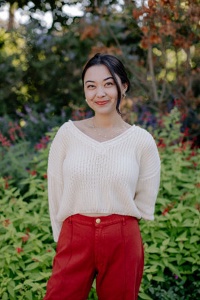 |
| Photo (c) Maria Tiffany. |
Chanel Miller: I was drawn to the landscape of constant change in middle school: social hierarchies are rearranged, kids are embraced and excluded, bodies are morphing, and everyone’s running from class to class instead of sitting in one homeroom. The daily fluctuation held infinite potential for chaos and confusion. I wanted to put Luna right in the thick of it, where she’d inevitably make mistakes. Then I wanted to challenge myself to figure out how she’d learn to give herself grace and repair her relationships, which is something I think all of us are always trying to get better at.
2. Luna becomes known for recommending books to her classmates to help them deal with tween issues both big and small. Was there a book that did that for you when you were in middle school?
CM: My class read Jerry Spinelli’s Stargirl in eighth grade, and there are moments of rejection in that book that still feel achy to think about. I was always struck by how words on a page could create an enduring emotional blow. To me books are valuable because they’re confirmation that someone out there has gone through something similar. They’re the closest thing we have to stepping into someone else’s consciousness, collecting clues on how to get through life.
3. Can you tell us about the development of Luna’s voice and her emotionally perceptive character? Were her more flawed moments difficult to write?
CM: My friend is a seventh-grade English teacher, and she invited me to sit in on her class. I spent the day observing, taking notes, and asking questions. When I told the kids I was writing a book, one girl specifically asked me if I could make sure that my main character was “flawed.” She said she’d read a lot of books where the protagonist was an empowered and witty hero, but came off as too perfect. After her request, I went home and started pulling the threads of Luna’s life apart, making things more messy. I understood that if Luna was flawed, it’d be a gift to readers who would then have permission to be flawed too.
 4. Was it hard to balance the heavier themes (bullying, Luna’s mother’s mental health) with the lighter aspects of the novel?
CM: It’s interesting that as an author I can select how many bad things happen. In real life, none of us get to decide what heavy things we’re handed. Kids deal with things they shouldn’t have to deal with all the time, so I didn’t want to sanitize my books and create a false, smooth world. I wanted to acknowledge that yes — hard, unfair, scary things happen, but amidst it all you continue to build a life. You integrate the awful moments and balance them with lovely ones. No matter what’s weighing you down, you try to stay attuned to the little joys: receiving a note from someone you like, noticing a bird’s nest outside your window, learning how to knead dough and make a cheesy pizza crust. Those ordinary moments are just as important.
5. How much of you as a writer is there in Luna as a writer?
CM: I always loved writing, but grew up in the Bay Area where kids were extraordinarily smart at math and science. I tried for a long time to succeed at every subject and felt ashamed when I faltered. In retrospect, I wish I’d owned my love of storytelling from an earlier age. We’re not meant to be the best at everything; life is about finding something that makes you come awake inside and following it. When I created Luna, I made sure that she proudly claimed her writer identity from day one.
From the February 2026 issue of Notes from the Horn Book.


Added To Cart
RELATED


RECOMMENDED
Please register with us to continue reading.
ALREADY A SUBSCRIBER? LOG IN
We are currently offering this content for free. Sign up now to activate your personal profile, where you can save articles for future viewing.
ALREADY A SUBSCRIBER? LOG IN
Thank you for visiting.
We’ve noticed you are using a private browser. To continue, please log in or create an account.

Add Comment :-
Be the first reader to comment.
Comment Policy:
Comment should not be empty !!!