


2018 School Spending Survey Report
Five questions for Hyewon Yum
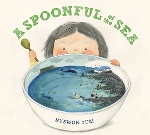
Hyewon Yum is a prolific picture-book creator, both as a solo author-illustrator and as an illustrator of books written by other authors (including one Boston Globe–Horn Book Honor Book!). In A Spoonful of the Sea (Norton, 4–8 years), which she both wrote and illustrated, the main character’s “birthday soup is seaweed soup” or miyeok-guk — and she learns how the soup connects her to the haenyeo, women divers, who came before her.
Hyewon Yum is a prolific picture-book creator, both as a solo author-illustrator and as an illustrator of books written by other authors (including one Boston Globe–Horn Book Honor Book!). In A Spoonful of the Sea (Norton, 4–8 years), which she both wrote and illustrated, the main character’s “birthday soup is seaweed soup” or miyeok-guk — and she learns how the soup connects her to the haenyeo, women divers, who came before her. See also our list “Tasty traditions” in this issue of Notes.
1. How did the idea of writing a picture book about miyeok-guk and motherhood come about?
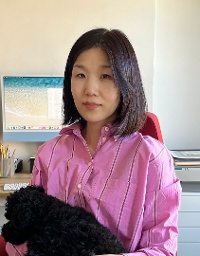 |
| Photo: Sahn Choi. |
Hyewon Yum: A few years back, I met my friend Hana Nakamura for tea and she told me this interesting story about miyeok-guk: During Korea’s Goryeo Dynasty, postnatal care for mothers included eating miyeok (seaweed), following the observation that whales ate seaweed after giving birth. Its detoxifying function helped with recovery. I had never heard of this before. I ate this soup on every birthday, and for a month after I had my own child, but I had never given it a thought. Hana, who is also my art director at Norton, thought this story could be a book. I wasn’t so sure.
But I kept the seed, and I kept thinking about this beautiful sea creature, a mother eating miyeok in the deep sea. The image stuck, and I thought about how we always learn from nature, from mothers, from tradition that continues through to daughters. This led me to think about haenyeo, their mother/daughter relationship, and their lives shaped around the sea. Then my main character was “born,” and it became the story of this book.
2. What was especially interesting, or especially challenging, about writing and illustrating on this topic?
HY: Usually, my stories come from my own experiences, my childhood memories, or my life as a mother. This time, it was about a haenyeo family, and I didn’t really know much about it. I checked the historical facts, but there wasn’t much I could rely on. So I decided to write it as a fictional story. Still, I wanted to show haenyeo’s life as accurately as possible, even though it’s an imagined story. I researched how their clothing changed over the years, what their kitchens looked like, and how their methods changed. I read books about haenyeo, went to Jeju Island, and visited the haenyeo museum. I also had fun imagining my characters’ names, ages, where they live — even though it doesn’t really show in the book, I kept the record for myself.
 3. When you both write and illustrate, how much do you plan about each before you start work on the other?
HY: If I only illustrate the book, it’s very straightforward. I start to imagine how the characters are going to be and where they live, which is very enjoyable. Then I plan out the dummy with the thumbnail sketches. So it takes a month or so for planning before sketches.
However, when I write and illustrate, I can’t plan anything since there is nothing concrete to start from. Hana told me the story in this book four years ago, and I couldn’t quite figure out how to tell it for a long time. It took me two or three years before I finished the manuscript and thought it was good enough for submission. By then, I had a few images in my mind, but it still needed some research. I felt responsible for recreating this story about the tradition properly.
Sketches took a few months, I think. Then I went to Jeju Island and saw the sea, the black-rocked beaches, and the town built with those rocks. It helped me create the scene and the color palette when I finally worked on the final art.
4. Would you want to be a haenyeo?
HY: I wish I could, but they say being a haenyeo is destined from above. It’s also hard work, sometimes miserable. Not everybody can dive deep without any protection and hold their breath for so long, even with practice. I am not a good swimmer. Sadly, I have no potential as a haenyeo.
5. What other foods from Korean culture are meaningful to you?
HY: Songpyun, traditional Korean half moon–shaped rice cakes made from rice flour, filled with sweet ingredients like sesame seeds, chestnuts, or red beans. They’re traditionally steamed on a bed of pine needles, giving them a subtle pine flavor. We eat this on Chuseok (추석) which is Korea’s major mid-autumn harvest festival. When I was little, my father’s big family (he had twelve siblings) got together at my uncle’s house for the celebration. We made this rice cake together, we picked chestnuts, gathered pine needles. And we kids had so much fun guessing which ones were the ones with our favorite filling.
From the January 2026 issue of Notes from the Horn Book.


Added To Cart
RELATED


RECOMMENDED
Please register with us to continue reading.
ALREADY A SUBSCRIBER? LOG IN
We are currently offering this content for free. Sign up now to activate your personal profile, where you can save articles for future viewing.
ALREADY A SUBSCRIBER? LOG IN
Thank you for visiting.
We’ve noticed you are using a private browser. To continue, please log in or create an account.

Add Comment :-
Be the first reader to comment.
Comment Policy:
Comment should not be empty !!!