



2018 School Spending Survey Report
Spring 2016 Publishers' Preview: Five Questions for Lois Sepahban
This interview originally appeared in the March/April 2016 Horn Book Magazine as part of the Spring Publishers’ Preview, a semiannual advertising supplement that allows participating publishers a chance to each highlight a book from its current list.
This interview originally appeared in the March/April 2016 Horn Book Magazine as part of the Spring Publishers’ Preview, a semiannual advertising supplement that allows participating publishers a chance to each highlight a book from its current list. They choose the books; we ask the questions.
Sponsored by
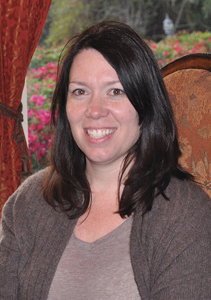
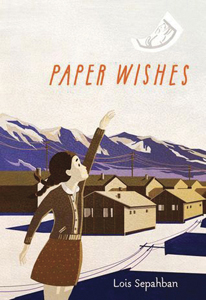
When Manami is, along with her family, interned after the attack on Pearl Harbor, she doesn’t realize that she’ll have to leave her dog behind, and Manzanar is a place where she could really use a friend. Paper Wishes is nonfiction writer Lois Sepahban’s first novel.
 1. Since Florence Crannell Means’s The Moved-Outers was published in 1945, the WWII internment of Japanese Americans has provided a rich theme in children’s literature. Is that intimidating or inspiring?
LS: A bit of both, actually. So many stories have been told that I felt like whatever I contributed needed to offer something new. I taught third grade for many years, and I wanted to write a story that young readers could read and relate to. At the same time, I wanted it to be a story that older kids and adults would also want to read.
2. What was the most surprising thing you discovered in researching Paper Wishes?
LS: I knew, of course, that many internees were children — but I didn’t realize that half of them were. I kept thinking about how awful it must have been for parents to raise their children in those prisons. I admire their struggle to maintain some sense of normalcy in such a desolate place.
 3. Why did you choose to tell the story in the present tense?
LS: I imagine that if adult Manami looked back on her time at Manzanar, Paper Wishes is not necessarily the story she would tell. That story would be colored by what happened after Manzanar. Ultimately, Paper Wishes had to be present tense because it is the story of Manami’s months at Manzanar as she experiences them.
4. Do you worry that a story like Manami’s could happen here today? (I do.)
LS: Unfortunately, I do, too. When I worry about this, I remind myself that very few Americans publicly opposed the internment camps during WWII. That gives us an opportunity for today. If we choose to speak out against political rhetoric that approves the internment camp system, perhaps we can make sure it will never happen again.
5. First novel! What lessons did you bring to it from your nonfiction writing?
LS: Writing nonfiction taught me how to outline, which translated into learning how to plot. It taught me to research — how to identify good sources and where to find them. Writing historical fiction allows me to indulge my love of research.
Sponsored by


Added To Cart
RELATED


RECOMMENDED

Please register with us to continue reading.
ALREADY A SUBSCRIBER? LOG IN
We are currently offering this content for free. Sign up now to activate your personal profile, where you can save articles for future viewing.
ALREADY A SUBSCRIBER? LOG IN
Thank you for visiting.
We’ve noticed you are using a private browser. To continue, please log in or create an account.

Add Comment :-
Be the first reader to comment.
Comment Policy:
Comment should not be empty !!!