


2018 School Spending Survey Report
Five questions for Stephanie Graegin
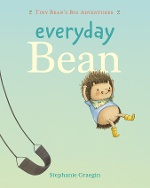
Meet Bean and Grandma, the heartwarming hedgehog protagonists of Stephanie Graegin’s Everyday Bean (Tundra, 4–7 years), the first book in the Tiny Bean’s Big Adventures series. With eleven brief stories, the book lives in a transitional space between beginning readers and younger chapter books — and is also great for reading aloud.
Meet Bean and Grandma, the heartwarming hedgehog protagonists of Stephanie Graegin’s Everyday Bean (Tundra, 4–7 years), the first book in the Tiny Bean’s Big Adventures series. With eleven brief stories, the book lives in a transitional space between beginning readers and younger chapter books — and is also great for reading aloud. For more books for new and emerging readers, see our list "Reading: the fun starts here" in this issue of Notes and the Younger Fiction subject tag in the Guide/Reviews Database.
1. This was your “first solo venture beyond picture books” [per our review]: was there anything particularly daunting (or not!) about this transition?
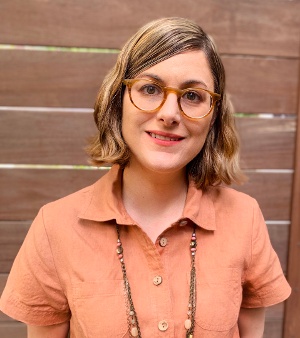 Stephanie Graegin: I think if I were to plan this out from scratch — like: I’m going to make these books with short stories and they’ll have narrative threads, humor, limited characters, etc. — that would be daunting! But Everyday Bean started out as fun writing exercises. They were my attempt at creating micro story arcs. I wanted to understand the primary colors that constitute a story (to use an art metaphor). I started out as a children’s book illustrator, so I’m completely at ease with expression via images. Writing, though, doesn't come with that same confidence, even though I'm a voracious reader. So I approached the writing process as I would drawing: by sketching on Post-it notes. I wrote parts of a story arc on Post-its and rearranged them to make concise little stories. Over time I was able to build upon the characters and expand the world. Like with my drawings, I started to get a foothold on how to use writing as a way of thinking [through a story]. And soon I had all these short “chapters” about Bean. The chapters felt more interesting to me than a traditional single narrative story arc. It was freeing and fun to have all these little slices of life that worked together to form a cohesive world.
2. Why was it important for you to focus on everyday adventures?
SG: When you’re a little kid, everyday experiences feel monumentally important: your favorite blanket, the love you have for your best stuffie, mastering that one swing in the park, finally growing too big for a specific sweater, being in a bad mood for no particular reason. These experiences are completely relatable to every kid, even those who aren’t tiny hedgehogs! Being that Everyday Bean is the first in a series, it made sense to have stories that can act as an introduction to Bean’s world.
3. Some of the stories are about Bean, while others are about Bean and Grandma. How did you strike a balance?
 SG: It wasn’t really planned from the outset, but as I assembled, edited, and rewrote the stories I felt the need for Bean to have independence — to make trouble and get into trouble. Grandma could then be freed up to act as a foil and grounding character for Bean…and maybe in the future Grandma can actually reverse roles with Bean or even be a partner-in-crime. Balancing a character’s time on the page is crucial — luckily I wrote more stories than what was needed for one book. I would lay out the stories in little piles on my living room floor so I could see everything together. I would then group them, change the order around, remove stories that felt weak or just were too similar, and rewrite ones that I liked but that weren’t “right.” I did this until they gelled.
4. Your art style has a cozy hand-drawn appearance and yet it’s digitally made. What appeals to you about drawing on an iPad (“while snacking on giant strawberries”)?
SG: The invention of the Apple Pencil was what moved me over to digital; it comes so close to feeling like an actual pencil. Before then I would draw in pencil on paper and spend hours scanning and stitching these drawings together, then color them in Photoshop. It was a very inefficient workflow and I was getting little sleep. With the iPad (and Apple Pencil), the process is faster and mostly seamless: from the iPad I can easily bring projects over to Photoshop. It's also a great tool for developing a book. I can add in text and quickly move things around and add in sketches, trying endless variations of drawings and text with ease. I’ll print these out, then read them aloud and edit them, and look at them as an actual book object. This workflow also allows me to use bits and textures from the physical-art world. If, say, I want a sky to have a specific watercolor look, I can make a bespoke watercolor piece, scan it in, and use it in my file. It really allows you to take the best parts from the digital and physical art worlds.
5. What is Bean's tiny ghost story? Has she told it to you? (And how about Grandma’s giant strawberries story?!)
SG: Ah yes, Bean is quite the chatterbox. Here’s what she told me…
There is a tiny ghost,
the very same size as tiny Bean.
She loves to scare Bean’s friends,
but somehow she never scares Bean!
One of Grandma’s passions is growing her giant and quite delicious strawberries, which she generously shares. But she hasn’t told me her giant-strawberries story yet. She’d much rather spend her time reading her latest mystery book!
From the September 2025 issue of Notes from the Horn Book.


Added To Cart
RELATED


RECOMMENDED

Please register with us to continue reading.
ALREADY A SUBSCRIBER? LOG IN
We are currently offering this content for free. Sign up now to activate your personal profile, where you can save articles for future viewing.
ALREADY A SUBSCRIBER? LOG IN
Thank you for visiting.
We’ve noticed you are using a private browser. To continue, please log in or create an account.

Add Comment :-
Be the first reader to comment.
Comment Policy:
Comment should not be empty !!!