


2018 School Spending Survey Report

Find more great Horn Book content at these links:
Recommended books: reviews and themed booklists
App and e-book reviews
Movie reviews
Event news and recaps
Events calendar
Five questions for the 2025 Massachusetts Book Award winners
The Massachusetts Book Awards “recognize significant works of fiction, nonfiction, poetry, translated literature, graphic novel/memoir, and children’s/young adult literature written, illustrated, or translated by current Commonwealth residents.” We chatted with Picture Book/Early Reader Award winner Linda Booth Sweeney and Middle Grade/Young Adult Award winner Robin Wasley...
The Massachusetts Book Awards “recognize significant works of fiction, nonfiction, poetry, translated literature, graphic novel/memoir, and children’s/young adult literature written, illustrated, or translated by current Commonwealth residents.” We chatted with Picture Book/Early Reader Award winner Linda Booth Sweeney and Middle Grade/Young Adult Award winner Robin Wasley, which gave us a chance to explore two very different books: Linda’s picture book The Noisy Puddle: A Vernal Pool Through the Seasons (Owlkids, 4–8 years), illustrated by Miki Sato; and Robin’s zombie novel Dead Things Are Closer (Simon, 14 years and up).
1. What does the Massachusetts Book Award mean to you?
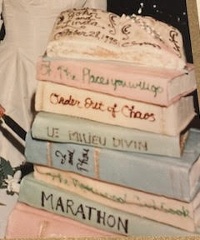
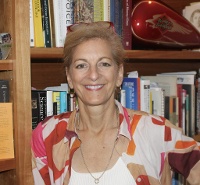 Linda Booth Sweeney: I grew up in Millis, a small town outside of Boston. No internet, no cell phones and for me, no TV (with the exception of Sunday nights when our parents let us watch The Wonderful World of Disney.) I lived for books; at that time it was Encyclopedia Brown and anything by James Herriot. In the fourth grade, I wrote my first “book." The topic? Why being a librarian was the best job in the world. I started the College of Holy Cross as an economics and accounting major but eventually found my way back to books—and bliss—as an English major. At my wedding, my cake was shaped like a stack of books, and every guest went home with a hand-picked book from the New England Mobile Book Fair.
 For me, books have always been how I learn, dream, and connect — with myself and others — and travel to new worlds. That’s why the Massachusetts Book Award means so much to me. I deeply admire and celebrate how the Massachusetts Center for the Book honors our state’s rich literary history and culture while at the same time nurturing a love of reading for people of all ages.
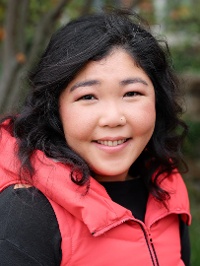 Robin Wasley: When I first started writing over twenty years ago, it was honestly an experiment to see if I could finish a book. Over the years, I wrote ten books that ended up being practice for this one. I’ve quit before. But quitting isn’t always forever. There isn’t a time limit on a dream. For me, it took years of trial and error, learning my craft, and finding my voice. People always say to write the book only you can write. Dead Things Are Closer than They Appear is that book for me, which I could only have written after a whole lot of life. This book is my debut, and the whole time I was writing it, I had no idea if it would be published, or if these characters would one day be loved by anyone other than me. Connecting to people with our stories is ultimately why we do this job. That the book of my heart is now being recognized for the Massachusetts Book Award is beyond anything I expected and is such a tremendous honor.
2. Linda, can you describe your process for creating a rhyming text that also conveys information?
LBS: It’s hands-on and messy! My books usually begin with a phrase that won’t let me go. For The Noisy Puddle, those first lines arrived during a walk through Hapgood-Wright Forest in Concord. I saw a lone goose, a lone crow, and a row of daffodils. It was so peaceful. Then suddenly I couldn’t hear myself think! The noise was coming from what sounded like a thousand wood frogs in a big, leaf-covered puddle. I laughed and wondered aloud: “What happened to the forest’s hush? Why is everything… in a rush?” Those lines became part of the book.
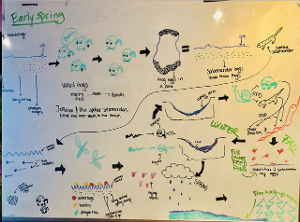 From there I dove into the science. I read textbooks and articles, scoured websites, and interviewed experts until I felt like I had a near-PhD in vernal pools. (During that time, dinner time at our house was punctuated by random vernal pool facts: Did you know fairy shrimp only live in vernal pools and they swim upside down?!) Once I’d done my research, I covered my kitchen table with index cards full of key phrases and rearranged them into rhymes within the thirty-two-page format. Because the science mattered, my daughter and I tracked species’ arrivals through the seasons and mapped them out on a whiteboard. That visual timeline helped me as I created the rhyme out of the index cards while, at the same time, maintained the scientific accuracy. It took years to get right, but looking back on it, all that effort, combined with Miki Sato’s exquisite paper-cut collage illustrations and rigorous science, made the book into something really special.
3. Linda, how does your work as an educator inform the way you present science in a picture book?
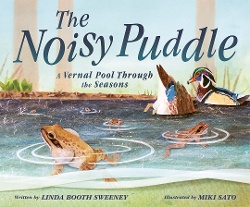 LBS: As a systems educator, I help people of all ages—children, Fortune 500 execs, social entrepreneurs—to “think in systems” and see how parts connect and interact to shape the world around them. With The Noisy Puddle, I wanted young readers to experience that same perspective in a playful and surprising way. A vernal pool may look like just a muddy puddle, but it’s actually a thriving ecosystem: a tightly interconnected community of plants and animals that plays a vital role in the life of a forest.
Most people have never even heard of a vernal pool. Neither had I before I wrote this book. Yet these pop-up spring ecosystems help protect communities from floods, filter water, and keep the surrounding forests healthy. Because they’re often overlooked, they also face real threats from development and agriculture. I wrote The Noisy Puddle as an invitation for children to fall in love with the unusual cast of characters in these pools. As they grow older, the hope is that these same children will become nature stewards, sharing the magic of vernal pools with their children and take steps to protect them.
4. Robin, how do you balance character development and humor with the suspense and gore of a zombie novel?
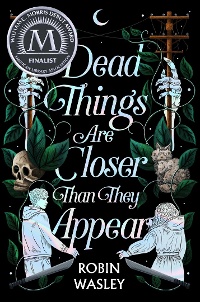 RW: I grew up on genre-mashy teen shows where the magic and monsters represented internal struggles and life hardships, where the overarching story was always about kids trying to survive in the real world. They were never just one thing. I wanted Dead Things Are Closer than They Appear to be a rollercoaster of emotion, for readers to go from laughing to crying in a heartbeat. Because that’s what the world feels like to me. Life is never just comedy, or romance, or drama, or horror. It’s equal parts beautiful and terrible. It’s everything everywhere all at once.
The characters were always first and foremost in my mind, though. The plot came later as a means to an end. My writing process starts with who the characters are, what they sound like, how their relationships develop, and how they grow and change. This story was always intended to be about how each person contributed to the others’ journeys. When it came to the catalyst of said journeys, that’s when I said, “Okay, so what if I added zombies?”
5. Robin, to borrow a question from our Perception and Reality special issue this year…how does reality shape the fantasy you create?
RW: In this book, I wanted to highlight a Korean American experience of growing up in a homogenous town, how that can contribute to isolation and insecurity, and, at the same time, how meeting diverse groups of people can help you see the world and yourself more fully. My own experience as a transracial adoptee in a family of transracial adoptees reflects this. It was important to me to show that being Korean American looks different for everyone. There is no “typical.” When we tell our stories, we broaden what’s normal for everyone.
To be super real, though, if I were in a magical zombie apocalypse, I’d either wait for someone to save me or just lay down and die. I’d want to go in the first wave. Writing a heroine with no special skills who just happens to be there might reflect my reality a bit too much. In my defense, most of us would not just dash out there with a sword on day one. Sometimes we are not extraordinary in a way that is easily visible. But I do think it’s the ordinary in us, what makes us human, that’s the most magical.


Added To Cart
RELATED


RECOMMENDED
Please register with us to continue reading.
ALREADY A SUBSCRIBER? LOG IN
We are currently offering this content for free. Sign up now to activate your personal profile, where you can save articles for future viewing.
ALREADY A SUBSCRIBER? LOG IN
Thank you for visiting.
We’ve noticed you are using a private browser. To continue, please log in or create an account.

Add Comment :-
Be the first reader to comment.
Comment Policy:
Comment should not be empty !!!