


2018 School Spending Survey Report
Funny folktales
Hard-boiled nursery rhymes, a one-that-got-away big-fish tale, and more.
 David Levinthal recasts the events of fairyland as crimes ("The Three Bears" is a breaking-and-entering case; "Snow White" is an attempted murder) in Who Pushed Humpty Dumpty?: And Other Notorious Nursery Tale Mysteries. Binky, a laconic and rumpled frog detective, investigates the mayhem, and Levinthal’s fun with scene-of-the-crime details is contagious. John Nickle’s dramatic, hard-edged paintings, with their hint of grotesque misanthropy, fulfill the story’s potential. (4–7 years, Random/Schwartz & Wade)
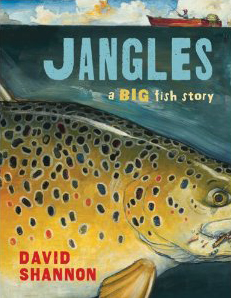 In Jangles: A Big Fish Story by David Shannon, a father tells his son a one-that-got-away tall tale. Jangles, legendary trout of Big Lake, had "broken so many fishing lines that his huge, crooked jaw was covered with shiny metal lures and rusty old fishhooks." Working with a palette as dark and evocative as the depths in which his elusive character dwells, Shannon provides formidable close-up views of this battle-scarred, larger-than-life character. (4–7 years, Scholastic/Blue Sky)
 The calculating dinos of Mo Willems’s Goldilocks and the Three Dinosaurs plan to lure Goldilocks into their home with chocolate pudding, then swoop in for a snack of "chocolate-filled-little-girl-bonbons." However, the over-eager (and highly unsubtle) creatures give themselves away, allowing their would-be victim to beat a hasty retreat. The meta elements fly fast and furious throughout this zany tale. (3–5 years, HarperCollins/Balzer + Bray)
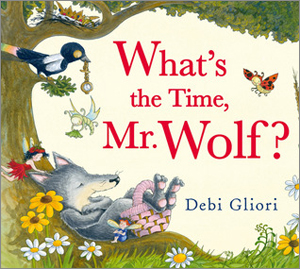 Snarky Mr. Wolf puts up a tough front in Debi Gliori’s What’s the Time, Mr. Wolf?, but neither the story’s recognizable nursery-rhyme and fairy-tale characters—nor readers—will buy his big-bad act. As the hours pass, readers will quickly figure out that it’s a special day, leading to the story’s rewarding climax: a surprise birthday party. Watercolor and pen-and-ink illustrations show Mr. Wolf’s mood going from grumpy to grateful. (3–5 years, Walker)
From the November 2012 issue of Notes from the Horn Book.


Added To Cart
RELATED


RECOMMENDED
Please register with us to continue reading.
ALREADY A SUBSCRIBER? LOG IN
We are currently offering this content for free. Sign up now to activate your personal profile, where you can save articles for future viewing.
ALREADY A SUBSCRIBER? LOG IN
Thank you for visiting.
We’ve noticed you are using a private browser. To continue, please log in or create an account.

Add Comment :-
Comment Policy:
Comment should not be empty !!!
Mary Pettit
The way I learned it back in the ancient days of library school was that folktales and folklore were the passed-down version of stories, not deliberately altered versions of tales. We were taught that those stories that authors had written which had elements of folktales in them were called fairy tales. No?Posted : Nov 18, 2012 04:54