


2018 School Spending Survey Report
Geology nonfiction that rocks
These rockin' nonfiction titles use a variety of formats and approaches to offer intermediate readers engaging lessons in earth science.
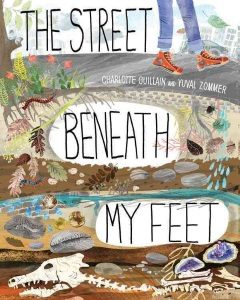 Author Charlotte Guillain and illustrator Yuval Zommer's The Street Beneath My Feet provides a journey to the center of the Earth via a clever vertical accordion-fold book design. Turn the sturdy pages from bottom to top to view layers of animal, vegetable, and mineral life all the way down to the inner core; begin again from the end to see many new sights on the return journey to the surface. The science is simple but made glorious by the illustrations, homely and fantastic at once. The pictures are packed with detail, but each one says adventure (look, diamonds!) as much as education. (Quarto, 7–10 years)
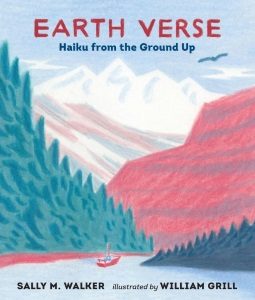 In Earth Verse: Haiku from the Ground Up, Sally M. Walker presents correct geological terminology and information in a series of haiku with an approachable, child-friendly sensibility (e.g., with its crust, mantle, and core, Earth is akin to "a hard-boiled egg"). William Grill employs soft edges, swirls of motion, and a limited palette to provide a sense of the places and action in his dynamic illustrations. An icon in the bottom corner of each page directs readers to the back matter for more on specific topics such as fossils, glaciers, and groundwater. (Candlewick, 7–10 years)
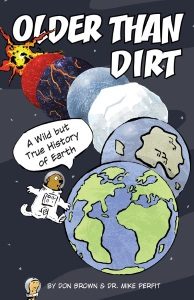 A science-savvy groundhog schools a new-to-Earth's-history worm on the planet's geological past in Older than Dirt: A Wild but True History of Earth by Don Brown and Mike Perfit. The graphic-novel format, light tone, and amusing repartee keep up the pace over the course of an impressive number of subjects, from the formation of the planet through the various processes that resulted in oceans and continents, Earth materials, and life. Concrete examples and illustrations effectively combine science and humor. It's a whirlwind tour but with clear explanations and a coherent line of reasoning. (Houghton, 9–12 years)
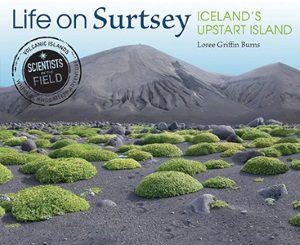 Loree Griffin Burns's latest Scientists in the Field entry Life on Surtsey: Iceland's Upstart Island follows researchers including entomologist Erling Ólafsson, whose fascination with the pristine island that was formed in 1963 led to a decades-long career documenting its ecology. Burns meticulously documents every detail of life in a remote field station, prominently featuring the scientists' research methods and tools. Vivid photographs of field locations convey Surtsey's rocky landscapes and inhabitants. (Houghton, 11–14 years)
From the January 2018 issue of Notes from the Horn Book.


Added To Cart
RELATED


RECOMMENDED

Please register with us to continue reading.
ALREADY A SUBSCRIBER? LOG IN
We are currently offering this content for free. Sign up now to activate your personal profile, where you can save articles for future viewing.
ALREADY A SUBSCRIBER? LOG IN
Thank you for visiting.
We’ve noticed you are using a private browser. To continue, please log in or create an account.

Add Comment :-
Be the first reader to comment.
Comment Policy:
Comment should not be empty !!!