


2018 School Spending Survey Report
Her-stories
March is Women's History Month, and this is an especially noteworthy year for one of the subjects of these four YA biographies (and possible vindication for another one of them whose notorious reputation precedes her).
 Hillary Rodham Clinton: A Woman Living History by Karen Blumenthal offers a positive yet frank account of Clinton's life through the 2015 announcement of her presidential candidacy. Beginning with her subject's birth in 1947, Blumenthal chronicles Clinton's youth, marriage, and career; while it does not linger on the scandals that have touched the Clinton family, the text is nonetheless direct in its reporting of them. Throughout, Clinton's accomplishments — and sometimes her foibles — take center stage. (Feiwel, 13–16 years)
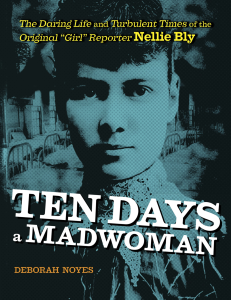 Budding journalist Nelly Bly arrived in New York in 1887 unprepared for sexist rejection at the major papers. Determined to make her journalistic mark, she accepted an assignment at the World to go undercover inside the "lunatic asylum" on Blackwell's Island and subsequently report on conditions there. In Ten Days a Madwoman: The Daring Life and Turbulent Times of the Original "Girl" Reporter Nellie Bly, author Deborah Noyes smartly uses this hook to engage readers, enriching this and other Bly experiences (such as her famous around-the-world race) with well-placed sidebars and clips from Bly's articles. (Viking, 11–14 years)
 In Radioactive!: How Irène Curie & Lise Meitner Revolutionized Science and Changed the World, Winifred Conkling delves into the lives of Irène Curie, the Nobel Prize–winning French physicist who co-discovered artificial radioactivity (and daughter of Marie Curie), and Austrian physicist Lise Meitner, who co-discovered nuclear fission. Although the two women hardly came in contact with each other — and when they did they frequently disagreed — both were pioneers in their fields, yet remained underappreciated in the larger cultural narrative of scientific endeavors. Conkling details the women's personal and professional lives, spending the majority of the book describing their accomplishments and their lasting impact on the commercial, military, and scientific realms. (Algonquin, 13–16 years)
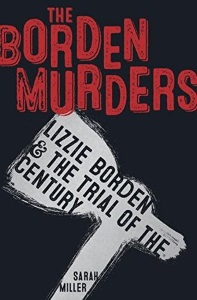 Lizzie Borden took an axe, / Gave her mother forty whacks. / When she saw what she had done, / She gave her father forty-one. "Today," Sarah Miller writes in her introduction to The Borden Murders: Lizzie Borden & the Trial of the Century, "everything most people know of Lizzie Andrew Borden is contained in those four singsong lines of doggerel. And nearly everything in those four lines is wrong." Miller relates both the immediate events leading up to the crime and the arguments for and against Borden that would eventually be used in the legal proceedings, drawing heavily on primary source quotations. The Borden Murders joins the growing body of narrative nonfiction that, despite reading like a novel, nevertheless scrupulously hews to the facts. (Random/Schwartz & Wade, 11–14 years)
From the March 2016 issue of Notes from the Horn Book.


Added To Cart
RELATED


RECOMMENDED
Please register with us to continue reading.
ALREADY A SUBSCRIBER? LOG IN
We are currently offering this content for free. Sign up now to activate your personal profile, where you can save articles for future viewing.
ALREADY A SUBSCRIBER? LOG IN
Thank you for visiting.
We’ve noticed you are using a private browser. To continue, please log in or create an account.

Add Comment :-
Be the first reader to comment.
Comment Policy:
Comment should not be empty !!!