


2018 School Spending Survey Report
Five questions for Julie Berry
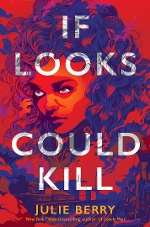
Julie Berry’s work ranges from light middle grade and picture books to sweeping YA-to-adult crossover historical novels with fantasy elements. Her latest, If Looks Could Kill (Simon, 14 years and up), is one of those historical fantasy novels (with a vengeance — literally). Set primarily in New York’s Bowery in 1888, it pits an imagined Jack the Ripper against Salvation Army volunteers and Medusa-inspired powers.
Julie Berry’s work ranges from light middle grade and picture books to sweeping YA-to-adult crossover historical novels with fantasy elements. Her latest, If Looks Could Kill (Simon, 14 years and up), is one of those historical fantasy novels (with a vengeance — literally). Set primarily in New York’s Bowery in 1888, it pits an imagined Jack the Ripper against Salvation Army volunteers and Medusa-inspired powers. For more books with fantasy elements for middle- and/or high-school readers, see the Fantasy tag in the Guide/Reviews Database or our list “Mythical and magical" in this issue of Notes.
1. What challenges were there in interweaving fictional and even fantastical elements with real historical events and people?
 |
|
Photo: Travis Tanner. |
Julie Berry: To me, blending Medusa and Jack the Ripper didn’t feel like a great stretch creatively, perhaps because Jack the Ripper is, himself, mythologized, looming large over our collective consciousness much as Medusa does. I had some work to do, however, to create a paradigm for how Medusa-ness worked in this story’s world and for twenty-first-century readers. I deliberately reinterpreted the myth and expanded a Medusa’s range of possibilities to create Medusas who could turn their powers on and off and modulate their degree of effect on others (i.e., they can do more, or, rather, less than turn someone to stone, if they want to). The hardest place to integrate myth and history was theological, oddly enough. I had chosen Salvation Army volunteers for my main duo, Tabitha and Pearl, for reasons that felt important to the story, and the early Salvation Army was unabashedly religious. This meant my characters would absolutely face a crisis of faith when they discovered the pagan Medusa in their midst. Reconciling this monstrosity with their nineteenth-century biblical Christianity took careful spadework. I always want to take the social, psychological, and spiritual worldview of my characters seriously and at face value.
2. What was it like to inhabit such wildly different narrative points of view?
JB: Writing from Jack the Ripper’s vantage point was a first for me. I’ve written from the point of view of antagonist characters before, but Jack was one for whom I had to work hard to find something approaching sympathy, or, if sympathy is a bridge too far, I’ll say understanding. You can condemn something utterly and still try to understand its reasons and motivations, even if they, too, must be denounced. My desire was to show how Jack justified his actions without the novel justifying them to the reader. I was glad that Jack came in small doses and glad that mostly I got to spend time with anxious, affable Tabitha.
3. How do you choose what your next project will be?
 JB: Variety is important to me creatively. When I move from one project to the next, I’m looking for something different in tone, subject matter, voice, and age range each time. I need to challenge myself creatively, or I don’t grow, and the project doesn’t force me to rise to the occasion. I also get bored too easily to stay in one groove for much longer than a book takes me to write.
4. To borrow a question from our Perception and Reality special issue this year…how does reality shape the fantastical elements you choose to incorporate into your stories?
JB: What a great question. The elephant in the room with this novel that pits Medusa against Jack the Ripper is the culture we’ve inherited that is so casual about violence against women that it’s barely remarked upon unless the violence itself is interesting, as Jack’s was. Or if the outcomes are interesting, as in the case of the assaulted girl Medusa becoming a Gorgon. Jack the Ripper treated women’s bodies as disposable property, viewing their humanity with chilling indifference. So did Poseidon. So have countless violent and predatory men through the ages and up to this day, including many men who become untouchable through wealth and fame. That reality sat beside me at my writing desk, and the fantasy fiction I worked on took shape accordingly.
5. You own a bookstore! What will you say to customers to hand-sell this novel?
JB: I’m eager to learn what I will say, as I’ve been touring nonstop since the book released, so I haven’t had a chance to be in the store and chat it up with customers who come in. But being a bookseller has trained me to lead with the concept or pitch when it’s provocative, so I expect I’ll hand it to them and say something like, “This is my newest YA-to-adult crossover novel, If Looks Could Kill, which pits Medusa against Jack the Ripper. It’s dark and sinister and suspenseful and all about girl power. Who’s the monster? Who’s hunting whom? You decide.”
From the October 2025 issue of Notes from the Horn Book.


Added To Cart
RELATED


RECOMMENDED

Please register with us to continue reading.
ALREADY A SUBSCRIBER? LOG IN
We are currently offering this content for free. Sign up now to activate your personal profile, where you can save articles for future viewing.
ALREADY A SUBSCRIBER? LOG IN
Thank you for visiting.
We’ve noticed you are using a private browser. To continue, please log in or create an account.

Add Comment :-
Be the first reader to comment.
Comment Policy:
Comment should not be empty !!!