


2018 School Spending Survey Report

Lai v. Griffin
Did anyone see the recent episode of Project Runway where they designed tearaway clothes for strippers? BOTH teams lost.
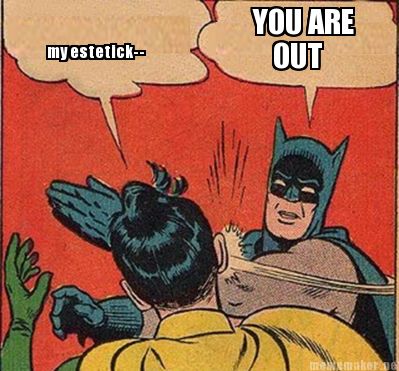 Did anyone see the recent episode of Project Runway where they designed tearaway clothes for strippers? BOTH teams lost. I wish we could do the same here.
Pitting Starry River of the Sky against Splendors and Glooms, Thanhha Lai incomprehensibly evokes a video game junkie "from, say, Dallas" to say that both books work as "entertainment." And that's it, really (the essay is only 250 words). She chooses Splendors and Glooms for no particular reason.
Meanwhile Paul Griffin, judging Seraphina and No Crystal Stair, starts out like he's Time magazine bon vivant Joel Stein, devoting the first five hundred words to sucking up to his publisher, who gives him Snickers. (I picture Scottie Bowditch tossing them into a pool while dolphin-Griffin does tricks.) But when he gets over himself, Griffin does have interesting things to say about his contenders, praising both books for their plot: "this is what most stood out to me—the meticulous scene-by-scene construction and perfect pacing. Both books are just good old fashioned storytelling: provocative beginnings, wild-ride middles, and endings that are at the same time happy and heart-rippingly poignant." It's all good until it comes time for a decision, which he decides to hand over to SLJ editor Rick Margolis along with a bag of Snickers. When Rick graciously denies the bribe, Griffin flips a coin and No Crystal Stair wins. So do wimps everywhere.
So it's Griffin, for having smart observations. But as Heidi Klum would unsmilingly warn, "You're in. But not by much."
Round two is completed and the winner is Martine Leavitt. We will have one more round here, comprising the final three BoB judges (Lynne Rae Perkins, James Patterson, and Frank Cottrell Boyce).


Added To Cart
RELATED


RECOMMENDED
Please register with us to continue reading.
ALREADY A SUBSCRIBER? LOG IN
We are currently offering this content for free. Sign up now to activate your personal profile, where you can save articles for future viewing.
ALREADY A SUBSCRIBER? LOG IN
Thank you for visiting.
We’ve noticed you are using a private browser. To continue, please log in or create an account.

Add Comment :-
Comment Policy:
Comment should not be empty !!!
DavidB
I wonder if one thing that might help is if you have a clear sense of what you want this contest to be- what you want the judges' decisions to do. At one level, there's the take that this is primarily about fun, about seeing whether you made correct predictions and rooting for your favorites. Clearly that is a part of the contest, but if that's all it is, then who cares if the judge flips a coin? When I look at this contest and the Morning News ToB that inspired it, there are several more specific great things that can come out of the tournaments. -They encourage both readers and judges to read books that they wouldn't ordinarily have picked up. That's something that people repeatedly state as one of the best outcomes of the contest. That has nothing to do with the judges' decisions, but it's worth mentioning. -They provoke discussions about the books; often by putting two seemingly unlikely pairings next to each other, it can spark new insights about them. A good judges' decision can do that beautifully (and it doesn't even have to get into flaws). It can also provoke interesting discussions about the books in the comments, too. Bringing up flaws can really spark that discussion, in part because they give some friction to rub up against. A lot of hand-wringing and praise leaves little room for more than "my bracket's still intact" or "boring decision." That said, the commenting crowd in the BoB is oddly reluctant to engage each other. There seemed to be a lot of people itching to talk about TFiOS and the reasons they disliked it, but that conversation never took off- nobody was engaging each other. (Compare that to the comments on the ToB, which can be really great discussions). Good decisions may help with that, but it may never happen (crowd's too small and people drop a comment and never come back? The mock award blogs scratch that discussion itch and people don't need the BoB to provide that space?). -For me, one of the most interesting things that the decisions can do is to contribute to a conversation about what standards we use to judge books. As I understand it the ToB was founded as a way of mocking awards by pointing out the arbitrary nature of such judgements. But articulating a reason or a standard by which to measure to very different books is a really fascinating conversation, whether you agree with the standards or not. For this, judges aren't bounded by the criteria of the ALA awards- they can set whatever standards they want and explain to us why they matter. That's what makes coin-flipping so annoying to me- you're refusing to engage in what can be the most interesting part of the exercise. This is just my view from the peanut gallery, but it seems to me that if we want this to be more than just a bit of fun (even if it is also a lot of fun, which it absolutely is), having a sense of what you want it to be and communicating that to the judges might help get the kinds of decisions you seem to want.Posted : Apr 02, 2013 02:26
fairrosa
Roger, I think it is important to give the judges some background information and I am certain that some of it was explained to all the judges. (I do not deal directly with any of our judges, so I cannot speak on this matter with great knowledge.). However, BoB judging is by nature entirely different from a published speech by an award winner and the judges are all contributing their time and effort purely out of their kind hearts and a passion for the field. We are still learning and will hone the process better for the future.Posted : Apr 01, 2013 06:10
marjorie
hm, did i say it was? if so, i apologize. i am quite aware of what literary criticism (vs criticism-criticism) is!Posted : Apr 01, 2013 05:08
marjorie
ooh, next year SLJ could make BoB bingo cards (i have bingo on the brain after writing bad apology bingo) of phrases and tones judges should not use! "apples and oranges" "comparisons are odious" "so hard" "lyrical" "flip a coin" "bribe" "task" "impossible" [expression of regret at taking this assignment] "bribery" "how can i" "holy man" and on the positive tip, for every mention of something you didn't like about a given book (gasp), you get a lovely dauber and a compost cookie from momofuku milk bar.Posted : Apr 01, 2013 04:34
Roger Sutton
Now I see. I guess I thought the judges would have apprised themselves of previous discussions. We routinely send previous speeches to the Newbery and Caldecott winners and Sutherland Lecturers (Linda Sue Park this May; see you there) so nobody has the excuse that they didn't know what was expected! Perkins v. Boyce v. Patterson coming up later today.Posted : Apr 01, 2013 03:25