


2018 School Spending Survey Report
Maurice Sendak: Easy Readers
There’s no need to leave Sendak behind when children begin reading for themselves.
 Entirely original in approach and content is Ruth Krauss’s A Hole Is to Dig (1952), illustrated by Sendak. In this “first book of first definitions,” Krauss, with the help of children themselves, gives us such gems as “a seashell is to hear the sea” and “cats are so you can have kittens.” The illustrations are perfect whether they are making it clear that “buttons are to keep people warm,” or picturing the boy who feels he has thought of an excruciatingly funny definition: “A tablespoon is to eat a table with.” This can start children off on a fascinating game. (5–8 years)
 Little Bear (1957) by Else Holmelund Minarik, illustrated by Sendak, was the first in publisher Harper’s legendary “I Can Read” series. Minarik and Sendak would go on to create four more books about Little Bear. Distinctive features include the imaginative quality of the story’s simple text, which divorces it from the feeling of controlled vocabulary, and the charm of its quaintly humorous drawings. Little Bear contains four play adventures, each in harmony with the instincts and interests of the young child. Mother Bear, in her full-flowing gown, conveys warmth and tenderness just as Little Bear has the playfulness, eagerness, and wistfulness of a child himself. (5–8 years)
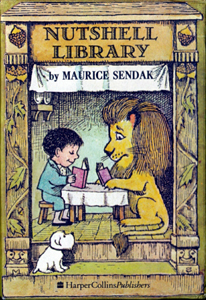 Sendak’s Nutshell Library (1962) includes four tiny books in a box, each complete in itself with droll jacket, hard cover, and humorous pictures and funny text. One Was Johnny is a counting book in rhyme; Alligators All Around is a complete and original alphabet book; Chicken Soup with Rice has a lively nonsense rhyme for every month (each involving chicken soup); and “cautionary tale” Pierre is “a story with a moral air about Pierre, who learned to care.” (5–8 years)

Added To Cart
RELATED


RECOMMENDED

Please register with us to continue reading.
ALREADY A SUBSCRIBER? LOG IN
We are currently offering this content for free. Sign up now to activate your personal profile, where you can save articles for future viewing.
ALREADY A SUBSCRIBER? LOG IN
Thank you for visiting.
We’ve noticed you are using a private browser. To continue, please log in or create an account.

Add Comment :-
Be the first reader to comment.
Comment Policy:
Comment should not be empty !!!