


2018 School Spending Survey Report
Oceanography and marine life
Bang, Molly and Chisholm, Penny Ocean Sunlight: How Tiny Plants Feed the Seas
Gr.
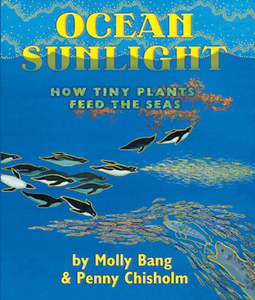 Bang, Molly and Chisholm, Penny Ocean Sunlight: How Tiny Plants Feed the Seas
Gr. K–3 48 pp. Scholastic/Blue Sky (Scholastic Trade Division)
This fresh perspective on food chains focuses on the critical and voluminous ocean-based plant life—plankton—and the transfer of energy and nutrients from the sun to these microscopic plants to ocean animals and back. Glowing illustrations, age-appropriate explanations, well-chosen text and visual analogies, and a series of rhetorical questions are used to excellent effect. Six pages of notes are appended.
Subjects: Natural history; Biology; Food chains; Oceans; Astronomy—Sun; Photosynthesis; Plants; Animals—Marine animals
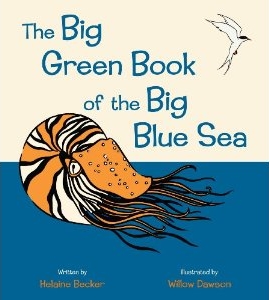 Becker, Helaine The Big Green Book of the Big Blue Sea
Gr. 4–6 80 pp. Kids Can
Illustrated by Willow Dawson. Simple activities are used to demonstrate scientific principles related to the ocean and its inhabitants. Some reliably illustrate important concepts (some of the others are less useful). Accompanying the activities is information about threats to marine and global environmental health, as well as steps readers can take to play a role in conservation. Cartoonlike illustrations, diagrams, and photographs aid comprehension of the science. Ind.
Subjects: Natural history; Oceans; Environment—Conservation; Marine ecology; Experiments
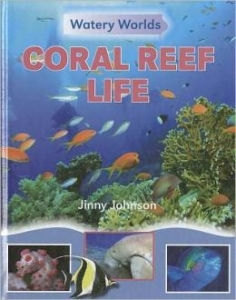 Johnson, Jinny Coral Reef Life
Gr. 4–6 32 pp. Smart Apple
Johnson, Jinny Deep Sea Life
Gr. 4–6 32 pp. Smart Apple
Johnson, Jinny Ocean Life
Gr. 4–6 32 pp. Smart Apple
Johnson, Jinny Polar Sea Life
Gr. 4–6 32 pp. Smart Apple
Johnson, Jinny River and Lake Life
Gr. 4–6 32 pp. Smart Apple
Johnson, Jinny Seashore Life
Gr. 4–6 32 pp. Smart Apple
Watery Worlds series. In brief, accessible texts, Johnson provides a good amount of information about a variety of life forms in and around bodies of water. The books' highlights are the vivid photographs, well matched to the subject matter. Different sidebars ("Amazing!" "Guess What?" "Watch Out!") provide details about individual animals or specific issues. Useful for browsing. Glos., ind.
Subjects: Natural history; Oceans; Seashore; Biomes; Coral reefs and islands; Animals—Marine animals; Animals—Polar animals; Polar regions; Lakes; Rivers
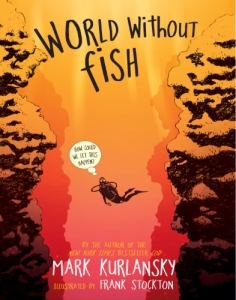 Kurlansky, Mark World Without Fish
High school 184 pp. Workman
Illustrated by Frank Stockton. The decline of fish populations, due to overfishing, pollution, and global warming, is a major environmental concern. Kurlansky digs deeply and engagingly into the history and science of the issue and provides important recommendations for sustainable fishing (the scientific terminology is very occasionally imprecise). Each chapter ends with a comic that imagines the impact of fish extinctions over a human's lifetime. Websites. Ind.
Subjects: Fish; Sports—Fishing; Fishers; Oceans; Conservation—Wildlife
 Sayre, April Pulley Here Come the Humpbacks
Gr. K–3 40 pp. Charlesbridge
Illustrated by Jamie Hogan. Sayre's text thoughtfully follows a year in the life of a female humpback whale, from the birth of her calf through her spring northward migration and back to Caribbean waters for winter. In addition to the narration on the right-hand pages, spreads contain paragraphs of further explanation on the left. Hogan's cool-toned pencil and pastel illustrations represent the underwater light well.
Subjects: Mammals; Animals—Whales; Migration; Oceans; Animal behavior
From the June 2013 issue of Nonfiction Notes from the Horn Book.


Added To Cart
RELATED


RECOMMENDED

Please register with us to continue reading.
ALREADY A SUBSCRIBER? LOG IN
We are currently offering this content for free. Sign up now to activate your personal profile, where you can save articles for future viewing.
ALREADY A SUBSCRIBER? LOG IN
Thank you for visiting.
We’ve noticed you are using a private browser. To continue, please log in or create an account.

Add Comment :-
Be the first reader to comment.
Comment Policy:
Comment should not be empty !!!