


2018 School Spending Survey Report
Our solar system and beyond
Adamson, Thomas K.
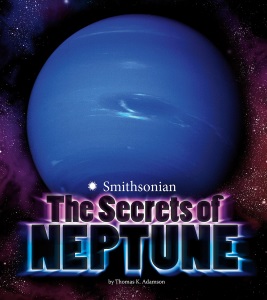 Adamson, Thomas K. The Secrets of Neptune
Gr. K–3, 4–6 32 pp. Capstone
Berne, Emma Carlson The Secrets of Earth
Gr. K–3, 4–6 32 pp. Capstone
Radomski, Kassandra The Secrets of Saturn
Gr. K–3, 4–6 32 pp. Capstone
Smithsonian: Planets series. These books for second through fourth graders include basic facts about planets in our solar system, accompanied by excellent images from the latest planetary explorations. Additional considerations of "secrets" — the unknowns and puzzles that guide current scientific inquiry — illustrate the constantly changing understanding of astronomers, both historical and present-day. Critical thinking questions are appended. Reading list. Glos., ind.
Subjects: Astronomy; Astronomy—Saturn; Astronomy—Earth; Astronomy—Neptune; Astronomy—Solar system
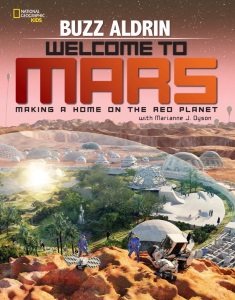 Aldrin, Buzz Welcome to Mars: Making a Home on the Red Planet
Gr. 4–6 96 pp. National Geographic
With Marianne J. Dyson. Astronaut Aldrin, drawing on his lifetime of science and space experiences, invites readers to imagine themselves among the first people to visit Mars. Detailed considerations of the technology needed for extended space travel, exploration, and colonization alternate with descriptions of and photographs from prior Mars missions. Several included activities encourage readers to explore related science concepts. Reading list, websites. Glos., ind.
Subjects: Space; Astronomy—Mars
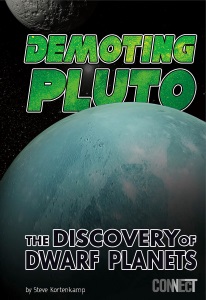 Kortenkamp, Steve Demoting Pluto: The Discovery of the Dwarf Planets
Gr. 4–6 48 pp. Capstone
Connect: Exploring Space and Beyond series. This timely discussion of our solar system's dwarf planets focuses not just on characteristics of these astronomical bodies, but also on the scientific processes of discovery and the deliberations held by astronomers to set guidelines for categorizing space objects. High-quality photographs of the planets and bodies described, plus artistic interpretations of some of their surfaces, illustrate their major features. Reading list. Glos., ind.
Subjects: Astronomy; Astronomy—Pluto; Space; Astronomy—Planets; Astronomy—Solar system
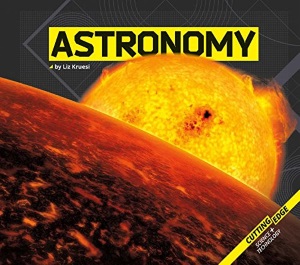 Kruesi, Liz Astronomy
Middle school, high school 112 pp. ABDO/Essential Library
Cutting-Edge Science and Technology series. This astronomy survey shows how astronomers past and present examine the electromagnetic radiation that reaches Earth (or its orbit) to determine the characteristics of the universe and the bodies within it. The technological advancements in telescopes and computer power help scientists to investigate such topics as exoplanets and dark matter. Photographs of space bodies, equipment, and the scientists profiled are included. Reading list. Bib., glos., ind.
Subjects: Astronomy; Astronomy—Solar system
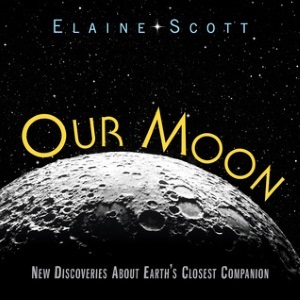 Scott, Elaine Our Moon: New Discoveries About Earth's Closest Companion
Gr. 4–6 72 pp. Clarion
This dive into the science of the moon includes explanations of its formation and composition, as well as details about the Apollo missions. Most exciting is the final chapter, in which lunar missions from 2007 to 2014—and the scientists who worked on them—are profiled. Color photos and additional text boxes found on nearly every page are as informative as the main narrative. Reading list, websites. Glos., ind.
Subjects: Astronomy; Astronomy—Moon; Space—Astronautics


Added To Cart
RELATED


RECOMMENDED

Please register with us to continue reading.
ALREADY A SUBSCRIBER? LOG IN
We are currently offering this content for free. Sign up now to activate your personal profile, where you can save articles for future viewing.
ALREADY A SUBSCRIBER? LOG IN
Thank you for visiting.
We’ve noticed you are using a private browser. To continue, please log in or create an account.

Add Comment :-
Be the first reader to comment.
Comment Policy:
Comment should not be empty !!!