


2018 School Spending Survey Report
Preschool milestones
Learning to share is hard.
 In the Leslie Patricelli preschool-book mold, the Big Kid Power series by Maria van Lieshout discusses getting-bigger milestones — learning to use the potty in I Use the Potty and giving up the pacifier in Bye-Bye Binky — in a way that little kids can grasp. Direct-address text describes each protagonist's journey from diaper- or binky-user to "BIG KID!" Simple digital illustrations in a limited palette — bright-yellow and gray-blue in Potty, neon-orange and warm-brown in Binky — plus thick black lines and white outlines keep the focus squarely on each toddler narrator and his or her small-scale surroundings. The books' petite, square shapes and sturdy bindings are well conceived for little hands. (Chronicle, 2–4 years)
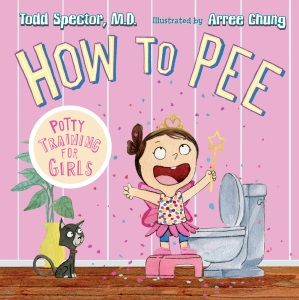 In How to Pee: Potty Training for Girls (the follow-up to How to Pee for boys), family doc/dad Todd Spector offers ten peeing "styles" for girls, including "Witchy style," "Tea party style," "Princess style," and "Gymnast style." Costumes, props, and a flair for drama are encouraged; the idea is to make the potty-training process less stressful for everyone. Acrylic and Photoshop illustrations by Arree Chung animate the simple four-step instructions ("Step 1: Curtsy. Step 2: Greet your people. Step 3: Kiss the prince. Step 4: Sit upon your throne"). A two-page author's note to parents offers some helpful and reassuring advice. (Holt, 2–4 years)
 The Saddest Toilet in the World by Sam Apple is a laugh-out-loud respite from potty charts, rewards, and accidents. Young Danny isn't ready to pee in the potty, despite his parents' gentle encouragement. The thin-skinned toilet, feeling unloved and unappreciated, packs its plunger in a suitcase and heads dejectedly out into the night. The next morning Danny is willing, but "there's only one problem"…and mother and son embark on a frantic search around the city for their AWOL bathroom fixture. The potty humor flows freely in Sam Ricks's expressive digital illustrations, and Apple's restrained text helps the preposterous scenario float. (Simon/Aladdin, 3–5 years)
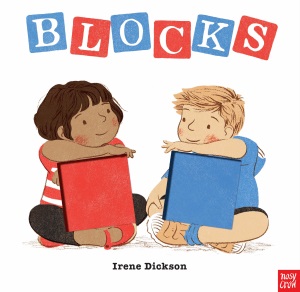 In Blocks by Irene Dickson, Ruby has red blocks, while Benji's are blue. The two play quietly and separately with their own blocks — until Benji picks up one of Ruby's red ones. A brief tug-of-war ensues ("'Mine!' says Ruby. / 'Mine!' says Benji") and ends with each falling backward ("CRASH!"), creating one big pile of mixed-up blocks ("Uh-oh"). When the pair realizes that two colors are better than one, they begin building again — this time together. The mixed-media illustrations keep things simple, with the children's clothing color-coordinated with their blocks and their facial expressions clear and easy to read. And the book's shape is, fittingly, square. (Candlewick/Nosy Crow, 2–4 years)
From the July 2016 issue of Notes from the Horn Book.


Added To Cart
RELATED


RECOMMENDED

Please register with us to continue reading.
ALREADY A SUBSCRIBER? LOG IN
We are currently offering this content for free. Sign up now to activate your personal profile, where you can save articles for future viewing.
ALREADY A SUBSCRIBER? LOG IN
Thank you for visiting.
We’ve noticed you are using a private browser. To continue, please log in or create an account.

Add Comment :-
Be the first reader to comment.
Comment Policy:
Comment should not be empty !!!