


2018 School Spending Survey Report
Publishers' Preview: Picture Books and Graphic Novels: Five Questions for Norm Feuti
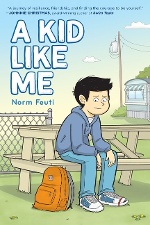
Ethan and his mother are barely making ends meet in this graphic novel, and it seems like middle school is going to present challenges both social and economic. He wonders, will A Kid like Me fit in?

This interview originally appeared in the November/December 2025 Horn Book Magazine as part of the Publishers’ Previews: Picture Books and Graphic Novels, an advertising supplement that allows participating publishers a chance to each highlight a book from its current list. They choose the books; we ask the questions.
Sponsored by

Ethan and his mother are barely making ends meet in this graphic novel, and it seems like middle school is going to present challenges both social and economic. He wonders, will A Kid like Me fit in?
 |
| Photo: Norm Feuti. |
1. Are you still friends with any of your middle school D&D crowd?
I still consider them friends, but we moved after high school, so I lost touch with most of them. But I’ve made plenty of new D&D friends since then whom I see on a regular basis. I highly recommend any group of friends engage in a regular game night of some kind.
2. What do you want to tell kids not to worry about?
I’d advise kids not to be preoccupied with what they imagine others are thinking about them. You can’t control whatever biases other people have, but second-guessing those biases can become a toxic way of thinking. Don’t be guilty of the social stereotyping you may have been a victim of in the past.
3. What was your social role back then?
I was introverted in middle school, but among my friends, my social role was comedian. I loved making my friends laugh. I still do. I was also a bit of a dissident, and I did my best to be an ally as well. When you grow up poor you experience a lot of the unfairness of life firsthand. For me that manifested as trying to make people happy and having empathy for anyone else who was suffering from social inequity.
 4. Ethan’s mom is great. Is she yours?
Very much so. Despite our financial disadvantages, my sister and I were lucky to have such a kind and selfless parent in our life.
5. This is your first book about people. What did you have to learn?
I guess I view all my characters as people, even when they’re anthropomorphic animals. But my biggest adjustment in writing a story for middle graders (as opposed to early readers) was learning to trust them to follow the story’s emotional arc without my spelling it out too explicitly. I had to remind myself that kids this age are savvy. They’ve had enough life experiences that you can trust them to understand how a character is feeling. Also, drawing the modern world of humans in a somewhat realistic fashion is definitely more challenging!
Sponsored by


Added To Cart
RELATED


RECOMMENDED

Please register with us to continue reading.
ALREADY A SUBSCRIBER? LOG IN
We are currently offering this content for free. Sign up now to activate your personal profile, where you can save articles for future viewing.
ALREADY A SUBSCRIBER? LOG IN
Thank you for visiting.
We’ve noticed you are using a private browser. To continue, please log in or create an account.

Add Comment :-
Be the first reader to comment.
Comment Policy:
Comment should not be empty !!!