



2018 School Spending Survey Report
Publishers' Preview: Debut Authors: Five Questions for Eric Dinerstein
This interview originally appeared in the July/August 2016 Horn Book Magazine as part of Publishers’ Previews: Debut Authors, an advertising supplement that allows participating publishers a chance to each highlight a first book.
This interview originally appeared in the July/August 2016 Horn Book Magazine as part of Publishers’ Previews: Debut Authors, an advertising supplement that allows participating publishers a chance to each highlight a first book. They choose the books; we ask the questions.
Sponsored by
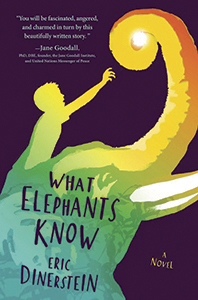
Eric Dinerstein’s What Elephants Know is a coming-of-age story set in the Borderlands rainforest of Nepal, where Nandu, abandoned as a baby, grows up in a royal elephant stable.
 Photo: Nathan Hahn
1. You spent five years in close proximity to elephants when you lived in Nepal in the 1970s and ’80s. Did you become close to any of them, as Nandu does?
ED: The five elephants we lived with felt like our brothers and sisters. When I rode them and we would approach rhinos and tigers, I felt the elephants’ strength and courage. And they could be so gentle! I grew especially close to Prem Kali. She was the model for Devi Kali. She could almost read her driver’s mind before he uttered a command.
2. Who (if anyone) was your inspiration for the character of Nandu?
ED: Believe it or not, I was not channeling Mowgli. I was far more taken by Kipling’s young hero Kim, whom other characters dub “Little Friend of all the World.” That is how I started to think about Nandu, extending the title to consider the world including wild animals.
 3. I love the book’s epigraph (from Zen teaching): “Sooner or later we have to see that what we do and what happens to us are the same thing.” Words to live by? Write by?
ED: I think we are defined by our actions. What you say is important, but doing good in the world always comes back to you in some way. It does for Nandu.
4. Are Dilly’s directives about how to buy an elephant (“Never buy an animal with yellow eyes. Walk away from an elephant with a black tongue,” etc.) actual tips? Who knows, I might be in the market.
ED: Yes. I once overheard this conversation from a real-life Subba-sahib. But better than keeping elephants in zoos or as captives is to let them roam free in the wild. The days of capturing and training wild elephants are over.
5. Would the young you have wanted to read What Elephants Know?
ED: Absolutely. That was a main reason to write this book. I wanted it to be a coming-of-age novel where my own feelings of not being part of the group could be expressed in a positive way. And I wanted to write a heroic adventure story that, at least in my imagination, I could take part in.
Sponsored by


Added To Cart
RELATED


RECOMMENDED

Please register with us to continue reading.
ALREADY A SUBSCRIBER? LOG IN
We are currently offering this content for free. Sign up now to activate your personal profile, where you can save articles for future viewing.
ALREADY A SUBSCRIBER? LOG IN
Thank you for visiting.
We’ve noticed you are using a private browser. To continue, please log in or create an account.

Add Comment :-
Comment Policy:
Comment should not be empty !!!
Serina
I am part of a book club and was wondering if it was possible to invite the author to come and speak does he live in the u.s? what state? Thank youPosted : Oct 01, 2016 03:59