


2018 School Spending Survey Report

Find more great Horn Book content at these links:
Recommended books: reviews and themed booklists
App and e-book reviews
Movie reviews
Event news and recaps
Events calendar
Recommended books on transgender lives
Ellen Wittlinger's Parrotfish was the first young adult novel starring a transgender protagonist.
For more on representation of transgender issues in children's books, see Ellen Wittlinger's "Parrotfish Needed an Update: The Rapidly Changing Language of Transgender Awareness" (in which she writes, "Ten years after it was written, Parrotfish was showing its age...if Parrotfish was to remain part of the discussion, which was now sometimes a boisterous debate, the language had to be correct.") and Elsworth Rockefeller's 2007 article "The Genre of Gender: The Emerging Canon of Transgender-Inclusive YA Literature."
Picture Books
 In Jessica Herthel and Jazz Jennings's I Am Jazz, a little girl describes how she was born with "a girl brain but a boy body." Once her parents talked to a doctor to understand more about it, they let her be herself. There is little plot, but the straightforward text and illustrator Shelagh McNicholas's friendly, pastel-hued watercolors fairly successfully simplify the issue of gender identity for a young audience and their caregivers. (Dial, 2014)
Intermediate Fiction
 The ten-year-old protagonist of Alex Gino's novel George is, outwardly, a boy. But inside, she's a girl, and that disconnect is becoming impossible to endure. There are setbacks, but with the help of a few allies, particularly best friend Kelly, George prevails. Gino can employ a heavy hand, but the heart of this novel is George's achingly poignant struggle to be herself, and that heart beats strong and true. (Scholastic, 2015)
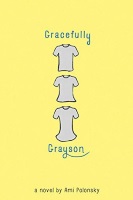 In Ami Polonsky's Gracefully Grayson, sixth grader Grayson daydreams about being a girl, despite being seen by everyone as male. Grayson keeps people at a distance until Amelia moves to town. After landing the (female) lead in a play, Grayson fights for the right to present her truest self to others — both on and off stage. Polonsky captures her protagonist's loneliness, then courage, in an immediate and intimate narrative. (Hyperion, 2014)
Young Adult Fiction
 "When J was a really little kid, he had been surprised whenever anyone thought he was a girl." Now J's mother assumes he's a lesbian, his father doesn't know how to talk to him, and he's in love with his best friend, Melissa. J's personal frustrations and desires are strongly conveyed in Cris Beam's I Am J, an affecting story of self-discovery. (Little, 2011)
 High school wrestler Brendan, star of Kristin Elizabeth Clark's Freakboy, likes girls "too much, / and not in / the same / way / everyone / else / does." Brendan's story weaves together with his girlfriend Vanessa's and that of transgender woman Angel in three-part verse-harmony. Each individual has a unique personality all his or her own in this sincere, profound rendering of sexuality, queerness, and identity. (Farrar, 2013)
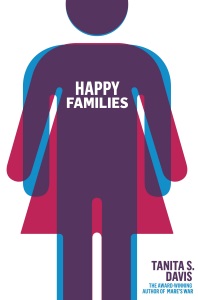 In Happy Families by Tanita S. Davis, twins Ysabel and Justin's lives are complicated since their father came out as transgender; they struggle to come to terms with what the change means for their family. Alternating narration, nuanced emotions, and Davis's idealistic (though admirably so) treatment of the subject make this a worthwhile contribution to LGBTQ literature. An appended resource on proper transgender terminology adds additional value. (Knopf, 2012)
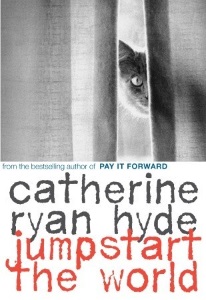 At the beginning of Jumpstart the World by Catherine Ryan Hyde, lonely Elle meets her new neighbor Frank and immediately develops an intense crush. Her devotion to Frank is tested by the discovery that he is transgender. When Frank is critically injured in a car accident, Elle must decide what's important to her. Hyde enriches this coming-of-age story with a candid, compassionate treatment of transgender issues. (Knopf, 2010)
 Narrator Grady (born Angela) is a transgendered teenager determined to show his true self in Ellen Wittlinger's Parrotfish. Unexpected allies include nerdy Sebastian, gorgeous Kita, and Grady's upset but protective mother. The matter-of-fact plot, tinged with a teenager's sense of irony, enumerates Grady's day-to-day challenges. Tangential subplots enrich a thought-provoking discussion of gender roles, gender identity, and the influences of nature, nurture, and social construction. (Simon, 2007) A new edition of Parrotfish — with updated language — was released in October 2015.
 The ten short stories of Julie Anne Peters's grl2grl give voice to expressions of lesbian and transgender teen experiences. Peters skillfully varies the subject matter and tone from piece to piece, with several of the amicable first-person narrators given a hard row to hoe. Whether readers are looking for reflections of the other or reflections of themselves, this book presents plenty of opportunities to find both. (Little/Tingley, 2007)
 In Luna, also by Peters, Regan is the only one who can see her brother Liam's true self — a girl born in the wrong body. Night after night, Liam has slipped into her room to secretly transform into a girl with makeup and wigs; now he's taken a new name, Luna, signaling the greater change about to come. While this book is determined to educate, Peters succeeds in creating whole, complex characters confronting transgender issues. (Little/Tingley, 2004)
Young Adult Nonfiction
 Arin Andrews, born female, suffered profound body dysphoria until transitioning to male at fourteen. Andrews's memoir Some Assembly Required: The Not-So-Secret Life of a Transgender Teen (written with Joshua Lyon) frankly discusses physical and emotional challenges of his transition, activism, and very visible relationship with another transgender teen (Katie Rain Hill, whose Rethinking Normal also touches on their relationship). A "How to Talk to Your New Transgender Friend" guide is appended. Reading list, websites. (Simon, 2014)
 Katie Rain Hill lived as a male — suicidally depressed due to body dysphoria — until transitioning to female at age fifteen. Her candid, touching memoir Rethinking Normal: A Memoir in Transition (written with Ariel Schrag) relates her transition, activism, public relationship with another transgender teen (Arin Andrews, whose Some Assembly Required also discusses their relationship), and hopes for the future. "Tips for Talking to Transgender People" appended. Reading list, websites. (Simon, 2014)
 Rather than attempting to convey the spectrum of transgender experience through a multitude of voices, Susan Kuklin's Beyond Magenta: Transgender Teens Speak Out focuses on just six young people whose gender identities are something other than what they were labeled at birth. Photographs (of most of the subjects) are candid and winning; appended material, including a Q&A with the director of a clinic for transgender teens, is valuable. Reading list, websites. Glos. (Candlewick, 2014)
 Queer identity and sexuality are boldly expressed in The Full Spectrum: A New Generation of Writing about Gay, Lesbian, Bisexual, Transgender, Questioning, and Other Identities, edited by Billy Merrell and David Levithan. This provocative collection of poems, essays, and personal narratives — writted by forty writers under the age of twenty-three — provides a fresh perspective on the nature of sexual identity and how it is shaped by political, cultural, and social institutions. Readers get an intimate glimpse into the lives of an "up and coming queer generation." (Knopf, 2006)

Added To Cart
RELATED


RECOMMENDED

Please register with us to continue reading.
ALREADY A SUBSCRIBER? LOG IN
We are currently offering this content for free. Sign up now to activate your personal profile, where you can save articles for future viewing.
ALREADY A SUBSCRIBER? LOG IN
Thank you for visiting.
We’ve noticed you are using a private browser. To continue, please log in or create an account.

Add Comment :-
Comment Policy:
Comment should not be empty !!!
Debbie Reese
I was confused, on twitter, seeing someone talking about a HB article where Wittingler talked about changes to her book, because I'd read this article and didn't see that at all. Now I see the hyperlink to her article. Any chance you might add a few words from her article at the top of this one? And maybe a heads-up to readers to make sure they get the newer edition?Posted : Nov 19, 2015 01:26