




2018 School Spending Survey Report
Review of Mysterious Patterns: Finding Fractals in Nature
Mysterious Patterns: Finding Fractals in Nature
by Sarah C.
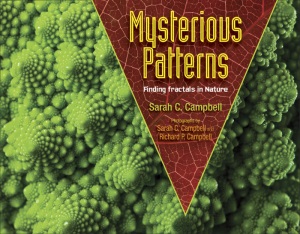 Mysterious Patterns: Finding Fractals in Nature
by Sarah C. Campbell; photos by Sarah C. Campbell and Richard P. Campbell
Primary Boyds Mills 32 pp.
4/14 978-1-62091-627-8 $16.95
Bring up the math term fractals in a roomful of adults, and it’s likely quite a few eyes will glaze over. Yet wife-and-husband team Sarah and Richard Campbell (Growing Patterns: Fibonacci Numbers in Nature, rev. 5/10) succeeds in making fractals accessible and engaging to — get this — the elementary-school crowd. Sarah Campbell’s writing is clear, fluid, and concise, effortlessly so. She starts off with familiar examples of man-made shapes, such as spheres, cones, and cylinders, as well as items in nature that approximate these perfect shapes (spherical tomatoes, conical icicles, cylindrical cucumbers). She then moves on to nature’s “rough, bristly, and bumpy” shapes — complex shapes ignored by scientists until Benoit Mandelbrot arrived on the scene, coining the word fractals in 1975. Mandelbrot noticed that the shapes of trees, broccoli, and ferns all share a common pattern: each has “smaller parts that look like the whole shape.” Take broccoli, for example: as parts of a head of broccoli are lopped off, the smaller pieces look like the original whole head. Glossy, well-designed pages feature crisp, up-close photographs, which pair perfectly with the text — making this the go-to choice for introducing fractals to children (and grownups). Included are a brief glossary, a “Make Your Own Fractal” activity, and an afterword by a Mandelbrot colleague.
From the May/June 2014 issue of The Horn Book Magazine.


RECOMMENDED

Please register with us to continue reading.
ALREADY A SUBSCRIBER? LOG IN
We are currently offering this content for free. Sign up now to activate your personal profile, where you can save articles for future viewing.
ALREADY A SUBSCRIBER? LOG IN
Thank you for visiting.
We’ve noticed you are using a private browser. To continue, please log in or create an account.

Add Comment :-
Be the first reader to comment.
Comment Policy:
Comment should not be empty !!!