


2018 School Spending Survey Report
Reviews of 2025 Mind the Gap Award winners
Not all deserving books bring home ALA awards. Our annual Mind the Gap Awards pay tribute to our favorite books that didn’t win. Here’s how we reviewed our 2025 winners.

Not all deserving books bring home ALA awards. Our annual Mind the Gap Awards pay tribute to our favorite books that didn’t win. Here’s how we reviewed our 2025 winners.
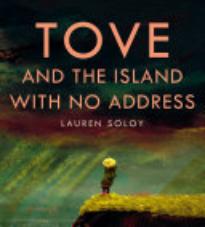
 Tove and the Island with No Address
by Lauren Soloy; illus. by the author
Primary Tundra 48 pp.
10/24 9781774883150 $18.99
e-book ed. 9781774883167 $10.99
In this fitting homage to beloved Finnish author Tove Jansson, a girl named Tove travels to a rustic island with her family, as they do every summer. The next morning she rises as “the stars were beginning to yawn, but the sun was still asleep” and strides confidently out the door looking for things to do. Tove’s red boots signal adventure, and her yellow hair stands out against the dramatic and ominous-looking sea and sky, a beacon of light in the darkness. She visits a grotto to see her secret friend, a squat, hairy creature with a pointy nose. She takes his five birdlike and mischievous daughters for a walk, but a gust of wind blows them away, “shouting and giggling.” Eventually, she finds the tiny girls; a ferocious storm sends her running back to the grotto, the creatures cupped in her hands to keep them dry. Then Tove heads home—“What a fortifying thing to see light beaming from the windows and cheerful smoke coming from the chimney!” A luminous double-page spread shows her wrapped in her mother’s arms, and as she tucks into a plate of hot pancakes, she thinks what it would be like “never getting soaked to the bone and then getting dry again…How dreadful!” This pairing of a strange escapade in the wild with a warm and a cozy welcome home epitomizes the appeal of Jansson’s Moomin books; Moomin fans of all ages will especially enjoy this tale. Appended with a biographical note about Jansson.
From the January/February 2025 issue of The Horn Book Magazine.
 Telephone of the Tree
by Alison McGhee
Intermediate Rocky Pond/Penguin 208 pp.
5/24 9780593698457 $17.99
e-book ed. 9780593698464 $10.99
In a first-person narrative, ten-year-old Ayla relates her special connection to her best friend, Kiri, beginning when they first reached out to each other as infants. Together they develop a keen interest in trees: caring for them, learning about them, and aspiring to be more tree-like. Their neighborhood plants trees to celebrate new babies, including a birch for Ayla and a pine for Kiri. With a hint of foreshadowing, Ayla notes that trees are also planted to remember those who have died. Her loose, dreamy narrative dances around current details, but she eventually confides she misses Kiri, insisting that her friend will be back soon. Meanwhile, an old telephone appears in her birch tree. Ayla finds it magical but refuses to attempt a call, though other people who have lost loved ones begin using it as a mechanism to talk to them. Ayla divulges small incidents and observations like a trail of breadcrumbs, allowing readers to piece together what she herself cannot admit: Kiri is not coming home. Ayla’s voice as she comes to terms with what has happened, combined with the care and understanding of those supporting her while she grieves, create an intensely emotional reading experience. Interlaced throughout, the parallel world of the trees, with their mysterious methods of communicating and working together, provides a noble community model. An author’s note pays tribute to Itaru Sasakai’s phone booth in Japan, where people find comfort talking to those they have lost on an unconnected rotary phone.
From the July/August 2024 issue of The Horn Book Magazine.
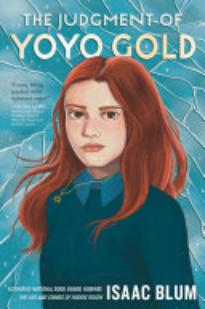 The Judgment of Yoyo Gold
by Isaac Blum
High School Philomel 304 pp.
10/24 9780593525852 $19.99
e-book ed. 9780593525876 $10.99
In this coming-of-age novel set in an insular Orthodox Jewish community (adjacent to the one in The Life and Crimes of Hoodie Rosen, rev. 11/22), Yocheved “Yoyo” Gold is the eldest daughter of the local rabbi and has been cast in a particular and demanding role by those around her. After her best friend leaves town under questionable circumstances, Yoyo begins to notice cracks in the standards of behavior she has always accepted and feels an urge to call out the hypocrisy she sees. New friends—one from outside her tight-knit community and one who is pushing boundaries within it—lead her to question both her responsibilities and her beliefs. Social media, alcohol, and physical relationships feature heavily in the story, and each potential hot-button issue is handled with delicacy and nuance as Yoyo approaches these new experiences from her sheltered but mature perspective. While the book critiques Orthodoxy, it also treats its norms and traditions with respect. Even at the height of mean-girl drama, the characters have dimension and agency, and Yoyo models a level of integrity that feels both genuine and aspirational. The story’s depictions of teens grappling with expectations are specific to this community and also represent universal themes of growing up, friendship, family pressures, and being true to oneself.
From the November/December 2024 issue of The Horn Book Magazine.
 The Yellow Bus
by Loren Long; illus. by the author
Primary Roaring Brook 48 pp.
6/24 9781250903136 $19.99
e-book 9781250368034 $11.99
Long’s poignant picture book about a school bus is a meditation on the passage of time while finding purpose in all seasons of life, in the tradition of Virginia Lee Burton. “There was once a bright yellow bus who spent her days driving” passengers (first school children, then elderly people) “from one important place to another. And they filled her with joy.” Eventually abandoned under a bridge, the bus becomes a resting spot for unhoused persons. One morning she’s towed away and left in a field near a river, where the bus becomes a playground for a herd of goats. When the river floods the valley, fish take up residence. The striking grayscale graphite- and charcoal-pencil illustrations (with “charcoal dust…scratched out with X-Acto blades and smudged with Q-tips”) feature color, done with acrylic paint, occasionally; the school-bus yellow of the protagonist is all the more eye-catching for it. Bird’s-eye views alternating with partial closeups help steer viewers’ emotions along with the narrative in witnessing and understanding the beauty of service to others. The book concludes with the story of the abandoned school bus that sparked Long’s imagination, along with his techniques for creating a 3D paper mini-town in which to place the bus as a model for his illustrations.
From the July/August 2024 issue of The Horn Book Magazine.
 Next Stop
by Debbie Fong; illus. by the author
Intermediate, Middle School RH Graphic/Random 272 pp.
3/24 9780593425206 $21.99
Library ed. 9780593425213 $24.99
Paper ed. 9780593425183 $13.99
e-book ed. 9780593425190 $8.99
Fong’s deeply moving graphic novel opens with an intriguing premise: Pia Xing, a reserved and lonely middle schooler, says goodbye to her father and embarks on a multi-day bus tour through the desert with a bunch of strangers. Their destination is the subterranean bioluminescent Cessarine Lake, billed as having mystical, wish-granting powers. During stops at diners and kitschy roadside attractions, Pia gets to know her fellow passengers, all of whom have their own reasons for making the journey. Pia isn’t ready to share hers—not even with new friend Sam, who’s grudgingly accompanying her tour-guide mom. Daily phone calls home to her father and flashbacks from the previous year gradually reveal what led to this solo trip, including the tragedy that left Pia and both her parents mired in grief. In varied panel and full-page illustrations, Fong’s spare cartoon style is well suited to the setting and the main character’s bleak emotional landscape. The trip offers moments of peace and lightheartedness: “I’m actually having a lot of fun! It kind of feels like being part of a big family.” The story begins to take on elements of magical realism the closer the group gets to the lake, making the impossible begin to seem possible. Pia’s miracle looks different from what she set out looking for, but the magic is transformative all the same. With a sympathetic protagonist navigating unimaginable pain, fully realized and engaging secondary characters, and a skillfully crafted narrative, this is a remarkable debut.
From the January/February 2024 issue of The Horn Book Magazine.
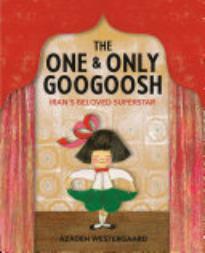 The One & Only Googoosh: Iran’s Beloved Superstar
by Azadeh Westergaard; illus. by the author
Primary, Intermediate Viking 40 pp.
11/24 9780593114636 $18.99
e-book ed. 9780593114643 $11.99
Theatrical scenes in pomegranate reds and peacock greens introduce readers to a young, precocious Googoosh, born Faegheh Atashin, performing in the 1950s with her acrobat father and captivating audiences with her singing. Her rise to stardom and voice “swelling in our hearts like the waves of our beloved Caspian Sea” become inextricably tied to the comfort of culture and home for the people of Iran. But the 1979 revolution shutters performance halls and outlaws women’s singing voices. Stark spreads stripped of color depict turmoil as fleeing Iranians are “scattering across the world like windblown poppies,” their faces shown as disconnected from anything else. These displaced Iranians live quietly, like Googoosh herself, until her return to performing finally gives people a chance to “bear witness” to memory, homeland, yearning, and joy. Complex and painstaking illustrations—tea-dyed paper, block prints of hand-carved stamps, brush pens, colored pencils, and collages of paper and cardboard—showcase the art as a clear labor of love. The text is lyrically and sensorially evocative, conveying devotion to country and pain of separation, and even the use of the second person mimics the formal method of reverence in Farsi. An author’s note, additional information about Googoosh, photographs, and sources are appended.
From the January/February 2025 issue of The Horn Book Magazine.
 A Friend for Eddy
by Ann Kim Ha; illus. by the author
Preschool, Primary Greenwillow 40 pp.
3/24 9780063315464 $19.99
Eddy the fish lives by himself in a little glass bowl. He wants a friend. “Someone who could swim and blow bubbles. Someone like him. Eddy peered out, wondering if such a friend would pass by.” Meanwhile, a pair of black, feline-shaped ears in the frame indicates that he is less alone than he realizes. This tension builds through digitally collaged watercolor illustrations and smart page design, but the text uses our protagonist’s limited, naive perspective to tell the story. Bright-orange Eddy pops on the rich cerulean background, while the black cat recedes into it with the exception of the two yellow eyes that are about the shape and size of the fish himself. He first mistakes one eye for a potential fishy playmate and then the second eye for another. “It was the little yellow fish again, and this time he had brought along a friend!” Eddy and his two new “friends” have a terrific time dancing and playing hide-and-seek, until Eddy propels himself right out of the protective glass bowl and onto the table in an effort to join them. It is in that precarious position that he finally sees the bigger picture (including many sharp teeth) that likely will have been troubling readers all along. Mercifully this dramatic, visually appealing friendship tale takes a surprise final turn, avoiding the anticipated grim conclusion. New friends are sometimes not who we imagine them to be; they can even be better.
From the March/April 2024 issue of The Horn Book Magazine.
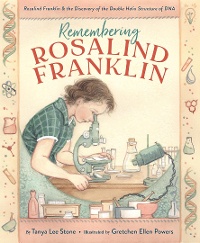 Remembering Rosalind Franklin: Rosalind Franklin & the Discovery of the Double Helix Structure of DNA
by Tanya Lee Stone; illus. by Gretchen Ellen Powers
Primary, Intermediate Ottaviano/Little, Brown 40 pp.
2/24 9780316351249 $18.99
Stone’s dedication—“For anyone who did something awesome and didn’t feel the love”—sets the reparative tone for this picture-book biography of scientist Franklin (1920–1958), whose Photo 51 cracked the DNA code while competing researchers James Watson and Francis Crick took the credit (and the 1962 Nobel Prize). As she weaves science and history, Stone unravels dual mysteries centering on the double helix: how the “secret of life…makes you—YOU” and how a “twist of fate” triggered Franklin’s posthumous recognition. Powers’s watercolors perfectly blend representative and expressive styles. Realistically rendered characters and period details set the story in its mid-twentieth-century milieu, while experimental techniques offer evocative visual commentary; for example, when Franklin argues with Watson and Crick, blue watercolor blotches disrupt the tidy floral border and explode the ground beneath them. Although Stone opens by warning, “This true story doesn’t really have a happy ending,” Powers’s accompanying fairy tale–esque castle, adorned with scientific instruments, foreshadows a time in which readers are empowered to interrogate the historical record and reclaim the stories of little-heralded figures. An author’s note explains the Matilda Effect, a historical pattern in which men take credit for women’s work.
From the January/February 2024 issue of The Horn Book Magazine.
 Let’s Go!
by Julie Flett; illus. by the author
Preschool, Primary Greystone Kids 40 pp.
5/24 9781771646109 $19.95
Every day, a child watches other kids skateboarding past the window and wishes to join them. After receiving Mom’s old skateboard, the child can now practice at the skatepark for real. At first unsure about joining the other kids, our protagonist sits alone watching them on their boards. Two others sit down and watch, too; eventually all three decide to join in with the group. Flett’s (We All Play, rev. 1/23) spare text, with its naturally incorporated Cree language refrain “haw êkwa,” ably and empathetically reflects a child’s nervousness and excitement about trying something new. The muted tones of the digitally composed pastel and pencil drawings complement the narrative. In her appended note, Flett explains that the story was inspired by her son and his friends learning how to skateboard and by “the skateboard community we had been a part of for many years.” She also explains the meaning of the Cree idiom haw êkwa (“okay, and”) and explores the definition of a “flow state,” along with providing Cree words that skateboarders may find useful. The book beautifully highlights the value of perseverance along with the joy of skateboarding.
From the May/June 2024 issue of The Horn Book Magazine.
 Young Hag and the Witches’ Quest
by Isabel Greenberg; illus. by the author
Middle School, High School Amulet/Abrams 288 pp.
5/24 9781419765117 $24.99
Paper ed. 9781419765124 $17.99
e-book ed. 9781647008499 $16.19
This spirited, intelligent mashup of Arthuriana puts Morgan Le Fay—now Ancient Crone, cheerfully saggy-bosomed and thin-haired—and her granddaughter, Young Hag, at the center of a fresh new story. At her ceremonial naming with her mother and grandmother, Young Hag learns from Ancient Crone that the ways between Faerie and the human world have been severed and that it is their task to return the broken sword Excalibur to Avalon to mend that rupture. As they traverse the wild countryside, Young Hag learns through Taliesin the bard and Ancient Crone just how King Arthur, Merlin, magic, and the land ended up in this predicament. When Ancient Crone disappears and Young Hag’s recently met traveling companion, Tom, is magically ensnared, Young Hag is on her own, piecing together stories, “fragments, questions, faces, threads all gathering, and me at the heart”—to bring all to a new beginning. Greenberg’s drawing style is comic but has a skillfully naive, seemingly unpracticed quality that enhances the protagonist’s poignant, youthful courage. Epic tragedy and grave betrayals are conveyed with a light touch, while Young Hag’s arduous personal growth and development have a heartwarming gravitas. “It takes a whole life to come of age,” says Ancient Crone—robust words of wisdom for any reader. Greenberg’s play with her sources—medieval Arthuriana, Edmund Spenser’s Britomart (here wonderfully queer and pink-haired), Christina Rosetti’s “Goblin Market”—has satisfying imaginative and critical depth.
From the July/August 2024 issue of The Horn Book Magazine.
 Ahoy!
Ahoy!
by Sophie Blackall; illus. by the author
Preschool, Primary Schwartz/Random 48 pp.
4/24 9780593429396 $19.99
Library ed. 9780593429402 $22.99
e-book ed. 9780593429419 $10.99
Picture books about imaginary play can be belabored or overly precious. Not so Blackall’s brilliantly constructed latest. The opening setting is a living room (just a suggestion of one—we mostly see an ocean-colored rug). Here we meet a child gathering items needed for a pretend sea voyage while an adult vacuums. As the child exhorts the adult to join in, we begin to see intimations of the coming seascape: the cat, poking its head under the rug, creates swelling waves; patterned pillows evoke shark fins; etc. Then, with a page-turn, we are plunged into the book’s make-believe world—child and adult aboard a fully rigged multi-masted schooner on the high seas, about to encounter a storm (and sharks!). The mixed-media and digital illustrations are alternately gorgeous and rich in character and humor. For example, on one spread the adult’s cell phone rings (“blah blah blah…”), temporarily returning us to real life (“we are in the doldrums,” bemoans the discouraged child). Blackall excels at setting the stage for the imaginary play with one-to-one equivalents (the vacuum, with its long cord, easily transforms into a giant squid; a paper-towel roll becomes a spyglass) and then making us forget all that, immersing us in the book’s imaginary world, wholly capturing the experience of imaginary play. “ANCHORS…AWEIGH!” Glossary of sailing terms included.
From the March/April 2024 issue of The Horn Book Magazine.
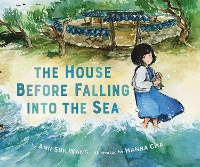 The House Before Falling into the Sea
by Ann Suk Wang; illus. by Hanna Cha
Primary Dial 40 pp.
3/24 9780593530153 $18.99
e-book ed. 9780593530160 $10.99
In this picture book set in 1950, Kyung lives with her family in a seaside house in the southeastern Korean coastal city of Busan. As the North Korean and Chinese militaries push south, many families begin to flee toward Busan. Kyung’s parents take several of these refugees in, giving them shelter and safety. The girl shares her home, food, parents’ attention, and sleeping mat, which she tolerates but becomes increasingly annoyed about. She eventually learns grace and perspective: “visitors are not stones we can toss into the sea. They are people, our neighbors, to help and to love.” Cha’s illustrations pay exquisite attention to the beauty of the seaside landscape, using color to intensify the experience of being near the ocean. Vibrant greens and blues swirl, producing the feeling of an ever-moving sea, while wheaty shades of tan create sand and scrub, all of which contrast with the darkness of a makeshift air raid shelter where women and children hide. This gorgeously illustrated book contains beautiful turns of phrase and metaphors (“we sat like two quiet hills, the breeze combing through our hair”). It’s a touching homage to the author’s own grandparents’ heroism, which also offers rare insight into complex feelings about personal sacrifice and witnessing the suffering of others. A glossary is appended, and author and illustrator notes provide historical context.
From the January/February 2024 issue of The Horn Book Magazine.
 Island of Whispers
by Frances Hardinge; illus. by Emily Gravett
Intermediate, Middle School Amulet/Abrams 120 pp.
8/24 9781419774331 $19.99
e-book ed. 9798887073118 $17.99
Milo’s father has a vital role to play on the island of Merlank: he’s the Ferryman, responsible for transporting the Dead to a place where their spirits are free to depart, no longer hampered by Merlank’s clingy mist. Otherwise, the Dead would linger, blighting the land and killing others with their fatal gaze. Thus, when the grieving Lord of Merlank causes Milo’s father’s death, Milo must become the Ferryman and sail the Evening Mare, despite what his father always deemed the dangers of Milo’s sympathetic, imaginative spirit. Don’t listen to them; don’t look at them, was his father’s self-protective way with the Dead. But when the Lord’s daughter writes a poem on the deck, desperate for her words to go on living despite her early demise, Milo realizes that listening, recording, and sharing can also be part of the Ferryman’s job. Gravett’s spectacularly misty, atmospheric illustrations, all in shades of indigo, heighten what is most elusive and poignant about Hardinge’s story—the sorrow of endings, the significance of last messages, and the inexorability of mortality. Hardinge’s own poetic language (most clearly visible in the girl’s poem: “The gnats sing the sun to sleep / Over the lake the air cools / Twinned birds fly through two pink skies”) brings multiple shimmering layers to both plot and imagery in this melancholic, fantastical tale.
From the July/August 2024 issue of The Horn Book Magazine.
 Heatwave
by Lauren Redniss; illus. by the author
Preschool, Primary Random House Studio/Random
40 pp.
5/24 9780593645949 $19.99
Library ed. 9780593645956 $22.99
e-book ed. 9780593645963 $10.99
Redniss’s assured, measured, and elegant meditation on life during our current environmental crisis begins during a record-breaking heatwave with a crystal-clear proclamation: “No way. Too hot.” The spare, evocative, and arguably unsettling text (“Try not to burn”) is contextualized by imagery of a family trying to cool off at a city beach. Equally accomplished, the illustrations feature elongated figures and loose continuity between each double-page spread. A thin, dark, wavering line is employed for both figures and austere backgrounds that mostly consist of high horizon lines topped by a jumble of building-like forms. Color plays a prominent role in the narrative, yet only two colors (other than black and white) are used—red and blue. Stretched across the entire spread, a singular flat red color is given texture, depth, and contrast. As the unbearably hot day continues, clouds form and a single blue raindrop dramatically pierces the all-red page. Two raindrops are precursors to a downpour, illustrated by bright blue vertical streaks that appear to vibrate down the page. As day turns to evening, the color blue eventually takes over the final spreads, suggesting relief from the sweltering heat—and perhaps a degree of hope for the residents of a steadily warming planet. Imbued with a fine-art aesthetic, this is an ambitious yet accessible work. An honest narrative of and for today, brilliantly told.
From the July/August 2024 issue of The Horn Book Magazine.
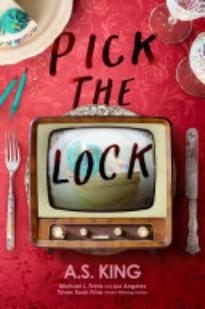 Pick the Lock
by A.S. King
High School Dutton 400 pp.
9/24 9780593353974 $19.99
e-book ed. 9780593353998 $10.99
Jane, sixteen, lives with her father, Vernon; her younger brother, Henry; house staff; and a rat in a Victorian-style mansion that has been in her mother’s family for generations. Mom is a punk rock star (a “feminist archangel of compassion”) who is often out on tour and is made a prisoner when at home: she’s confined to a system of human-sized pneumatic tubes installed throughout the house. Jane doesn’t think to question the setup—manipulative, controlling Vernon having so thoroughly and cruelly turned her and Henry against their mother—until she discovers “home movies” (i.e., surveillance videos) that allow her to witness the truth. She begins a process of unlearning that includes writing a punk opera called Free Mother, alerting school administrators to her educational neglect (Vernon has nominally homeschooled the children since the COVID-19 quarantine), tanking forced encounters with “suitors,” and embracing her queer identity. The story begins in September 2024 and ends in March 2025, with frequent jumps in time, digressions into the fantastical and surreal, and variations in storytelling format: Jane’s main narrative, song lyrics, video transcripts, lists, postcards, the rat’s first-person perspective, and more. The emotional landscape is similarly vast: bewilderment, rage, regret, sorrow, empathy, enlightenment. “How easily tricked we can be. How easily influenced. How mean. How simply honest we can be. How beautifully influenced. How kind,” observes Jane, in a well-earned and cathartic ending.
From the November/December 2024 issue of The Horn Book Magazine.
 Mid-Air
by Alicia D. Williams; illus. by Danica Novgorodoff
Middle School Dlouhy/Atheneum 320 pp.
4/24 9781481465830 $17.99
e-book ed. 9781481465854 $10.99
“Be like water,” Isaiah says. “Always,” Darius replies. These are the final words the boys say to each other before Darius takes off on his bicycle to break the Guinness world record for a wheelie. Isaiah is in charge of watching for cars, but a chaotic, unexpected confrontation ends with a tragic fatal accident. Isaiah and his other best friend, Drew, each deal with grief and guilt in their own way: Isaiah wants to open up about his pain, while Drew withdraws. Written in verse, this resonant coming-of-age novel flows with accessible language that quickly draws readers into the story; emotionally moving grayscale illustrations are interspersed. After Isaiah is violently attacked, he begins to shut down, and his mother sends him to visit relatives in North Carolina. There, Isaiah begins a journey of self-acceptance and unpacking of the emotional weight he has been carrying. Williams (Genesis Begins Again, rev. 1/19) handles the sensitive topics of death, grief, racism, violence, and racial and gender expression with care, making sure the narrative doesn’t become overly dark and heavy. The novel’s focus on Isaiah’s inner world allows readers to witness the evolution of a thirteen-year-old Black boy dealing with life-altering events, navigating challenging relationships with friends and family, and, finally, feeling comfortable enough to reveal his full self in the process.
From the May/June 2024 issue of The Horn Book Magazine.

 Meena’s Saturday
by Kusum Mepani; illus. by Yasmeen Ismail
Primary Kokila/Penguin 40 pp.
10/24 9780593110317 $18.99
e-book ed. 9780593110324 $10.99
This captivating ode to weekly gatherings of friends and extended family brims with affection for foods, activities, and traditions shared by a loving, large group crowded together in the narrator’s home. Mepani revels in specific references to Gujarati Indian culture within an immigrant experience in an Anglophone country. Young Meena, with her precocious, fierce perspective, is the star of the story. Beginning with early-morning chai, Meena narrates shopping and meal preparations overseen by her mother, greeting beloved cousins and other guests, watching Bollywood films and dancing, and finally enjoying a splendid feast. All the while, she questions strict gender norms, notes the tightly knit fabric of her community, and offers matter-of-fact commentary on her bicultural, bilingual experience. It’s a testament to Mepani’s writerly chops that such reflections feel integral to the storytelling and never tacked on; illustrator Ismail meets and enhances this achievement. Busy, vibrant mixed-media pictures of Meena and her friends and family bear stylistic resemblance to Bob Graham’s, Helen Oxenbury’s, and Quentin Blake’s work but are entirely Ismail’s own. An excellent pick for any day of the week.
From the November/December 2024 issue of The Horn Book Magazine.
Mind the Gap 2025 is from the July/August 2025 issue of The Horn Book Magazine: Special Issue: ALA Awards. For more speeches, profiles, and articles click the tag ALA 2025.


Added To Cart
RELATED


RECOMMENDED

Please register with us to continue reading.
ALREADY A SUBSCRIBER? LOG IN
We are currently offering this content for free. Sign up now to activate your personal profile, where you can save articles for future viewing.
ALREADY A SUBSCRIBER? LOG IN
Thank you for visiting.
We’ve noticed you are using a private browser. To continue, please log in or create an account.

Add Comment :-
Be the first reader to comment.
Comment Policy:
Comment should not be empty !!!