




2018 School Spending Survey Report
Review of The Blue Jays That Grew a Forest
Most everyone knows that “mighty oaks from little acorns grow,” as the old saw goes, but how many people know that blue jays are integral to their...
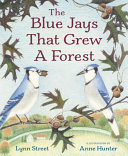 The Blue Jays That Grew a Forest
by Lynn Street; illus. by Anne Hunter
Primary Quinlin/Peachtree 48 pp.
8/25 9781682636046 $18.99
Most everyone knows that “mighty oaks from little acorns grow,” as the old saw goes, but how many people know that blue jays are integral to their propagation? Street’s simple, gentle text uses repetition and onomatopoeia as well as accurate scientific vocabulary to bring young people in on the secret. As winter approaches, blue jays gather acorns, flying “one block, two blocks, over a farm or two” to find where they can “tap, tap, tap the acorns into soft ground, or hide them under mulch and layers of leaf litter.” Using pen-and-ink and soft colored pencils on textured paper, Hunter depicts the birds’ industry. One flies to the right, dominating the foreground of a double-page spread and carrying multiple acorns, while far below autumn leaves dapple a rolling hill. On another page, five vignettes show the birds burying acorns “Here. Here. There. There. Still more?” But “not all the acorns will be found” for food, and in the spring, tiny oak saplings emerge from those that remain: “Here. Here. There. There.” Readers who may never have thought much about either acorns or blue jays will come away enchanted by the depiction of what the author explains in a closing note is “an example of mutualism.” Street specifies that blue jays live in the “central and eastern United States and parts of Canada,” and the back matter also includes three other types of jays and the local oaks they help to propagate. An unassuming delight.
From the September/October 2025 issue of The Horn Book Magazine.


RECOMMENDED

Please register with us to continue reading.
ALREADY A SUBSCRIBER? LOG IN
We are currently offering this content for free. Sign up now to activate your personal profile, where you can save articles for future viewing.
ALREADY A SUBSCRIBER? LOG IN
Thank you for visiting.
We’ve noticed you are using a private browser. To continue, please log in or create an account.

Add Comment :-
Be the first reader to comment.
Comment Policy:
Comment should not be empty !!!