




2018 School Spending Survey Report
Studio Views: Pulp Painting
Pulp painting is easy to demonstrate, but difficult to explain.
Cotton rag fiber suspended in water (a wet, messy, colorful slurry) is poured through hand-cut stencils (made from foam meat trays) onto a screen (a window screen will do). The result — an image in handmade paper. The paper is the picture. The picture is the paper.
The advantages of this technique are many:
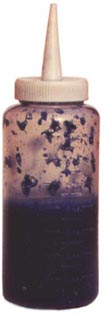
I now have a use for all those discarded yogurt containers and hair coloring squeeze bottles; they make excellent pouring cups and drawing tools.
 I’ve developed marvelous upper-body strength, without the cost of a gym membership, from hauling forty-two pound pails of damp fiber (pulp) around the studio.
At the market I’m known for my fashion sense; my pulp splattered clothing makes quite an impression.
I’ve discovered that a bucket of pulp is the better mousetrap (I am withholding the disgusting details).
Looking for additions to my motley collection of blenders (used to mix pigment and chemicals) gives me a reason to stop and shop garage sales.
Friends have found that the five-gallon pulp shipping pails make nifty nesting buckets for Rhode Island Reds.
And, of course, there is the pleasure of swirling my hands through five gallons of glorious color to mix fiber and pigment.
The drawbacks are few:
Cotton rag fiber spoils, and it is no secret when it does. Open the doors and windows and turn on the fans!
Then there is the problem of color test strips catching fire in the microwave — quite a dramatic touch, but a bit dangerous.
So why pulp painting? It works.
From the March/April 1998 issue of The Horn Book Magazine: Special Issue: Picture Books. Click on the tag Studio Views for more illustrators.


RECOMMENDED

Please register with us to continue reading.
ALREADY A SUBSCRIBER? LOG IN
We are currently offering this content for free. Sign up now to activate your personal profile, where you can save articles for future viewing.
ALREADY A SUBSCRIBER? LOG IN
Thank you for visiting.
We’ve noticed you are using a private browser. To continue, please log in or create an account.

Add Comment :-
Comment Policy:
Comment should not be empty !!!
Studio Views — The Horn Book
[...] “Pulp Painting” by Denise Fleming [...]Posted : Dec 12, 2012 09:08