


2018 School Spending Survey Report
What Makes a Good “Bad” Book?
Trashy books: they’re the ones that cause young patrons to avert their eyes from a librarian (or, better yet, use the self-scan) and hide the dust jackets from their parents.
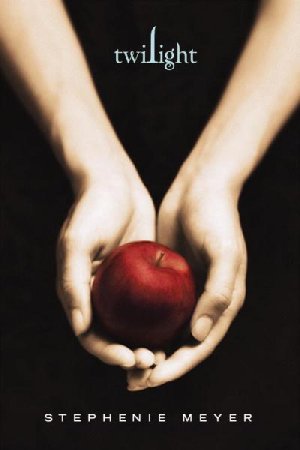 It’s too soon for long-suffering Edward and newly bitten Bella to claim classic status, but the Twilight series’ popularity is a force to be reckoned with. Before becoming something of a punch line, the series debuted to some critical acclaim — the first book received starred reviews from School Library Journal and Publishers Weekly; The Horn Book Guide gave it a 4 — “recommended, with minor flaws.”
There are many, many of these volumes mooning about all over the world in book form, not to mention e-iterations. Add to that the movie franchise plus the soundtrack and merchandise (action figures!). Mix in the tabloid coverage of on-again, off-again Kristen and Rob (and Taylor’s on-again, off-again shirt). No shrinking violets, these vampires and werewolves, and sheer exposure adds to the series’ notoriety.
Another reason for Twilight’s popularity is its accessibility. The books are undemanding; there’s not a lot of mental heavy lifting required in order to follow what’s going on. But, notably, they don’t make their fans feel stupid for loving them. All four volumes are big and weighty. They are long, and they use words of more than one syllable. Bella, for all her many faults, is not an airhead, and Edward’s family has centuries of life-learning under its belt. Readers of differing ability levels can get through Twilight without hating themselves in the morning.
And like the good crossover series that it is, Twilight has gripped not just teenage girls but also their mothers, their little sisters, and most likely an uncle or two. Regency Romance swooners, Comic-Con attenders, Vincent Price fans: lovers or haters, they all know Twilight. The series has spawned countless imitators in the form of YA vampire stories; supernatural love stories (not just vampires but also zombies, angels, mermaids — you name it); forbidden relationship tales; angst-ridden, Northwest-set emo-teen books, etc. Even Harlequin romance novels are getting into the game, with its YA offshoot, Harlequin Teen, publishing supernatural-themed titles alongside its swoon-inducing earthbound tales. It’s a cultural phenomenon that, while on the wane, has left its mark.
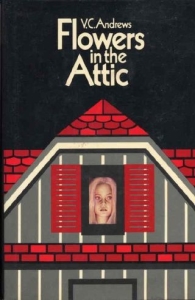 Forbidden love, idealized romance, distressed damsels, moralizing. Before there was Stephenie Meyer, there was V. C. Andrews, arguably the grande dame of literary trash-lit devoured by teens, who, spectacularly, put the “ick” in gothic when it comes to taboo teen sex. Andrews began her Dollanganger series in 1979 with Flowers in the Attic. It starred twelve-year-old Cathy, her fourteen-year-old brother, Christopher, and their five-year-old twin siblings, Cory and Carrie. The family — once dazzling, now destitute — seeks help from the children’s maternal grandmother. To make a long story short, the kids’ mom ends up locking them in Grandmother’s attic, ostensibly for their own protection, really to feather her own nest. This element of escapism is a trash-book factor that cannot be overstated. It’s a romantic idea to be Cathy — beauty-queen beautiful yet forcibly, tragically removed from the outside world. Or Bella — ugly-duckling beautiful and ensnared by eternal love. Would anyone in real life actually want to be either of these young ladies? Probably not; but reading about their travails sure can sweep a reader away.
 The vicarious escapism of a debauched and dangerous existence keeps another YA book, Go Ask Alice, perennially popular. When first published in 1971, it was marketed as the real-life journal of an anonymous teen — a nameless everygirl with self-esteem issues who first loses herself to the grip of vice, then roller-coasters between a life of drug abuse/living on the streets/trading sex for drugs and getting clean/going to high school/living at home with her caring family, before dying dramatically, offstage, at the end of the book, just after being sprung by her parents from a mental hospital following a psychotic episode brought on by ingesting a laced drink (planted by her enemy) while she’s babysitting. Whew!
No one sets out to live the Go Ask Alice life. But teens may wonder what it would feel like — from a very safe distance — to experience what she went through: the lure of parties and nightlife; the exhilaration of new experiences (sex, booze, drugs); the in-control feeling of making choices and taking chances while, paradoxically, losing oneself to the moment. Far fewer of this book’s readers are teenage prostitute drug addicts than are ordinary kids looking for titillating literary thrills, who can then feel grateful — superior, even — to find themselves back in their own everyday lives and not in Anonymous’s shoes.
The book’s nonfiction claim was intended to scare readers straight, and it was a Big Deal to find out that the events were actually made up, and by an adult at that. As fiction, the story is a blatant (and histrionic) cautionary tale; knowing that the story is fake makes it easy, while reading, to see what’s so fake about it. However, Alice’s mythology helped the book transcend its problem novel status to become a part of the YA zeitgeist. People were fooled — teens were lured by the lurid elements; adults were taken in by the fear-mongering. The story could be true, just about, and what remains interesting today is the perception of it as nonfiction versus fiction, as compelling teenager-tragedy versus over-the-top melodrama.
 Go Ask Alice spurred many copycat problem novels (and an Afterschool Special or two…or ten). In 1979, Simon & Schuster published a boy version, Jay’s Journal, about sex, drugs, and the occult, with the credit line “Edited by Dr. Beatrice Sparks, who also discovered Go Ask Alice.” Nowadays, Simon Pulse seems to be trying to singlehandedly orchestrate a comeback for the books and their imitators. In 2006, the publisher reprinted and repackaged Go Ask Alice in paperback; they did the same thing with Jay’s Journal in 2010. In 2012 they released an anti-drug novel called Lucy in the Sky, and 2013 brought Letting Ana Go, about an anorexic girl’s death; both books are written by Anonymous and published “in the tradition of Go Ask Alice.” In each of the contemporary novels, the tone is somewhat less hysterical than in Alice, and the narrator’s voice is fairly believable, but will they be widely read forty years from now? Time will tell, but none of the imitators thus far have had Alice’s legs.
 Another book from the 1970s that steadfastly maintains its scandalous status — and constantly re-ups its
reading population — is Judy Blume’s Forever. Even today, this book is fiercely divisive, with some people seeing it as pornographic trash and others (notably librarians, who are forced to defend it whenever Banned Books Week rolls around) viewing it as worthy, groundbreaking young adult fiction. High school senior Katherine, a virgin, dates (and beds) boyfriend Michael. By the end of the book, she has grown restless (forever is a long time), and falls into the arms of an older boy. Published as an adult book by a nervous children’s publisher, Bradbury, Forever was groundbreaking in subject matter (frank, nonjudgmental teenage sexuality), details (Michael’s, ahem, friend Ralph), and even some humor:
Another book from the 1970s that steadfastly maintains its scandalous status — and constantly re-ups its
reading population — is Judy Blume’s Forever. Even today, this book is fiercely divisive, with some people seeing it as pornographic trash and others (notably librarians, who are forced to defend it whenever Banned Books Week rolls around) viewing it as worthy, groundbreaking young adult fiction. High school senior Katherine, a virgin, dates (and beds) boyfriend Michael. By the end of the book, she has grown restless (forever is a long time), and falls into the arms of an older boy. Published as an adult book by a nervous children’s publisher, Bradbury, Forever was groundbreaking in subject matter (frank, nonjudgmental teenage sexuality), details (Michael’s, ahem, friend Ralph), and even some humor:Jamie (Katherine’s little sister, generally a goody-two-shoes): “What were you two doing in your bedroom?…Were you fucking?”
Katherine: “Jamie!”
Jamie: “That’s not a bad word…hate and war are bad words but fuck isn’t.”
Katherine: “I never said it was.”
Jamie: “So were you?”
Katherine: “No…I wasn’t…but even if I was I wouldn’t tell you.”
Jamie: “Why not?”
Katherine: “Because it’s none of your damn business…that’s why.”
Jamie: “Oh wow,” she said, clucking her tongue, “your generation is so hung up about sex.”
Passages like this made people nervous. And also dismissive: in the December 1977 issue of The Horn Book Magazine, Aidan Chambers called Forever “as much a first-sex manual as it is a novel.” Even today, the book is consistently questioned, challenged, and banned, with a large part of its cachet for teens coming from the anticipation of adult disapproval.
The book was also, of course, a huge departure for its author, best known for kid-friendly books such as Tales of a Fourth Grade Nothing, The One in the Middle Is the Green Kangaroo, and Freckle Juice. Though she’d already delved into adolescent territory (with Are You There God? It’s Me, Margaret; Then Again, Maybe I Won’t; and Deenie, among others — themselves frank enough to raise eyebrows), Forever catapulted the author into the maelstrom of pissed-off parents — and trashy YA publishing history was made. Forever is still in print, still in libraries (my checked-out copy had underlined words and marginalia), still discussed and debated. Though it’s undeniably a product of its day (later editions include an introductory author’s note about the dangers of AIDS), the story’s forthrightness and emotional resonance keep the book relevant today.
Forever, Go Ask Alice, and Flowers in the Attic — books that are boundary-pushing but also kitschy, dated, and over-the-top. However, a new generation of good “bad” books has sprung up, which includes some titles with surprising heft. These highlight the same issues as classic YA bad books — teen sexuality and love, drinking and drugs, and family problems, to name a few — but in a nuanced, multidimensional way.
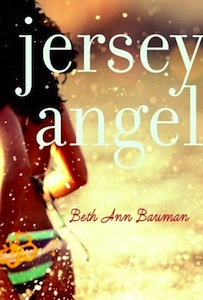 Take Beth Ann Bauman’s Jersey Angel, for example. This novel’s star is, according to the Horn Book Magazine review, “a rare but welcome type of protagonist in young adult literature: a girl with a healthy libido and no shame about following where it leads.” Seventeen-year-old Angel is a Jersey Shore girl with little adult supervision. She’s a caring big sister, but makes terrible choices when it comes to her own life: though she quit smoking cigarettes (she wears a patch), she drinks, parties, smokes pot, and continually hooks up with different boys. Worst of all, she’s having a secret fling with her best friend’s boyfriend — whom she later catches making out with her mom. Sordid? Yes. Gratuitous? Not really. Bauman creates complex characters, townies in a summer vacation spot, whose desperation, hope, alienation, regret, and boredom show through. The protagonist is flawed with a capital F; like Katherine in Forever, who threw over poor Michael for no good reason, Angel can be careless with people’s feelings, and at times she’s extremely unlikable. But she can also be quite vulnerable, a sympathetic figure, and — boyfriend-stealing notwithstanding — a surprisingly dependable friend. There’s nothing saccharine about the book: Angel is who she is, and the resolution is gratifyingly ambiguous for modern-day readers. We want to believe that Angel is going to change, as she avows, but there’s no guarantee that she will.
Bella, Cathy, Anonymous, Katherine, and Angel: each young lady tells her own story in her own words. This first-person perspective draws readers close even as the characters make bad choices or justify wrong decisions or otherwise mess things up. Readers are also privy to the small victories and can ally themselves with the young women without condoning everything they do. Empathy is key to connecting with bad-book characters in all their humanness.
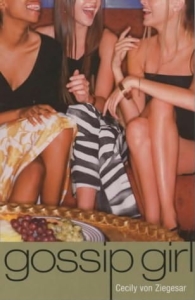 On the other hand, many books today embrace their badness — and can be lots of fun. The Gossip Girl books, created by Cecily von Ziegesar, and the Pretty Little Liars series, by Sara Shepard, for example, revel in their terrible fabulousness. Both series feature super-rich kids acting like debauched adults — boozing, partying, sleeping around, and backstabbing, with commensurate world-weariness thrown in. Instead of having a sympathy-inducing first-person narrator, these stories are told by snarky omniscient voices whose sneering commentaries bring readers back to earth like a frenemy’s slap across the face.
As did Twilight with its movies, both book series have benefited from the popularity of their television show spin-offs, with Gossip Girl trading on its high-fashion costumes, tabloid-friendly stars (Blake’s surprise wedding to Ryan Reynolds! Leighton’s jailbird mother!), and envelope-pushing sex scenes (a ménage à trois? on primetime TV? among YOUNG ADULTS?!), which makes Pretty Little Liars — itself no stranger to scandalous story lines but also broadcast on a more family-friendly network — seem downright wholesome by comparison.
And also as with Twilight, it’s too soon to know whether these contemporary bad books will outlive their of-the-moment status and take their place in the trashy books canon alongside Andrews, Blume, and Anonymous. What’s certain is that the teens and tweens reading the books today — hiding them from their parents, their librarians, and their teachers — will soon grow up to be those same authority figures. And, like so much costume jewelry, the best of these trashy books will endure as sparkly, if tarnished, reminders of how much fun bad books can be.
Good “Bad” Books
Flowers in the Attic (Pocket/Simon, 1979) by V. C. Andrews [Dollanganger series also includes Petals on the Wind (1980), If There Be Thorns (1981), Seeds of Yesterday (1984), and Garden of Shadows (1987)]
Go Ask Alice (Simon, 1971) by Anonymous
Jay’s Journal (Simon, 1979) by Anonymous
Letting Ana Go (Simon Pulse, 2013) by Anonymous
Lucy in the Sky (Simon Pulse, 2012) by Anonymous
Jersey Angel (Lamb/Random, 2012) by Beth Ann Bauman
Forever (Bradbury, 1975) by Judy Blume
Twilight (Tingley/Little, Brown, 2005) by Stephenie Meyer [Twilight series also includes New Moon (2006), Eclipse (2007), and Breaking Dawn (2008)]
Pretty Little Liars series (HarperTeen, 2006–present) by Sara Shepard
Gossip Girl series (Little, Brown, 2002–2009) by Cecily von Ziegesar
From the July/August 2013 issue of The Horn Book Magazine.


Added To Cart
RELATED


RECOMMENDED
Please register with us to continue reading.
ALREADY A SUBSCRIBER? LOG IN
We are currently offering this content for free. Sign up now to activate your personal profile, where you can save articles for future viewing.
ALREADY A SUBSCRIBER? LOG IN
Thank you for visiting.
We’ve noticed you are using a private browser. To continue, please log in or create an account.

Add Comment :-
Comment Policy:
Comment should not be empty !!!
Elissa Gershowitz
Debbie, was it when the book was still considered nonfiction? How did your student respond to it?Posted : Jun 25, 2013 03:18
Debbie Vilardi
I taught Go Ask Alice to a high school student who was suspended for fighting. It's the book his English class was reading at the time.Posted : Jun 25, 2013 02:27
Elissa Gershowitz
Can I come too, Ms. Cynthia?Posted : Jun 20, 2013 07:48
Cynthia
You're making me yearn to fill a bag with deliciously trashy reading and hit the beach, Elissa!Posted : Jun 20, 2013 07:41