


2018 School Spending Survey Report
What Makes a Good YA Coming-Out Novel?
Since John Donovan’s groundbreaking 1969 I’ll Get There.
 Since John Donovan’s groundbreaking 1969 I’ll Get There. It Better Be Worth the Trip, young adult novels featuring gay, lesbian, bisexual, transgender, and questioning teens have come a long way. Once few and far between, they have enjoyed a steady rise in numbers and prominence, particularly over the last decade, as prolific and acclaimed queer* writers such as David Levithan and Julie Anne Peters have entered the scene. Queer teen lit is no longer purely a domain of angst-filled secret affairs, deadly accidents, and ambiguous implications. Similarly, it no longer needs to be filtered through the eyes of a sympathetic straight character. While tales of hapless or inspiring queer outcasts were once commonly told from the point of view of a straight observer (M. E. Kerr’s Deliver Us from Evie; Peters’s Luna), now queer protagonists are more likely to be the stars of their own stories.
Queer young adult novels don’t have to be coming-out stories, but coming out is a common theme in many of these books, fitting well with the still-in-progress audience and the relative newness of the genre. But what makes such a book more than just an issue novel? What gives it that special combination of universality and particularity that allows it to reach a wide audience while at the same time speaking to individual readers on a deeply personal level? What makes a coming-out novel good?
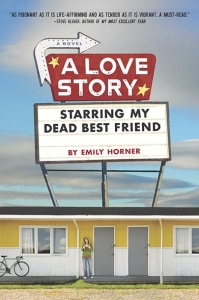 A good coming-out novel is about more than just coming out. The best ones weave their coming-out stories into larger dramatic narratives. Brent Hartinger’s Geography Club, Alex Sanchez’s Rainbow trilogy, and Lili Wilkinson’s Stonewall Honor Book Pink all build their plots around the complicated social politics and interpersonal dynamics of high school, with coming out just one thread of potential conflict among many. In Madeleine George’s The Difference Between You and Me, the breaking points in a closeted lesbian relationship revolve around prom: Emily is trying to make her name in student government by getting corporate sponsorship for it, while Jesse is crusading against that same company’s bid to move into town. Hannah Moskowitz’s Gone, Gone, Gone and Peter Cameron’s Someday This Pain Will Be Useful to You both draw on the painful post–9/11 urban landscape to externalize their protagonists’ acute sense of being unmoored and under threat. In A Love Story Starring My Dead Best Friend by Emily Horner, the main character realizes she’s a lesbian over the course of the transformative cross-country bike trip that is her way of dealing with her best friend’s death. In this book (as in all of these titles), the protagonist’s process of coming to terms with her identity, sharing it with her friends and family, and embarking on her first relationship is integral to the book, but it is not all of the book; her life’s borders aren’t defined by this one aspect of her identity.
Coming-out stories don’t unfold in a vacuum, and nor do teens’ own lives. The best books integrate queer teens’ coming-of-age stories into the rich and varied spectrum of human experience.
 A corollary of this rule is that a good coming-out novel knows its characters are more than their sexual or gender identity. Queer kids are more than just their designated letter of the alphabet, and their stories — coming out and otherwise — should reflect that. As the protagonist of Cris Beam’s I Am J puts it: “Being trans wasn’t special, and yet it was. It was just good and bad and interesting and…very human, like anything else.” The plot of I Am J hinges on coming-out issues, but J himself struggles with issues of class and race as well as gender, and his fraught family dynamics and longing for a relationship help to flesh out his character. Perry Moore’s Hero, a Watchmen-esque superhero satire, creates neat narrative parallels between its protagonist’s superpowers and his gayness. The eponymous hero must alternately hide and embrace both, and his coming-out story is riddled with superhero team training, epic battles, and secret identities.
 Speaking of secret identities, identity in these novels isn’t simple. Take A. S.
King’s Ask the Passengers, whose introverted protagonist is reluctant to label herself before she’s had the chance to sort through her identity in private. When pressed by her parents to commit, one way or another, to an identity they understand, she argues back that “it’s just not as simple as you’re making it…I don’t think every gay person can be clearly defined and kept in a nifty little box.” Wilkinson’s Pink plays with the idea that for some teens, identity is still in the process of triangulation. Protagonist Ava has a long-term girlfriend and supportive parents and has identified as a lesbian for years, but when she changes schools she uses her newfound anonymity to dress more girly than goth and explore the possibility that she might be bi. The Difference Between You and Me rotates narrative duties among the three very different, but equally compelling, teen girls that make up its central love triangle. They are all queer, but none of them are alike. Similarly using a diverse cast of queer characters, David Levithan’s semi-utopian Boy Meets Boy and Sanchez’s soapy Rainbow trilogy affirm that there is a whole rainbow of ways to be gay.
Speaking of secret identities, identity in these novels isn’t simple. Take A. S.
King’s Ask the Passengers, whose introverted protagonist is reluctant to label herself before she’s had the chance to sort through her identity in private. When pressed by her parents to commit, one way or another, to an identity they understand, she argues back that “it’s just not as simple as you’re making it…I don’t think every gay person can be clearly defined and kept in a nifty little box.” Wilkinson’s Pink plays with the idea that for some teens, identity is still in the process of triangulation. Protagonist Ava has a long-term girlfriend and supportive parents and has identified as a lesbian for years, but when she changes schools she uses her newfound anonymity to dress more girly than goth and explore the possibility that she might be bi. The Difference Between You and Me rotates narrative duties among the three very different, but equally compelling, teen girls that make up its central love triangle. They are all queer, but none of them are alike. Similarly using a diverse cast of queer characters, David Levithan’s semi-utopian Boy Meets Boy and Sanchez’s soapy Rainbow trilogy affirm that there is a whole rainbow of ways to be gay.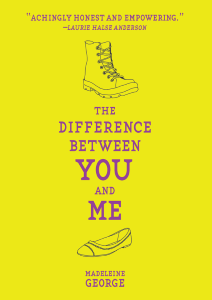 And because there is no one right way to be (or write) gay, a good coming-out novel isn’t prescriptive; it recognizes that there are infinite paths toward coming out, even if they all share some basic similarities. Almost all of the books named here use diverse ensemble casts to assemble a collective narrative about coming out that contains multitudes. Boy Meets Boy may celebrate the easy outness of main character Paul, but it also throws into stark, sympathetic relief the pain felt by his best friend Tony and ex-boyfriend Kyle, whose coming-out paths are much more fraught with danger and doubt. The Difference Between You and Me urges readers to admire Jesse’s determination to be true to herself, but it also paints a surprisingly sympathetic portrait of closeted, perpetually on-edge Emily, who could have easily been a one-note villain.
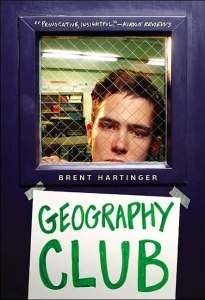 These ensemble casts are also notable because a good coming-out novel celebrates the importance of friendship and belonging. Coming out is about community as much as romance. The best books capture the exhilaration and relief of finding a place in the world where you can be all of yourself. Geography Club is one of the earliest and most enduring examples of this rule, with its plot hinging on the formation of a secret school club (its members assume no one else will look into something that purports to be about geography) where queer students meet and share their experiences. Main character Russel explains the importance of this safe space: “There’s a difference between being alone and being lonely; I may not have been completely alone in life, but I was definitely lonely. My secret mission — four years in an American high school — had been an involuntary one, and now I desperately wanted to be somewhere where I could be honest about who I was and what I wanted.” Even though the romance between Russel and closeted, popular Kevin ultimately proves untenable, the book ends on a hopeful, happy note because Russel has found a group of friends who know and accept him, and in turn he’s gained the courage to take a stand on things like reaching out to the school’s more obvious outsiders.
Laura Goode’s recent Sister Mischief takes a similar approach, building plot around the formation of a hip-hop GSA in a small Midwestern town. In this book, queerness is just one kind of difference that unites outsiders of all stripes in a town that values conformity. And King’s Ask the Passengers includes a joyful scene of Astrid patronizing a gay club for the first time, in which an older woman
smiles at me. It’s not a creepy smile or a flirtatious smile. I can’t describe it. It’s like a supportive smile. Friendly and happy for me…I smile, and the biker lady smiles back and blows her whistle and then starts a victory lap around the bar.
All the people at the bar put out their hands for high fives…and some duck down and kiss her. It occurs to me, as I stand on the edge of the dance floor out of breath, that people here are nice to each other.
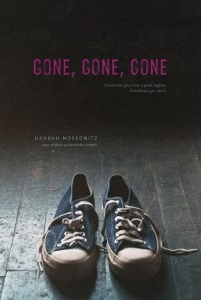 That said, if there is a romance, it should be electric. One reason that Nancy Garden’s Annie on My Mind is still read today, despite its dated social landscape and unfashionably earnest tone, is the timeless luminosity of its love story. If a story hinges on a romance, then it had better make readers believe in the power of that relationship. A Love Story Starring My Dead Best Friend draws on a classic rom-com setup when it makes Cass’s love interest a former nemesis with whom she must now work, delivering sparkling banter and a snappily romantic love-hate relationship. Moskowitz’s Gone, Gone, Gone and Moore’s Hero both feature budding relationships that are breathless and exhilarating, with a tense romanticism that even Twilight fans should be able to appreciate.
A good coming-out novel can be a window or a mirror. According to Rudine Sims Bishop,
Books are sometimes windows, offering views of worlds that may be real or imagined, familiar or strange…When lighting conditions are just right, however, a window can also be a mirror. Literature transforms human experience and reflects it back to us, and in that reflection we can see our own lives and experiences as part of the larger human experience. Reading, then, becomes a means of self-affirmation, and readers often seek their mirrors in books.
Coming-out novels have an important role as cultural educators, allowing some readers to walk in the shoes of those unlike them and develop empathy and understanding. However, these books’ role as mirrors is equally important; they may offer affirmation, guidance, and hope for young readers who are challenged to find those things outside the world of words.
The best books have something to give any reader, queer, straight, or questioning; they celebrate and sympathize with the experiences of the readers their protagonists reflect, but their narrative power isn’t based on insider knowledge. Beam’s I Am J is a great example of this quality: Beam conveys eye-opening information about the challenges and cruelties J faces as he navigates daily life that provides an accessible, engaging education in trans issues for readers learning about them for the first time. At the same time, the level of detail and emotional intensity contained in the book make it more than just a learning experience; it’s a story, one that reflects this one aspect of their lives in a way that other books do not.
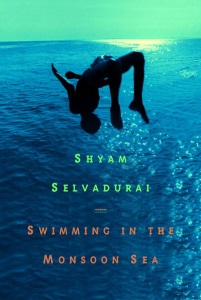 Finally, a good coming-out novel is, first and last, a good book. It’s not enough for a book to offer a respectful and realistic representation of queer life, or be the first to show a particular kind of character. Those things are important, but they should be a baseline, not markers of rare quality. Like any other story, a good coming-out novel needs some combination of beautiful writing, propulsive pacing, engaging plot, fully developed characters, vivid setting, compelling theme, and emotional depth. Cameron’s Someday This Pain Will Be Useful to You features delicate, beautifully nuanced writing and an understated but devastating portrait of one disaffected teen’s pain and striving. Shyam Selvadurai’s Swimming in the Monsoon Sea powerfully evokes a 1980s Sri Lankan setting and uses the protagonist’s involvement in a production of Othello to draw readers’ attention to the Shakespearean scale of the drama.
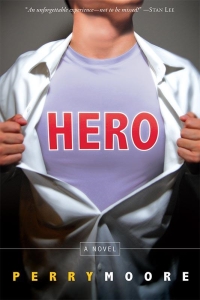 And let’s not forget genre fiction. It’s hardly fair to hand over a few fraught, issue-driven books to readers looking for queer characters and leave the Nancy Drews and Harry Potters and, yes, even the Gossip Girls and Twilights of the literary world to the domain of straight characters. It’s still difficult to find gay or lesbian protagonists (and near impossible to find bisexual or transgender characters) starring in anything that’s not realistic fiction. Romance and soapy drama are decently represented in the canon of coming-out stories, but mystery/suspense, historical fiction, fantasy, and sci-fi can be more challenging to find. When mysteries or thrillers feature queer characters, they often appear as victims or villains (as in Kevin Brooks’s Black Rabbit Summer and Lauren Myracle’s Shine). Historical fiction has made some inroads (see Pat Lowery Collins’s Hidden Voices), but given how small the perceived audience is for historical fiction in general, the relative dearth of representation here isn’t surprising. Speculative fiction has seen a boom of positively portrayed queer supporting characters (though with an unfortunate tendency toward martyrdom) in books such as Patrick Ness’s The Knife of Never Letting Go and Sarah Crossan’s Breathe. Malinda Lo’s Ash, Huntress, and Adaptation are not precisely coming-out stories, but they incorporate lesbian and bisexual protagonists seamlessly into their respective fantastical universes. Hero remains the standard for a coming-out story that is equally successful as speculative fiction.
There is ground yet to travel. Coming-out stories featuring teens of color are still few and far between, and representations of gay and lesbian teens far outpace depictions of bisexual and transgendered protagonists. Still, the last few years have seen a number of debut authors (including Laura Goode, Emily Horner, Martin Wilson, Tonya Cherie Hegamin, and Cris Beam) whose first novels have featured queer protagonists, and the future is bright. Good coming-out novels have so much to offer readers, from affirmation to education to iconic characters — and there’s much more to come. We’re getting there. It’ll be worth the trip.
*Throughout this column I use queer as a blanket term for people who are gay, lesbian, transgendered, bisexual, or questioning. While historically a derogatory label, it has been reclaimed as an inclusive term that acknowledges the limits of labels and acronyms in describing the pantheon of sexual and gender identities. I use it here in deference to that diversity.
Good YA Coming-Out Novels
I Am J (Little, Brown, 2011) by Cris Beam
Someday This Pain Will Be Useful to You (Foster/Farrar, 2007) by Peter Cameron
The Difference Between You and Me (Viking, 2012) by Madeleine George
Sister Mischief (Candlewick, 2011) by Laura Goode
Geography Club (HarperTempest, 2003) by Brent Hartinger
A Love Story Starring My Dead Best Friend (Dial, 2010) by Emily Horner
Ask the Passengers (Little, Brown, 2012) by A. S. King
Boy Meets Boy (Knopf, 2003) by David Levithan
Hero (Hyperion, 2007) by Perry Moore
Gone, Gone, Gone (Simon Pulse, 2012) by Hannah Moskowitz
Rainbow trilogy: Rainbow Boys (Simon, 2001), Rainbow High (2003), and Rainbow Road (2005) by Alex Sanchez
Swimming in the Monsoon Sea (Tundra, 2005) by Shyam Selvadurai
Pink (HarperTeen, 2011) by Lili Wilkinson
From the March/April 2013 issue of The Horn Book Magazine.
For more in The Horn Book’s Pride Month series, click on the tag Pride 2017.


Added To Cart
RECOMMENDED

Please register with us to continue reading.
ALREADY A SUBSCRIBER? LOG IN
We are currently offering this content for free. Sign up now to activate your personal profile, where you can save articles for future viewing.
ALREADY A SUBSCRIBER? LOG IN
Thank you for visiting.
We’ve noticed you are using a private browser. To continue, please log in or create an account.

Add Comment :-
Comment Policy:
Comment should not be empty !!!
Mika
Mercedes Lackey's book Magic's Pawn is an interesting coming of age/ historical Fantasy genre book. I'm not sure if it can be considered a book about coming out, so much as book about discovering yourself. The main character discovers that he is gay and takes his first lover during the course of the bookPosted : Oct 07, 2013 01:46
Steven dos Santos
Great article! Thanks for mentioning my book, THE CULLING, Amanda! :-)Posted : Jun 21, 2013 11:14
Amanda Coppedge
There is a new dystopian YA called THE CULLING by Steven dos Santos which features a gay main character and romance. It is not a coming-out story, but one set in a world where being gay is no big deal. Progress!Posted : Jun 15, 2013 05:23
Claire Gross
Hi Emily -- Thanks so much for commenting! I'm glad you liked the article. I actually reviewed Tessa Masterson Will Go to Prom for the Bulletin of the Center for Children's Books back when it first came out, and I really enjoyed it. :)Posted : Mar 29, 2013 01:41
emily franklin
Hi - Great article. You might be interested in my novel, co-written with Brendan Halpin, TESSA MASTERSON WILL GO TO PROM. Thanks.Posted : Mar 29, 2013 12:43