


2018 School Spending Survey Report

Whips AND chains
I'd really like to ban the term "self-censorship" from discourse, given that we already have a spectrum of words--from "prudence" to "cowardice"--that say more precisely what we mean, and because it causes us to be confused about what censorship actually is.
 I'd really like to ban the term "self-censorship" from discourse, given that we already have a spectrum of words--from "prudence" to "cowardice"--that say more precisely what we mean, and because it causes us to be confused about what censorship actually is.
As Megan Schliesman at Reading While White posted last week, the discussion about A Birthday Cake for George Washington is not about censorship. People talking about what's wrong with the book are not censors; people saying it will damage children are not censors; Scholastic deciding to cease the book's distribution is not censorship. Hell, somebody buying a copy of the book only in order to consign it to a bonfire is not censorship. (I think I told you guys I did this once, with a Sidney Sheldon book whose utter disregard for logical plot construction and consistent characterization caused me to pitch it into the fireplace by which I was reading. It felt naughty.)
Censorship happens when the government--and this includes public libraries--gets into the business of restricting access to information. As far as A Birthday Cake for George Washington is concerned, it would be censorship if a library that held a copy decided to restrict readership to adults, for example, or removed it from the collection on the basis of its being "offensive" or "harmful to children." It is also censorship if a public library decided not to purchase the book on the grounds that it is offensive or harmful, or if the library thinks it will get into trouble with those who find it so. This is of course very tricky--libraries don't purchase more books than they do, and it's rarely one criterion that guides that decision. Here is where we have to trust in the librarian's integrity and the library's book selection policy and adherence to ALA's Library Bill of Rights. I know I've told the story here before about the librarian I knew who didn't purchase a sex ed book for children on the grounds that it didn't have an index. Yes, it did not have an index--but that wasn't the reason she didn't buy it.
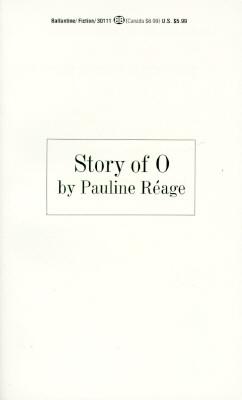
I bring all this up because of an interesting exchange I had on Twitter last week with YA novelist Daniel José Older. Reacting in a subtweet to my post about A Fine Dessert and A Birthday Cake, Older wrote "Ah here's the Horn/Sutton tut tutting on why Scholastic should've let kids read that book," with a screenshot of part of the post. I replied--or barged in, depending on your views about subtweeting--that I and the Horn believe kids should be allowed to read any book they wish. Then he asked me if I was cool with kids reading Little Black Sambo, Mein Kampf and The Story of O. (I think he dated us both with that last example.) Although I'm aware that this was intended as a sort of gotcha rhetorical question, it made me realize that Mr. Older is probably not familiar with the way librarians think. I said I was perfectly fine with kids reading any or all of those three books.
A bias toward believing that people, kids included, should be able to read whatever they want is so ingrained in librarianship that we can forget that it seems like a radical stance to civilians. And as discussions about children's books have moved, via social media, beyond the usual suspects of teachers, librarians, and publishers, it would be good for all concerned to remember that our assumptions are not necessarily shared.


Added To Cart
RELATED


RECOMMENDED
Please register with us to continue reading.
ALREADY A SUBSCRIBER? LOG IN
We are currently offering this content for free. Sign up now to activate your personal profile, where you can save articles for future viewing.
ALREADY A SUBSCRIBER? LOG IN
Thank you for visiting.
We’ve noticed you are using a private browser. To continue, please log in or create an account.

Add Comment :-
Comment Policy:
Comment should not be empty !!!
Robin Kurz
Hi Roger, I've been thinking about this post since I first read it, as collection development is an area in which I teach and research. Since I've been bogged down with teaching and finishing an article the past two weekends, I wasn't able to participate in the comments while they were still active. I did write a blog post in response to your first paragraph. I want to share that here in a spirit of goodwill before someone else does: http://www.transformingamericanlibraries.com/2016/02/self-censorship.html Warmest Regards, RobinPosted : Feb 07, 2016 04:34
Sarah
That's Little Black Sambo, of course. Apologies.Posted : Feb 05, 2016 01:54
Sarah
Since no one else has, wanted to leave the link to Daniel José Older's Guardian piece here. It's also illustrative to read the comments in this thread regarding Little Black and minstrelsy in concert with the recent Lee & Low study regarding demographics in the publishing industry. http://www.theguardian.com/books/2016/jan/29/smiling-slaves-the-real-censorship-in-childrens-booksPosted : Feb 05, 2016 01:53
Sesame Street
Skimming those documents, the request that "brotherhood" be supplanted by "amity" caught my eye. Ridiculous, but expressive in a way of a goal that would now be considered quaint if not outright deleterious. And it probably never was the goal, but a whole generation of us was raised on lip service to it; and it's hard to completely shake off.Posted : Feb 04, 2016 03:21
marc aronson
I knew about that 70s controversy but so glad you posted those old files, perfect current reading. This spring I am working on a book in which, in one section, I will speak about and share images of blackface minstrelsy. Now what is fascinating there is that here you have pure demeaning stereotyping created expressly to demean and humiliate (in abscencia, audiences were whites only) that was the most popular form of entertainment in non-black America for 90 or so years. Yet in a strange way it was non-black America wanting to experience, to be animated by, be enlivened by, black music, dance, talent. And eventually black performers blacked up themselves -- took over the demeaning medium and (to a point) transcended it.Posted : Feb 02, 2016 08:31