


2018 School Spending Survey Report
Apples to Elephants: Artists in Animation
Children’s book geekery comes in many forms.
 Children’s book geekery comes in many forms. My own most recent example came while watching Disney’s The Little Mermaid with my daughter for the first time. After skipping all the scary sea-witch scenes (which incidentally makes for a remarkably short film), we were watching the credit sequence roll when suddenly I started jumping up and down and pointing. “Tony Fucile! I just saw Tony Fucile’s name! Tony Fucile!” That’s the price any kid has
to pay when Mama is a children’s
librarian — having to deal with intemperate enthusiasm about anything and everything related to children’s books.
Children’s book geekery comes in many forms. My own most recent example came while watching Disney’s The Little Mermaid with my daughter for the first time. After skipping all the scary sea-witch scenes (which incidentally makes for a remarkably short film), we were watching the credit sequence roll when suddenly I started jumping up and down and pointing. “Tony Fucile! I just saw Tony Fucile’s name! Tony Fucile!” That’s the price any kid has
to pay when Mama is a children’s
librarian — having to deal with intemperate enthusiasm about anything and everything related to children’s books.It is safe to say that never before have so many artists from the world of animation made the pilgrimage to books. In an era when pundits predict the death of print, it seems ironic that people who often have a background in computer-generated effects are seeing a future in this supposedly dead, paper-based medium. Publishing has seen its fair share of changes, but animation studios have undergone some major changes as well. (For example, today’s feature films are more often computer animated than hand drawn.) Artists who have worked in animation bring to their books experience that affects every element of their works’ look, style, and pacing, leading to illustrations that can incorporate the best of both worlds.
 The first thing one learns when talking with artists with animation backgrounds is that just because someone worked in animation in some capacity, it’s not to say that they have all have performed the same jobs. In the filmmaking process, different departments fulfill different tasks. First there are animators who create the key drawings, alongside the character designers who create the look and feel of animated characters. Then there are concept or visual development artists, who do everything from designing characters and environments to illustrating moments from the script, and background or layout artists, who often break down 2D storyboards into 3D shots. The job of the “inbetweener” (in the words of Caldecott honoree Molly Idle, who started out as one) is to “create the drawings that go in between the key drawings in a scene.” And just to confuse matters further, there is a fair amount of overlap among these departments. Still, due to the myriad responsibilities, the best way to refer to these people might just be to call them artists in animation. The umbrella term animator does not actually apply.
Such artists are hardly new to the children’s book scene. Since the dawn of Disney (and possibly before, if you consider Winsor McCay, creator of “Gertie the Dinosaur,” a children’s illustrator thanks to his Little Nemo comic strip), there have always been artists with animation backgrounds working in the field of children’s literature. Mary Blair, illustrator of the Ruth Krauss Little Golden Book I Can Fly, was a longtime Disney art supervisor. Bill Peet, author-illustrator of more than thirty books including The Whingdingdilly, was a story writer for Disney Studios. Even Swedish illustrator Gustaf Tenggren’s The Poky Little Puppy was influenced, according to Leonard S. Marcus’s Golden Legacy: How Golden Books Won Children’s Hearts, Changed Publishing Forever, and Became an American Icon Along the Way, less by “the guileful elves and trolls of Swedish folklore than [by] the uniformly endearing Disney Seven Dwarfs, in whose creation Tenggren himself was deeply involved.”
They have always been with us. Still and all, have there always been so many animation experts in publishing, or are their numbers greater today? “I’ve seen it grow and grow over the past ten years,” confirms Laurent Linn, art director for Simon & Schuster. Why? A combination of elements has contributed to the uptick. Significant among them has been the animation studios’ move from 2D animation to 3D. Former layout artist LeUyen Pham (illustrator of the Alvin Ho, Princess in Black, and Bo at Ballard Creek books, along with Freckleface Strawberry and many others) spent some time “helping to shepherd in the transition to 3D from traditional layout. It’s complicated to explain, but I was basically a bridge between the old way of animating and the 3D world that was coming through.” As traditional animation jobs have changed (and grown scarcer), the focus of former animation artists has widened. Linn speculates, “As more of them see others in the animation world doing books, it’s become an option that most of them hadn’t considered before.” Additionally, the opportunity to work on your own characters can be alluring. Says artist Kelly Light (Louise Loves Art), “I came home from [a] book tour drunk on the experience of being with kids who like my characters. Not Bugs Bunny or Mickey or Snoopy or SpongeBob (they did ask me to draw SpongeBob)…but I got to share my own artwork and got to talk to kids about making their own art.”
 “I actually find the craft of animation extremely time-consuming to tell a story, though I greatly admire anyone with the diligence to create frame by frame of film,” says 2015 Caldecott Award winner Dan Santat, author-illustrator of The Adventures of Beekle: The Unimaginary Friend. The creator of the Disney animated television series The Replacements, Santat knows all too well why so many people have made the shift to picture books. “Working creatively with a large corporation and numerous executives was rather frustrating because there was a feeling that there was a process of homogenization to try to appeal to as many kids as possible.” The result is a subsuming of personal style. As Bink & Gollie’s illustrator Tony Fucile, a man who has worked on everything from Disney’s Aladdin to the 2015 Pixar film Inside Out, says, “On large features animators work toward a goal together; it’s a team sport…You need to row that giant boat as one.” That can make working on your own books a freeing, almost frightening process. “Editors don’t want you to draw like someone else. They want you to be you. We’re not used to that.” Santat agrees. “[Book] publishing is you, an editor, and an art director all working together to bring your ideas to life in their purest form.”
Historically, publishers as well as teachers and librarians might have written off picture book art with a “cartoonlike” style. After all, cartoons were seen as lowbrow and literature, high. Yet with the proliferation of high-quality graphic-novel and comic-book elements in children’s books comes a wider acceptance of similar forms in picture books. Says Laurent Linn, “I think more animation/cartoon styles are accepted and wanted in trade picture books. A lot of parents/librarians/ editors/art directors/etc. now (like us) were raised in a time when animation wasn’t seen as…the opposite of fine illustration, but as an art form.”
Whether they’re winning Caldecott recognition or simply producing top-quality bestsellers, artists in animation have attained a level of critical acclaim little known to their predecessors. One might think that, having worked in studios where individual creativity was subsumed for the greater good of the whole, these artists’ styles might look too similar to one another. Yet it is their range that sets them apart. True, some illustrators look like they have an animation background right off the bat. Pick up Bink & Gollie and note how elastic Tony Fucile’s characters’ facial expressions are. Flip through Caldecott Honor Book Flora and the Flamingo and see how Molly Idle imbues the characters’ motions with an enviable fluidity.
Yet other former animation artists are harder to spot. In I Want My Hat Back Jon Klassen’s hatless bear stands with a stalwart steadiness that belies his creator’s motion-picture background. Aaron Becker’s books Journey and Quest construct intricate worlds that have more in common with David Macaulay’s painstaking attention to detail than with Becker’s own animation work on the Cars spinoff, and yet that is a part of his background experience. What then is the connective thread among former animation artists?
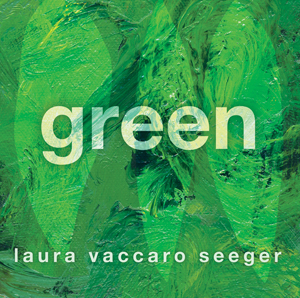 When asked how their background has influenced their art, most illustrators with animation backgrounds speak to the way in which their storytelling techniques have been honed. “I think that my background in animation is absolutely invaluable,” says two-time Caldecott Honor winner Laura Vaccaro Seeger (Green, First the Egg). “It taught me about timing and pacing and the importance of identifying the ‘key frames’ in storytelling. To make a
storyboard — which is the very important first step in the animation process — is to make a picture book, basically.” Fellow Caldecott Honor winner Molly Idle agrees. “Both are sequential, visual, storytelling mediums.” In her case, the language of filmmaking informs her every decision. “A page turn is like a scene change. A series of spot illustrations can function as a montage. A double-page spread can be used like a pan (the camera move, not the crockery). As I’m thumbnailing sketches I’ll ask myself…should this illustration be an establishing shot or a close-up?”
When asked how their background has influenced their art, most illustrators with animation backgrounds speak to the way in which their storytelling techniques have been honed. “I think that my background in animation is absolutely invaluable,” says two-time Caldecott Honor winner Laura Vaccaro Seeger (Green, First the Egg). “It taught me about timing and pacing and the importance of identifying the ‘key frames’ in storytelling. To make a
storyboard — which is the very important first step in the animation process — is to make a picture book, basically.” Fellow Caldecott Honor winner Molly Idle agrees. “Both are sequential, visual, storytelling mediums.” In her case, the language of filmmaking informs her every decision. “A page turn is like a scene change. A series of spot illustrations can function as a montage. A double-page spread can be used like a pan (the camera move, not the crockery). As I’m thumbnailing sketches I’ll ask myself…should this illustration be an establishing shot or a close-up?”“There is no doubt that my pacing, character design, and technique come directly from the 100+ shorts I animated for TV and for festivals,” says Mo Willems, multiple Caldecott Honor winner. However, more important than those elements, to him, is the fact that the anonymity of that storytelling allowed him to hone his craft. As a result he was able to work on and improve his storytelling ability, “before having to slap my name on the cover of one of my efforts.”
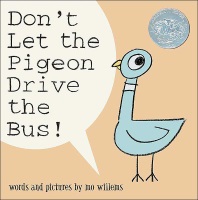 Willems, however, would disagree with the thinking that animation and picture book creation are all that similar. “Comparing animation and books is like comparing apples and elephants. In cartoons you are stuck with a specific aspect ratio, but you control the duration, rhythm, voices, and volume of the piece. In a book you give away a great deal of control to your readers; they determine the voices, the pacing, and the way in which it is consumed, which requires a greater respect for your audience paired with trusting your work enough to let go.”
For former animation artists, it’s a big shift from trying to please everyone as a cog in a larger machine to trying to please an audience as only yourself. Suddenly the spotlight isn’t just shining on the work. It’s shining on you as well. The interesting thing is that so many artists refuse to say which medium they love more. Both forms of storytelling exert a firm hold on the people involved. You can take the artist out of animation, but you’ll never take the animation out of the artist. “That’s the thing about animation, it’s magic you make with a pencil,” says Kelly Light. “I think if you learn it and love it, it has a lifelong hold on your heart.”
A Sampler of Illustrators with Animation Backgrounds
Chris Appelhans (Sparky!, written by Jenny Offill): Worked at LAIKA and DreamWorks
Aaron Becker (Journey, Quest): Worked on the film adaptation of The Polar Express and provided backgrounds for PIXAR’s Cars Toons series
Vera Brosgol (Anya’s Ghost): Designer at LAIKA
Peter Brown (Mr. Tiger Goes Wild): Painted backgrounds for The Venture Bros. on Cartoon Network
Peter de Sève (The Duchess of Whimsy): Designs for Blue Sky
Tony Fucile (Bink & Gollie): Animator for Disney, PIXAR, Warner Bros., and others
Carter Goodrich (Say Hello to Zorro!): Designs for Blue Sky, PIXAR, and others
Molly Idle (Flora and the Flamingo): Worked as an inbetweener and breakdown artist for DreamWorks
William Joyce (Rolie Polie Olie): Various, including conceptual characters for Disney/PIXAR, and co-founder of Moonbot Studios, an animation and visual effects studio
Kazu Kibuishi (Amulet series): Animated for Shadedbox Animations
Jon Klassen (I Want My Hat Back): Concept artist and illustrator on films including Coraline and Kung Fu Panda 2
Dan Krall (The Great Lollipop Caper): Designer at DreamWorks
Kelly Light (Louise Loves Art): Animator with Animotion, Film Roman, and other studios. Character artist
Bill Peet (The Whingdingdilly and many others): Story writer for Disney Studios
LeUyen Pham (Freckleface Strawberry, written by Julianne Moore): Worked as a 2D, 3D layout artist and concept designer at DreamWorks
Christian Robinson (Gaston, written by Kelly DiPucchio): Graduated from CalArts’s character animation program
Dan Santat (The Adventures of Beekle): Created the animated television series The Replacements
Julia Sarcone-Roach (Subway Story): Attended RISD and studied animation
Laura Vaccaro Seeger (Green, First the Egg): Animated openings for NBC shows and specials, FOX-TV, ABC’s 20/20, and others. Animated “Pete Seeger’s Family Sing-A-Long”
Divya Srinivasan (Octopus Alone): Animation work with music videos, movies, and book trailers
Bob Staake (Bluebird, this issue’s Horn Book Magazine cover): Animation design for Cartoon Network and Little Golden Books
Doug TenNapel (Cardboard): Created Earthworm Jim, Catscratch, and VeggieTales in the House
Mo Willems (Elephant & Piggie books): Animator for Sesame Street, creator of “The Off-Beats” and Sheep in the Big City
Dan Yaccarino (The Birthday Fish): Worked on Oswald and The Backyardigans
From the May/June 2015 special issue of The Horn Book Magazine: Transformations.


Added To Cart
RELATED


RECOMMENDED
Please register with us to continue reading.
ALREADY A SUBSCRIBER? LOG IN
We are currently offering this content for free. Sign up now to activate your personal profile, where you can save articles for future viewing.
ALREADY A SUBSCRIBER? LOG IN
Thank you for visiting.
We’ve noticed you are using a private browser. To continue, please log in or create an account.

Add Comment :-
Be the first reader to comment.
Comment Policy:
Comment should not be empty !!!