



2018 School Spending Survey Report

Why the Hell Is Everyone Sleeping on Flowcharts?: Informational Picture Books Up Close
A conversation between Elisa Gall and Jonathan Hunt about informational picture books and the Caldecott Award.
Today on Calling Caldecott, a conversation between Elisa Gall and Jonathan Hunt about informational picture books and the Caldecott Award. (This is an entry in their "why-the-hell" Calling Caldecott series. Previous posts include discussions about the Caldecott and holiday books; photography; board books; the Newbery Award; "didactic intent"; folklore; and sequels and series.)
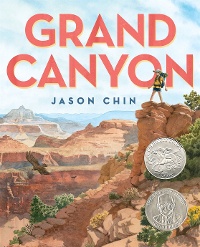 ELISA GALL: As we consider potential contenders for the 2026 Caldecott Medal, I'm also thinking about how in 2026 ALA and ALSC will be celebrating the twenty-fifth anniversary of the Robert F. Sibert Medal. Do you have any favorite Calde-Sibert books from years past (books that have been awarded an honor from both committees)? Standouts for me include The Right Word (Sweet) and Voice of Freedom (Holmes). I also remember Jason Chin’s Grand Canyon winning honors for both Sibert and Caldecott.
There's some crossover between the two awards, and a lot of Caldecott love for information books in general. What are some of your favorite informational picture books that have received Caldecott recognition?
JONATHAN HUNT: I think the only other Calde-Sibert books are Locomotive (Floca) and Unspeakable (Cooper). I like the illustrations in Locomotive, but find the text superfluous, and I can look at Floyd Cooper's artwork all day long. But five overlapping books in twenty-five years is not a whole lot. However, during that span five nonfiction books have won Caldecott medals. In addition to Locomotive, you have So You Want to Be President? (illustrated by Small, written by St. George), The Man Who Walked Between the Towers (Gerstein), Finding Winnie (Blackall), and Radiant Child (Steptoe). Looking at the honor books, there are about three times as many biographies (including autobiographies and biographical vignettes) as other nonfiction genres. I count five of the latter, but a whopping twenty of the former:
The Dinosaurs of Waterhouse Hawkins (Selznick)
Martin’s Big Words (Collier)
Rosa (Collier)
Moses (Nelson)
Henry’s Freedom Box (Nelson)
The Wall (Sís)
How I Learned Geography (Shulevitz)
A River of Words (Sweet)
Dave the Potter (Collier)
Me...Jane (McDonnell)
The Right Word (Sweet)
Viva Frida (Morales)
The Noisy Paint Box (GrandPré)
Trombone Shorty (Collier)
Voice of Freedom (Holmes)
The Cat Man of Aleppo (Shimizu)
Choosing Brave (Washington)
Jovita Wore Pants (Mendoza)
There Was a Party for Langston (Pumphreys)
Up, Up, Ever Up! (Shimizu)
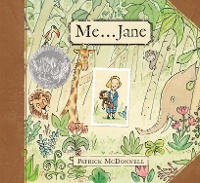 I find this interesting because it's clear that adults love picture book biographies. A lot of them get published, get good reviews, and — obviously — win awards. But the kids? Not so much, at least in my experience as a teacher and librarian — and I say this as a proud member of the committee that recognized three of the books on this list. What's your take on the picture book biography phenomenon?
EG: I'm thinking about what is different between the Sibert and Caldecott criteria that leads to less overlap between the two awards than people might assume. It might be that the Sibert goes for the entire book (with the author and illustrator receiving recognition), while the Caldecott is for illustration only. It could also be that the Sibert is only twenty-five years young!
To answer your question, I suspect that the shift in publishing we've seen is a result of the Common Core Standards being released in 2010, and the push toward "text complexity" and a necessary and ever-increasing need to emphasize information literacy skills with young people. I think a lot more kids love nonfiction and informational books than folks think, but those books can sometimes require a lot more 1:1 recommendation and hand-selling. It's hard to see literary picture-book nonfiction leading the bestseller charts (without having won awards) because it's difficult to series-ify those picture books compared to slightly lengthier or less narrative nonfiction book series, like the Who Would Win? series. I would guess that picture book biographies, because often (though not always) the subjects are already known by the general public, have an edge in the market. On the book-award-committee side of things, I'm not sure why picture book biographies tend to be overrepresented compared to other types of information-based picture books. Perhaps, with the Caldecott criteria in mind, it is easier to stick the landing on "unity of story-line, theme, or concept" with a book about one specific person (versus, say, another more general nonfiction topic)?
Not all picture book biographies are about people that are widely known in dominant culture though, and you've listed several of those already. I also think that (both in publishing and in book award committee service) there's a pride that can come from celebrating and spotlighting a lesser-known person or story that you believe everyone needs to know. If you help give that story wider recognition, you are part of making that change. While I think this is laudable and relatable, it is a subconscious sort of bias that might be at play, too. Is there a picture book biography on your 2026 Caldecott contenders list you'd like to look at today?
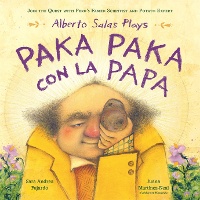 JH: I think the Caldecott criteria favor narrative nonfiction over other kinds of nonfiction — and I think the reading tastes of committee members also probably skews in that direction too. Once again, there is a large group of picture book biographies to consider this year, including well-known figures such as Toni Morrison, James Baldwin, James Marshall, and Yo-Yo Ma. However, my favorite one this year is about Alberto Salas. Alberto Salas Plays Paka Paka con la Papa is as much about preserving potato varieties and climate change as it is about Alberto Salas — and that's probably why I like it so much. The book is illustrated by Juana Martinez-Neal, who won the Caldecott Honor for Alma and How She Got Her Name and the Sibert Medal for Fry Bread. I think this pedigree doesn't hurt, but I also think her style is so recognizable that it might not feel as fresh and "distinct" as it did in Alma. Have you read it yet?
EG: I have. The earthy-hued palette and varied use of panels and perspectives create a dynamic visual reading experience. It is so engaging for a book about potatoes! But I agree this book shines because it isn’t simply a biography. It is as much about the subject as it is about potatoes, as well as the region and its people. And while back matter and citation are not explicitly part of the Caldecott criteria, the back matter here is superb. Martinez-Neal's stylized people, especially their body language and facial expressions, add depth to character too, but I know not everybody is a fan of a recognizable style. Some readers have shared quibbles about the characters’ pointy fingers. What do you think?
JH: Eh. The stylized fingers don't bother me any more than the bulbous, red nose or the flamboyantly bushy eyebrows. It'd be one thing if I thought Martinez-Neal couldn't draw fingers any differently, but I think she deliberately chose to draw them this way. People are free to dislike the choice, just as they may dislike the color palette or the line work or the medium — all of them are things I personally like and believe place this book in the conversation — but I think those flaws lie with the viewer just as they do with the illustrator.
It was recently Indigenous Peoples' Day, and I would be remiss if I did not call out the strong presence in the text and illustrations of the Quechua, an indigenous Andean people. Of course, this is the heritage of Alberto Salas too, but there are some additional characters who are — channeling Debbie Reese here — depicted in mostly modern dress with some traditional accents.
I guess I like this book because it is both homey and hopeful — and I'm in the mood for that nowadays.
Are there any other picture book biographies to discuss? Or should we turn our attention to other genres of nonfiction?
EG: I have learned so much from Dr. Debbie Reese’s work, including the importance of children’s books showing contemporary Native and Indigenous folks living their everyday lives (this is a great resource that I got linked from AILA). Have you seen the Traci Todd and Eleanor Davis biography of Ella Jenkins (Make a Pretty Sound) or James Yang’s biography of Carl Sagan (A Universe Big & Small) by chance? We don't need to dig deep if not, but those are two I have on my informational Calde-watch lists.
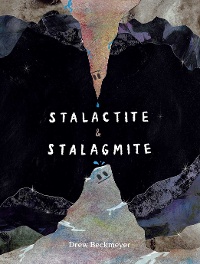 Stalactite & Stalagmite by Drew Beckmeyer is not a biography of a person, but a compelling story with fictionalized elements (and sadly no sources) that I would love to know your thoughts on!
JH: I have read Stalactite & Stalagmite and there is so much I love about this book. Presenting the information from the points of view of these personified inanimate objects was genius! I also like the placement of the text in different fonts, colors, and sizes and how it represents a dialogue between those objects. And I'm generally a fan of cut-paper artwork. However, I think the color palette is a bit muddled here, and that's compounded by the textural variation of the cut paper. What's your take on this book?
I haven't seen either of those picture book biographies yet, but I will check them out. And I will suggest some of my other nonfiction favorites, too: Hurricane by Jason Chin; Kaho'olawe by Kamalani Hurley, illustrated by Harinani Orme; and I'm a Dumbo Octopus! by Anne Lambelet.
EG: I haven’t seen I’m a Dumbo Octopus! yet. I am adding it to my to-read list right now.
I agree about the appeal of the personification in Stalactite & Stalagmite. The faces are legible and engaging. I also see your point about the formatting variations and subdued color palette. I didn’t mind the colors on account of it being a book about the Earth. (It reminds me of the potato book, actually, in that it feels appropriate for the theme and setting — but I get your broader point!) The visual timeline running left-to-right across the base of the book is what makes this a standout for me. There are no numbers shown, but instead time is represented relative to the book’s length, which feels both fresh and intuitive. Many young readers will understand the representation of time through formatting and visuals alone. For an informational book that is also a picture book, this feels distinctive.
Hurricane is no joke. Jason Chin is giving us everything: maps, charts, back matter, and more. Delineation of setting is on point, and this book is jam-packed with information about hurricanes and their impacts. He manages to weave everything together while still centering the humans' experience too, which is no easy feat. With so much text accompanying the art, it makes me wonder: do you think text-heavy informational books (with their definitions, speech bubbles, flowcharts, and diagram labels) face a tougher time getting Caldecott recognition?
JH: To my mind, Hurricane is the most distinguished nonfiction picture book in this conversation, and probably one that I would spend one of my seven nominations on. The illustrations are fabulous and serve the narrative by illustrating the story, yes, but there are nonfiction illustrations which are more expository in nature: flowcharts, diagrams, cross-sections, maps, visual metaphors, and captions — all things that are absent from many other books, and certainly most of the picture book biographies. There is a nice balance between the close viewpoint of the residents of Hatteras Island and the efforts of those monitoring the storm. It's a lot to synthesize, and Chin does it brilliantly. A wondering I have: With the proliferation of visual media, we've all seen news clips and documentaries of the awesome power of hurricanes. Does this feel subdued in comparison? Also, does the book feel less fresh than Life After Whale (last year's Sibert winner) because I have less experience with whalefalls than I do with hurricanes? These questions are out of bounds in terms of official Caldecott discussion because our focus is solely on Hurricane, but I think in both instances these are very adult questions to ask, and I'd lean into child experiences of the text during discussion.
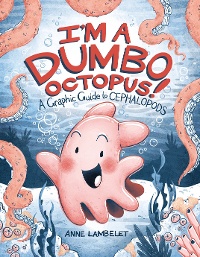 I’m a Dumbo Octopus! is a longshot because it's a graphic novel for younger readers with an appropriately cartoony style, but I think the presentation of information is fabulous and the illustrations are an important part of this. I think it's a Sibert contender and, to my mind, it would also be a Geisel contender on the older end of the spectrum (a la Mercy Watson).
The other one I mentioned is Kaho’olawe: The True Story of an Island and Her People. I'm inclined to like this story because of its focus on Indigenous people reclaiming their rightful land. Moreover, this book has a strong environmental literacy focus as local Hawaiians strive to restore the island after decades of bombing. Of course, none of what I've said speaks to the criteria necessarily. But I think the illustrations are magnificent. Should this book be getting more attention?
EG: Yes. And it's so important that it includes Native Hawaiian folks in the present-day too. The illustrations look so layered and complex, in the best sort of way (love those sidebars!). The textured, organic feel combined with the bold colors and brushstrokes really make it stand out. And the wildlife is beautifully rendered. This one seems like a full package.
Hearing your ideas, I'm still wondering about how difficult it can sometimes be to separate images from text when discussing and evaluating informational picture books. The Caldecott criteria states: "The committee is to make its decision primarily on the illustration, but other components of a book are to be considered especially when they make a book less effective as a children’s picture book. Such other components might include the written text, the overall design of the book, etc."
Because the Caldecott is reserved for illustrators rather than authors, might informational picture books — which often rely equally on art and text — have a harder time standing out?
JH: Beauty is in the eye of the beholder and I worry that some may find the artwork in Kaho’olawe too smudgy — if that's a word — especially when it comes to people and faces. I think it's a deliberate choice, just like the pointy fingers in Alberto Salas.
You ask a good question about parsing out the artwork, and I'm not sure that I can answer it definitively, but I will say that I think flowcharts and diagrams and cross-sections are not accorded the same respect as other kinds of illustration techniques. I guess that's my biggest pet peeve in this whole conversation.
I'm still waiting on Make a Pretty Sound and A Universe Big & Small, so I've run out of contenders to discuss. Do you have any final thoughts about individual books or nonfiction in general?
EG: Just that there are a LOT of contenders this year. Let’s hope the committee gives each of them a fair shake, and that the illustrated flowcharts, sidebars, cross-sections and more get the critical respect they deserve.

Added To Cart
RELATED


RECOMMENDED
Please register with us to continue reading.
ALREADY A SUBSCRIBER? LOG IN
We are currently offering this content for free. Sign up now to activate your personal profile, where you can save articles for future viewing.
ALREADY A SUBSCRIBER? LOG IN
Thank you for visiting.
We’ve noticed you are using a private browser. To continue, please log in or create an account.

Add Comment :-
Comment Policy:
Comment should not be empty !!!