


2018 School Spending Survey Report

The Horn Book website has lots of material of interest to teachers. Here are some areas to explore. And follow us on Twitter: #lollysclass
|
Interviews with authors and illustrators Recommended books -- reviews and themed book lists |
School -- reading in school, author visits, and more Suggestion box: what else to you want to see in Lolly's Classroom? |
Ling and Ting | Class #2 2015
This is one of two early readers (a.
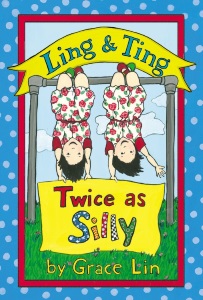 This is one of two early readers (a.k.a. easy readers) for our second class. At the end of class, we talked about the difference between picture books and easy readers. How well do you think this book works in the early reader genre? Clearly it's for somewhat more fluent readers than the Elephant and Piggy books. Do the situations match the age of the average new reader? What if a somewhat older child is learning to read at this level? Easy readers may not look as flashy as picture books, but in some ways they are more challenging to create. The author and illustrator must perform a balancing act to make the book inviting yet not intimidating. Imagine trying to create specific and engaging characters using very few words and clean, simple illustrations.

Added To Cart
RELATED


RECOMMENDED
Please register with us to continue reading.
ALREADY A SUBSCRIBER? LOG IN
We are currently offering this content for free. Sign up now to activate your personal profile, where you can save articles for future viewing.
ALREADY A SUBSCRIBER? LOG IN
Thank you for visiting.
We’ve noticed you are using a private browser. To continue, please log in or create an account.

Add Comment :-
Comment Policy:
Comment should not be empty !!!
Katelyn Patterson
Like Gek Keng said, I really liked how all of the stories were connected in some way. I also liked the bright colors throughout. I was unfamiliar with Lin until this book. Thanks for introducing it to me!Posted : Mar 08, 2015 04:22
Gek Keng
I also noticed how the book was broken down into chapters and I initially thought that it was going to be standalone individual stories without much connection to each other. I was pleasantly surprised to realize that the last chapter "Not a Silly Story" managed to make connections back to the previous stories (e.g. lucky red toy, cupcake tree, jellybeans), which kind of pulls the story back together as a satisfying whole. Like Annie and Sara mentioned, I loved the colors too, and appreciated the color choices a lot more after reading the artist's note, which mentioned that the color palette was inspired by blue summer skies and ripening strawberries. I can imagine this would be extremely enticing to children!Posted : Mar 04, 2015 06:29
Annie
I like how Sara identified that the book was broken down into six chapters to make the book more accessible for the children reading them. While I have not worked with children of this age group, I can imagine that "graduating" to a chapter book would be very exciting. I also loved the girl's outfits. Furthermore, I liked how the pictures were broken down into to smaller, manageable images which directly related to the words on the page. That is so important in an easy reader so that children can use the images to identify the words. Like Sara mentioned, the colors are bright and cheerful which might encourage the children to read on!Posted : Mar 04, 2015 04:04
Ying Xiang Lai
Like Sara, I really like how clever every story is in this book and that the content was not “dumbed down”, even though care was taken to choose words an average new reader can read by himself/herself. I also like that last story addressed writing, which is the other aspect of literacy that the reader is probably starting on at this developmental stage and can relate to. Overall, I think the pictures were done well in the sense that they contributed to the flow of the stories, but not too complicated and full of details until they were a distraction. One thing that puzzled me was the beginning and end of the book where the twins got their hair cut; I’m not sure what the purpose of those illustrations were, although I guess they did tie the book up neatly in a way.Posted : Mar 03, 2015 09:30
Sara Gordon
I appreciate how this book is broken up into six "stories", or chapters, which helps the young reader focus on each individual one instead of becoming overwhelmed if it is written as one long story. I love the bright colors throughout the book, and Ling and Ting's matching outfits--right down to the mismatched shoes (each of the girls has one green shoe and one red). The end of each of the 6 stories is always something funny or clever that children, as readers, would find amusing. I also found it effective that the author, Grace Lin, very rarely uses pronouns, in order to avoid confusing the readers; for example: "Ting likes to paint. She likes to paint fast. When Ting paints, the paint splashes. It splashes on Ting."Posted : Mar 02, 2015 08:41