


2018 School Spending Survey Report

The Horn Book website has lots of material of interest to teachers. Here are some areas to explore. And follow us on Twitter: #lollysclass
|
Interviews with authors and illustrators Recommended books -- reviews and themed book lists |
School -- reading in school, author visits, and more Suggestion box: what else to you want to see in Lolly's Classroom? |
Ling and Ting: Not Exactly the Same!
This is one of our two easy readers (a.
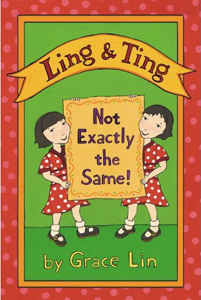 This is one of our two easy readers (a.k.a. early readers) for our second class. We talked about the difference between picture books and easy readers. How well do you think this book works? Clearly it's for somewhat more fluent readers than the Elephant and Piggy books. Do the situations match the age of the average new reader? What if a somewhat older child is learning to read at this level? Easy readers may not look as flashy as picture books, but in some ways they are more challenging to create. The author and illustrator must perform a balancing act to make the book inviting yet not intimidating. Imagine trying to create specific and engaging characters using very few words and clean, simple illustrations.

Added To Cart
RELATED


RECOMMENDED
Please register with us to continue reading.
ALREADY A SUBSCRIBER? LOG IN
We are currently offering this content for free. Sign up now to activate your personal profile, where you can save articles for future viewing.
ALREADY A SUBSCRIBER? LOG IN
Thank you for visiting.
We’ve noticed you are using a private browser. To continue, please log in or create an account.

Add Comment :-
Comment Policy:
Comment should not be empty !!!
Zohra Manjee
I really enjoyed Ling and Ting: Not Exactly the Same because is balances their similarities with what makes them unique. I think the first page of the story sets an important theme because it highlights their challenges with being seen as exactly the same, since they are not, but ironically are thinking the exact same thing. This underscores that even though they look and behave differently, there are shared experiences and understandings that are mutual and undeniable. As this is an easy reader, I appreciated the use of italics and bolding to draw attention to certain key words/actions. Also, the balance between words and pictures on each page, in terms of the amount of space each takes up helps young readers focus on reading with the pictures as a guide/reinforcement. As a chapter book, I appreciated how each of the stories could stand on their own, but were still referenced later. I liked how each chapter had a cover page with a picture and title previewing the story, its own challenge or dilemma, and a resolution or happy ending, which was achieved either the words of Ling and Ting or the final picture. The fact that the last chapter incorporates the main themes from previous chapters by mixing them up is important because it offers another narrative that ultimately highlights the same principal of Ling and Ting staying together and appreciating each of their own strengths. Also, in this last chapter, I found it interesting that the picture area changes from neat squares to more bubble shapes when illustrating scenes that are being mixed up or imagined. As Corinne mentioned, this last chapter has the potential for practicing reading comprehension and making connections, which is a critical step from moving to reading and understanding words and sentences to enjoying longer chapter books with more complex characters and story lines.Posted : Mar 05, 2014 06:53
Ashley Szofer
I really liked Ling and Ting: Not Exactly the Same! because it reminded me of something i might have enjoyed as a child. Although my sister and I look nothing alike, my grandparents always made a point to buy us the exact same presents to make sure neither of us felt jipped. While as an adult, I can completely understand why they did this, as a child, I felt like it wasn't fair that we were always "the girls" because we were really different, even as children. I could see this being a very relevant not just for twins, but for anyone with a same-sex sibling growing up that always get grouped together. I thought there were interesting cultural aspects, like the reference to old Chinese money, and enjoyed the little nuances of the book like Ting forgets what she was supposed to get for Ling when she remembers what her magic card was. It shows a positive message of family and togetherness, while celebrating individuality at the same time. There is a lot that could be discussed about this in the classroom, and it's a great read for kids just learning about chapter books because it is very manageable, with pictures that illustrate exactly what is happening in the story itself.Posted : Mar 05, 2014 06:16
Xinyi Qi
This book didn't really surprise me until the second to last story "The Library book" where I realized that all stories are related and intertwined with each other. As we can see, every story is building upon some elements in the previous stories such as the haircut accident of Ting, the forgotten card of Ting, the chopstick challenge for Ling and the story book borrowed by Ting. At first glance, the readers will perceive 6 stories as separate ones but as soon as they starting the final “Mixed Up” story, they will find the connections within this series really amazing. From a child’s point of view, the connection designed by the author within the stories is also a good way to help her/him better understand all the content through a build-on process.Posted : Mar 05, 2014 03:57
Kim Fernandes
This book is beautiful! I particularly enjoyed the message at the end (and then also the little illustration after the end of the book), and I think it can be used with young readers in a variety of ways. This is definitely an easy chapter book for children who are starting to develop their vocabulary, and like my colleagues noted above, gives them the opportunity either to learn about a culture that is different from their own or to see themselves reflected in the book. I think Nancy makes a valuable point, though, about the book fitting in better with girls perhaps than with boys, and would be interested to see if there are similar books (or books with similar messages) that would appeal to boys.Posted : Mar 04, 2014 11:28
Felicity
I really enjoyed reading this picture book, as I was able to see the storyline very clearly and appreciated the episodic organization that delineates the every day interactions between the two girls. The book also brings into attention the idea of identity and how the girls discover their differences, which started off as just a different haircut to many smaller actions. In the end, they were able to resolve and stay together despite/because of their differences. For the English-speaking young audience, they also learn about the girls lives through culture activities, such as making dumplings.Posted : Mar 03, 2014 09:04