


2018 School Spending Survey Report

The Horn Book website has lots of material of interest to teachers. Here are some areas to explore. And follow us on Twitter: #lollysclass
|
Interviews with authors and illustrators Recommended books -- reviews and themed book lists |
School -- reading in school, author visits, and more Suggestion box: what else to you want to see in Lolly's Classroom? |
Narrative nonfiction in middle school
You may have inferred from my first post in February that I am spending a lot of time thinking about nonfiction for middle school readers.
So when our ELA department revised our curriculum to align with the CCSS two years ago, we deliberately crafted an entire 7th grade unit of study around narrative nonfiction. But when we began to share plans for the unit with teachers, we kept hearing the same question: What exactly did we mean by narrative nonfiction?
After much debate, we finally agreed that a narrative nonfiction text has a phenomenon, a dilemma, a discovery, etc. acting as a protagonist. And, we felt that narrative nonfiction authors often use complex literary techniques to craft compelling stories about real world events.
Armed with this definition, I have been searching (somewhat obsessively) ever since for titles to illustrate the genre. Fortunately, the field of YA literature brims with great examples!
A fiction reader by nature, I initially approached nonfiction with trepidation. Could I find a range of great nonfiction narratives that all middle school readers could love and navigate independently? The answer is a resounding yes.
Some texts we use as read-alouds in our classrooms — titles that we want all kids to experience. Others, we put in our classroom libraries so students can discover them on their own. Here are three that have worked particularly well. (Pardon my fixation on grotesque medical history and forensic science!):
 Phineas Gage: A Gruesome but True Story about Brain Science by John Fleischman
This book tells the story of Phineas Gage, a 19th century railroad worker, who has the misfortune of having a tamping iron shoot through his brain. Phineas survives, but his personality is forever altered. While Phineas’s persona is an engaging hook, the real protagonist here is the evolving nature of brain science and Phineas’s impact on the trajectory of medical research. Fleischman weaves together history, science and narrative in a way that leaves the reader racing to find out the “resolution.”
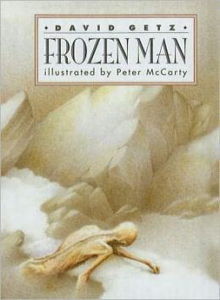 Frozen Man by David Getz, illustrated by Peter McCarty
In 1991, hikers in the Austrian Alps discovered the body of a man frozen in ice and frozen in time. David Getz uses the dramatic discovery of the 5000 year-old male to narrate how archeologists interpret artifacts from the past. This relatively short (55 pp.) and accessible text encourages many middle school readers to work their way through an entire nonfiction narrative.
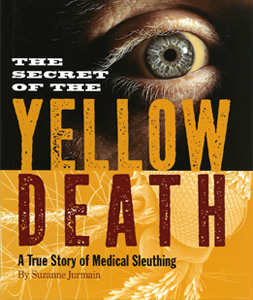 The Secret of the Yellow Death: A True Story of Medical Sleuthing by Suzanne Jurmain
Jurmain recounts the thrilling race to discover the causes of yellow fever, a ghastly illness that yellowed its victims’ eyes, caused them to spew black vomit, then killed them! Jurmain’s writing style encourages readers to care about the scientific puzzle as though it were a character. She includes excerpts from notebooks, newspapers and personal letters, further humanizing the comprehensive narrative.
These are just a few on my list of favorites, but a bookshelf of titles awaits me. I can’t wait to share more great finds as the year unfolds!

Added To Cart
RELATED


RECOMMENDED
Please register with us to continue reading.
ALREADY A SUBSCRIBER? LOG IN
We are currently offering this content for free. Sign up now to activate your personal profile, where you can save articles for future viewing.
ALREADY A SUBSCRIBER? LOG IN
Thank you for visiting.
We’ve noticed you are using a private browser. To continue, please log in or create an account.

Add Comment :-
Comment Policy:
Comment should not be empty !!!
Bruce Weaver
I am teaching English to 6th and 7th graders at Cornerstone this year in Orlando. I am teaching "Narratives" to start out the unit. I am teaching from "Springboard" and I need some suggestions for independent reading. I recall there was a book "My Life With Doctor Martin Luther King Jr." but I can't remember the author.Posted : Aug 14, 2014 11:52