


2018 School Spending Survey Report

The Horn Book website has lots of material of interest to teachers. Here are some areas to explore. And follow us on Twitter: #lollysclass
|
Interviews with authors and illustrators Recommended books -- reviews and themed book lists |
School -- reading in school, author visits, and more Suggestion box: what else to you want to see in Lolly's Classroom? |
Today’s Picture Book Biographies: Back Matter Matters
Picture book biographies broke out of their formulaic cradle-to-grave structure in the late 1990s and began telling authentic stories with new verve.
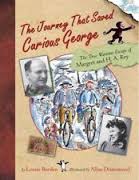 Far more than just acknowledgments and glossaries, back matter can matter a lot for educators looking to address literacy skills defined in the Common Core State Standards (CCSS). For example, CCSS says that second graders are supposed to be able to “identify the main purpose of [an informational] text, including what the author wants to answer, explain, or describe.” Reading the author’s or illustrator’s note can help deliver some insight, straight from the creator’s pen. “For many years, I was intrigued by the story of Margret and H. A. Rey’s flight from Paris on bicycles in June 1940,” writes Louise Borden in her "Finding the Story" introduction to The Journey That Saved Curious George: The True Wartime Escape of Margret and H. A. Rey (Houghton, 2005; illustrated by Allan Drummond). Her first-person author’s notehighlights her conversations, travels, and accumulation of primary sources (some of which artfully appear within the book’s illustrations). After the main narrative, Borden provides a second author’s note, “After the Escape”; this third-person summation addresses milestones in the Reys' lives. This cover-to-cover blend of facts, author commentary, and original research materials fortuitously (and unintentionally) connects to CCSS nonfiction literacy standards.
Furthermore, the author’s and illustrator’s notes can also connect readers directly to their intentions, insights, or biases, especially regarding controversies or issues related to the subject’s legacy. In Gary Golio’s picture book Jimi: Sounds like a Rainbow: A Story of the Young Jimi Hendrix (Clarion, 2010; illustrated by Javaka Steptoe), the author’s note tackles the topics of substance abuse and addiction. Golio acknowledges that “Jimi’s substance use plays a large part in how he is remembered today.” The author, who has worked as a clinical social worker, provides online resources and book suggestions for children and young teens, “for better understanding and addressing the dangers of substance use.”
Carefully written ancillary notes, in contrast to the main text, can also offer more comprehensive information directed at the adult readers sharing picture books with their young emerging readers. Author Jonah Winter saves the salient birth-to-death information about John Birks Gillespie for the back matter of Dizzy (Scholastic/Levine, 2006; illustrated by Sean Qualls). Such details would clutter the spare main text and interrupt the rhythm of “the story of one real cool cat / who must have been born with a horn / in his hands.”
 Reaching even further toward authenticity, author and illustrator Patrick McDonnell includes the actual voice of the book’s subject in the back matter of Me...Jane (Little, Brown, 2011). McDonnell introduces Jane Goodall in his author’s note on the left-hand page of a spread near the end of the book. Then, on the right-hand page, Goodall speaks directly to readers in “A Message from Jane.” A compelling letter? In a picture book of scarcely more than two hundred words? This is back matter that matters to the author, the book’s subject, and to readers, as Jane encourages young people to “make the world a better place for people, animals, and the environment.”
 While author’s notes vary in style and content, illustrator’s notes tend to be written in first person and focus on some aspect of the book’s artwork. These back matter comments usually explain how the artist learned more about the book’s subject and the impact of his or her research on the visual elements. In an author’s note to Balloons over Broadway: The True Story of the Puppeteer of Macy’s Parade (Houghton, 2011), Melissa Sweet talks about Tony Sarg’s accomplishments. In a separate note on the same page, with the subhead “A Few Words about the Art,” Sweet explains her interpretive process: “In addition to the watercolor illustrations, my collages are, in part, a mix of paper from old books to make papier-mâché puppets, found objects, and fabrics, all painted or altered to illustrate what it may have felt like to be in Sarg’s world.” Readers learn that Sweet made the real-life toys shown in the book and also included Sarg’s original illustrations from The Tony Sarg Marionette Book. With this knowledge, readers find more meaning in the book’s visual delights.
 Illustrator Bryan Collier, who also uses watercolor and collage as his media, similarly employs the illustrator’s note in the front of Martin’s Big Words: The Life of Dr. Martin Luther King, Jr. by Doreen Rappaport (Hyperion/Jump at the Sun, 2001) to ensure that readers understand his approach. Collier discusses stained-glass windows as metaphors and explains that “the four candles in the last picture, for example, represent the four girls who were killed in the Sixteenth Street Baptist church. Their light shines on.” Furthermore, he tells readers that he tried to use his collages to “bring a fresh spin to a story that’s been told many times.” Readers turn the pages, captivated by unexpected visual combinations illuminating Rappaport’s story of Dr. King’s salient words.
 Timelines and sources aren’t new in nonfiction, but these elements have found new importance in contemporary picture book biographies by emphasizing context. Author Jen Bryant and illustrator Melissa Sweet nailed context when they devised a double timeline at the back of A River of Words: The Story of William Carlos Williams (Eerdmans, 2008). Their creative chronology shows the life and work of the celebrated poet alongside significant events in world history, with overlapping vertical colored bands that signify the various types of events, inviting readers to contemplate the juxtaposition of artist, artistry, and factual documentation.
At all reading levels, documentation of sources can be found in most of today’s picture book biographies. Through the use of quotations in the main text, authors leave bibliographic crumbs along their research paths for readers to follow to the appended citations. Citations of quoted phrases in the back matter highlight the authenticity of the work. Another interesting trend is the listing of primary sources in a section separate from the suggested reading list — ideal for CCSS classrooms. Excerpts from diaries, newspapers, speeches, etc., or images of original photographs, paintings, or other reference materials drawn upon by the author or illustrator further enrich the reading experience.
To help students develop their own perspectives, many authors have added recipes, art projects, songs, and other learning activities to their back matter. In The Extraordinary Mark Twain (According to Susy) (Scholastic, 2010; illustrated by Edwin Fotheringham), Barbara Kerley appends a full-page reader’s activity. “Writing an Extraordinary Biography (According to Barbara Kerley)” extends the learning experience for readers while it demonstrates one way to use this picture book biography in the classroom. This bonus fun-factor piques reader interest and enjoyment of biographical facts.
Back matter in all of its various forms matters more to readers and educators than ever before — and, coincidentally, just in time for the CCSS’s emphasis on nonfiction. Today’s many outstanding picture book biographies combine ancillary information with the main text in exciting ways to help introduce significant people in history while engaging readers, prompting questions, extending literacy skills, and fortifying critical thinking. These books matter — cover to cover.
Cited Titles
The Journey That Saved Curious George: The True Wartime Escape of Margret and H. A. Rey written by Louise Borden, illustrated by Allan Drummond, Houghton, 2005.
A River of Words: The Story of William Carlos Williams written by Jen Bryant, illustrated by Melissa Sweet, Eerdmans, 2008.
Jimi: Sounds like a Rainbow: A Story of the Young Jimi Hendrix written by Gary Golio, illustrated by Javaka Steptoe, Clarion, 2010.
The Extraordinary Mark Twain (According to Susy) written by Barbara Kerley, illustrated by Edwin Fotheringham, Scholastic, 2010.
Me…Jane written and illustrated by Patrick McDonnell, Little, 2011.
Martin’s Big Words: The Life of Dr. Martin Luther King, Jr. written by Doreen Rappaport, illustrated by Bryan Collier, Hyperion/Jump at the Sun, 2001.
Balloons over Broadway: The True Story of the Puppeteer of Macy’s Parade written and illustrated by Melissa Sweet, Houghton, 2011.
Dizzy written by Jonah Winter, illustrated by Sean Qualls, Scholastic/Levine, 2006.


Added To Cart
RELATED


RECOMMENDED

Please register with us to continue reading.
ALREADY A SUBSCRIBER? LOG IN
We are currently offering this content for free. Sign up now to activate your personal profile, where you can save articles for future viewing.
ALREADY A SUBSCRIBER? LOG IN
Thank you for visiting.
We’ve noticed you are using a private browser. To continue, please log in or create an account.

Add Comment :-
Comment Policy:
Comment should not be empty !!!
Janice Shefelman
Dear Tracy and Ann, Please don't overlook our picture book biography, I, VIVALDI (Eerdmans, 2008). Thanks Janice and Tom ShefelmanPosted : Sep 21, 2013 07:05