


2018 School Spending Survey Report

The Horn Book website has lots of material of interest to teachers. Here are some areas to explore. And follow us on Twitter: #lollysclass
|
Interviews with authors and illustrators Recommended books -- reviews and themed book lists |
School -- reading in school, author visits, and more Suggestion box: what else to you want to see in Lolly's Classroom? |
The value of re-reading
I was recently privy to a conversation that I have participated in countless times in my twenty-plus years in education.
 I was recently privy to a conversation that I have participated in countless times in my twenty-plus years in education. It was a version of “The 8th grade teachers are stealing the 9th grade teachers’ books” discussion. You know that one, right? Of course, it does not reside exclusively in the domain of middle or high school. I have heard it across all levels of schooling conducted at all different tenors and pitches. It is often a difficult and deeply personal conversation.
Teachers work hard to craft compelling units of study and lesson plans that meet the needs of their students. How frustrating it can be to feel like the special text you have chosen to gift your students is no longer the surprise you intended it be. As teachers we often have so little time with our students that repeating a text can feel wasteful. I understand that — I really do.
But having worked across the K-12 spectrum, I also know that repetition of text is inevitable. We cannot stop students from reading a text because it is taught in 10th grade world lit. Similarly, I don’t really want to tell the second grade teacher to hide Owl Moon in her closet because it is a mentor text in third grade. Rather, I would like to consider designing a deliberate unit of study in reader’s workshop focused on re-reading a text.
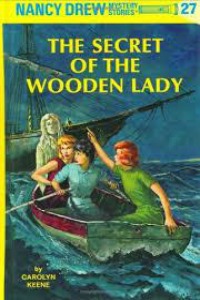
The first assignment we had as students in Lolly’s YA Lit module several years ago was to revisit and reflect on a text we had not read since adolescence. I wrote my paper on a Nancy Drew mystery story (The Secret of the Wooden Lady, #27). With the demands of middle school English, I mournfully left this series behind as an early adolescent.
Reading it as an adult, I chuckled at the frenetic pace with which Nancy solves her mysteries and the number of times in each episode she narrowly manages to escape disaster. So while I acknowledged that the writing style might not meet my adult expectations, I also saw elements of this text I could never have recognized as a ten or twelve year old. Nancy Drew was a competent and smart young woman who often managed to outwit and outperform grown men. No wonder Nancy Drew books are still in circulation some seventy years after they were first published.
I learned so much from that assignment. I learned about myself as a more mature, critical reader. And I came to understand something about the resonance of theme — what it might mean as a young reader and what it means as an adult. I think our students might benefit enormously from being asked to re-read a text and reflect on that dual reading experience.
I envision a unit of study wherein students select a book from their reading past and re-read it with a critical eye on how the second read differs. Perhaps the teacher might offer mini-lessons guiding students to attend explicitly to craft or theme. Or, students might be encouraged to write and discuss how returning to a text as a more experienced reader affects the reading process. Rather than guard against the fear of spoiling the story, I would urge us to celebrate the resonance of a great book.
Have you ever incorporated deliberate repetition into your reading work with kids? If so, I would love to know about it.
Welcome back to school and happy re-reading!


Added To Cart
RELATED


RECOMMENDED

Please register with us to continue reading.
ALREADY A SUBSCRIBER? LOG IN
We are currently offering this content for free. Sign up now to activate your personal profile, where you can save articles for future viewing.
ALREADY A SUBSCRIBER? LOG IN
Thank you for visiting.
We’ve noticed you are using a private browser. To continue, please log in or create an account.

Add Comment :-
Be the first reader to comment.
Comment Policy:
Comment should not be empty !!!